
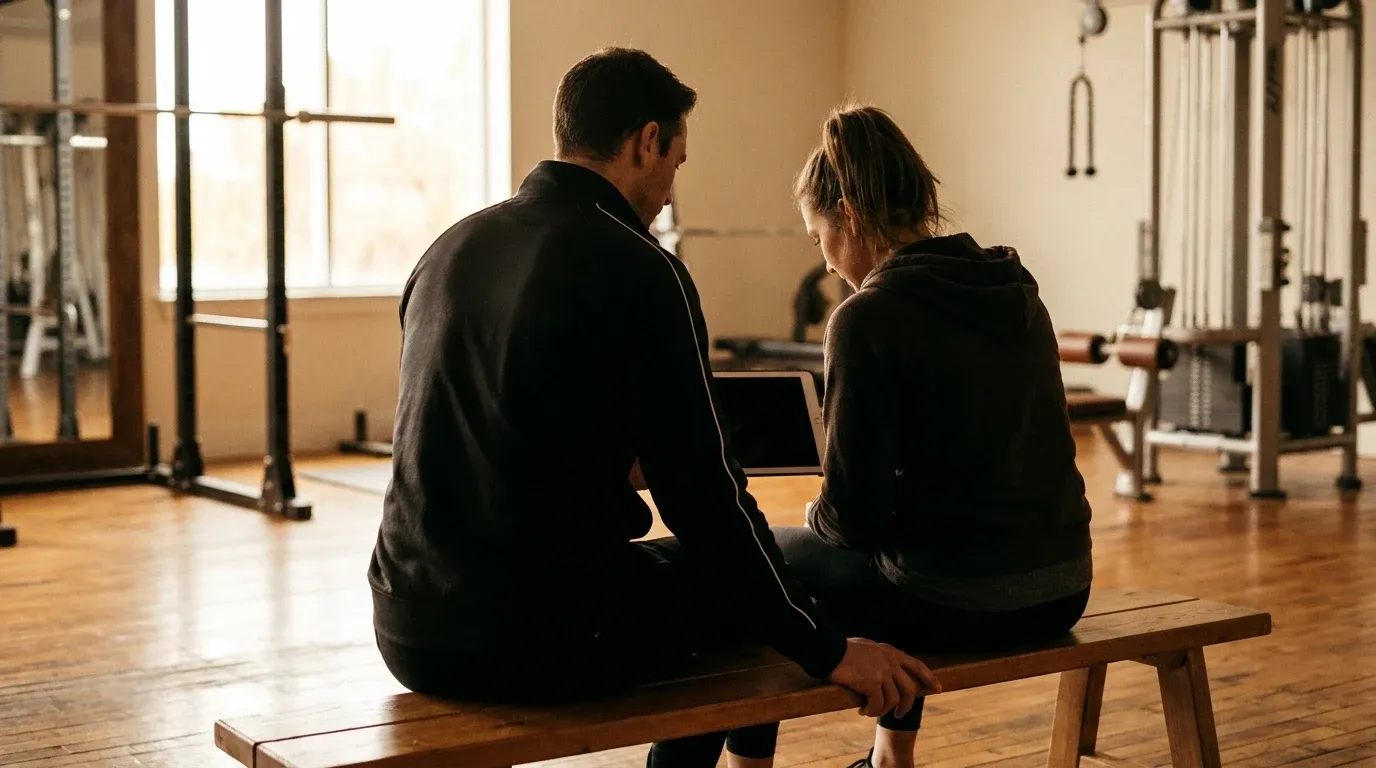
AI coaching apps are selling the dream hard right now. Pay $30 a month instead of $100 an hour, get a personalized program, track your workouts, and never deal with scheduling again. For a certain kind of motivated, experienced exerciser, that pitch isn't entirely wrong. But for most people, the marketing glosses over some genuine gaps that can slow your progress or, in worse cases, get you hurt.
Here's what the evidence actually shows about where AI performs well, where it falls short, and what a smarter setup looks like for most clients.
What AI Coaching Actually Does Well
To be fair, AI-driven platforms have made real progress. The best of them can generate structured, periodized programs in seconds, adjust volume based on your logged performance, send reminders, and compile adherence data over weeks and months. That last part matters more than people realize. Consistency is the single biggest driver of results in any training block, and having a system that tracks whether you're actually showing up gives you something concrete to work with.
At scale, AI also democratizes access. If you're living somewhere without access to a qualified coach, or your budget genuinely caps out at $20 to $40 per month, a well-designed AI platform is meaningfully better than no structure at all. It can help you structure a strength block with logical progressions, appropriate rest periods, and built-in deload weeks. That's not nothing.
AI is also genuinely useful for experienced lifters who know their body, understand basic movement patterns, and mainly need a logical progression framework rather than hands-on guidance. For that profile, the technology can be a solid training partner.
The Movement Quality Problem Nobody Talks About Enough
Here's where things get complicated. No current AI platform can watch you move. Even apps that use your phone camera to analyze form are working with 2D video and pattern-matching algorithms that miss a lot. They can flag obvious errors like a rounded lower back in a deadlift, but they can't detect subtle hip shifts, contralateral load compensation, or breathing pattern dysfunction that a skilled coach catches in a single session.
This matters because most training injuries don't happen during maximal effort lifts. They accumulate. Someone squatting with a persistent valgus knee collapse, session after session, doesn't blow out their knee on day one. It happens over weeks of compounding stress on tissue that wasn't prepared for it. An AI program won't catch that drift. It will simply keep adding weight according to its progression model while the problem gets worse.
For populations with existing movement limitations, returning athletes, people with prior injury history, or beginners who haven't yet built accurate body awareness, this blind spot isn't a minor inconvenience. It's a structural risk in the product. Research published in sports medicine literature consistently shows that supervised training significantly reduces injury incidence compared to unsupervised programming, particularly in the first six months of a new training stimulus.
The Motivation Gap Is Real, and It Has Data Behind It
Tech companies love to point to their engagement metrics. But engagement and long-term adherence are different things. A 2023 systematic review examining digital health coaching interventions found that AI and app-based tools performed comparably to human coaching for short-term behavior change but showed significantly lower retention at the 12-month mark. The relational element, specifically the accountability that comes from knowing a real person is invested in your outcome, appears to be a durable driver of long-term consistency in ways that push notifications and leaderboards don't fully replicate.
This aligns with what coaches report on the ground. Clients don't quit programs because the sets and reps were wrong. They quit because life gets complicated and there's no one to help them recalibrate. A human trainer can recognize when you're burning out before you do, adjust expectations after a stressful life event, or simply call you out when you're sandbagging. That kind of responsive, context-aware intervention is currently beyond what AI can provide.
If you're looking at what the 2026 coaching industry data shows, human coaching retention rates remain substantially higher than app-only models despite the price gap. That delta in retention has real implications for your actual results over time.
What Happens When the Program Stops Working?
This is the question most people don't think to ask before they sign up. If you're following an AI program and your progress plateaus, most platforms will adjust variables algorithmically, change rep ranges, add volume, suggest a different split. That can work. But if you're experiencing pain during a movement, most platforms have no clear escalation path to a qualified human who can assess what's happening.
Some apps offer access to coaches via chat for an upgraded subscription tier. That's better than nothing, but asynchronous text advice from a coach who has never seen you move is a limited tool for diagnosing pain or dysfunction. You're essentially describing symptoms and hoping the guidance you get back is specific enough to be useful. Often it isn't.
This gap is particularly significant for populations managing metabolic or musculoskeletal conditions. Research on how diet and exercise interact to improve metabolic health consistently emphasizes individualized prescription. That kind of individualization requires human judgment, especially when the client's response to training is atypical.
Before you commit to any AI coaching platform, ask these questions directly:
- What happens if I report pain during a prescribed exercise? Does the platform have a protocol, or does it just swap the movement for a similar one?
- Is there a human coach I can contact, and what are their credentials? "Certified fitness professional" covers a wide range of competence.
- How does the platform handle populations with specific health needs? Blanket programs aren't appropriate for everyone.
- What's the refund or cancellation policy if the program isn't working? This tells you a lot about how confident the company is in its outcomes.
The Hybrid Model Makes the Most Sense for Most People
The most honest answer to whether AI can replace a human trainer is: it depends entirely on who you are and what you need. For most people, the optimal setup isn't AI or human. It's both, structured appropriately.
A hybrid model uses AI for what it's genuinely good at: generating and updating your program, tracking adherence, logging data, and providing structure between sessions. A human coach handles what AI can't: initial movement assessment, program design for specific goals or limitations, periodic check-ins to review progress and adjust strategy, and the relational accountability that keeps people going when motivation runs dry.
This model is also becoming more cost-effective. A number of coaches now offer monthly remote coaching packages in the $150 to $300 per month range that include periodic live video check-ins alongside AI-assisted program delivery. That's more than a pure app subscription, but it's also substantially less than the $400 to $800 per month you'd spend on three to four weekly in-person sessions with a qualified trainer in a major US city. For many clients, that middle tier represents real value.
If your goals involve building a sustainable foundation, something like the evidence behind strength training for long-term health makes clear that program quality over years matters far more than any single training block. Getting the foundation right, with human eyes on your movement early, pays dividends that an app simply can't deliver on its own.
The Bottom Line on AI Coaching
AI coaching tools are genuinely useful products for the right user. They're structured, accessible, affordable, and improving quickly. If you're an experienced exerciser with solid movement literacy who mainly needs a logical training framework and progress tracking, an AI platform can serve you well.
But if you're new to training, returning from injury, managing a health condition, or simply someone who needs real accountability to stay consistent, an AI program alone is probably not sufficient. The marketing won't tell you this, but the data does.
The smartest approach right now is to use AI tools for what they do efficiently while staying honest about where human expertise is worth the cost. That's not a knock on the technology. It's just an accurate read of where it currently stands.