
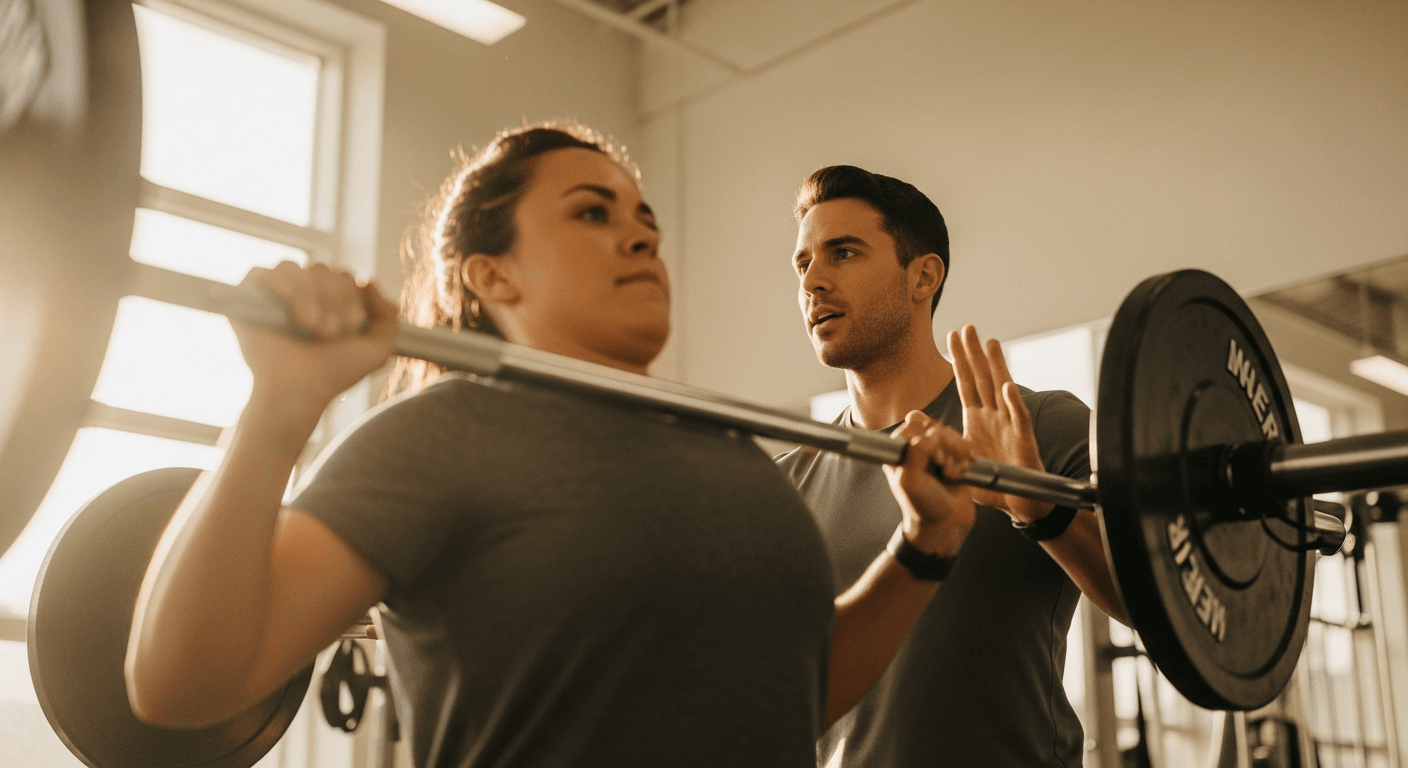
Most people choose a personal trainer the same way they choose a restaurant: they look at the photos, check the price, and hope for the best. A polished Instagram feed and a long list of certifications can feel like enough evidence. They're not. The only real test of whether a coach is right for you happens inside an actual session, before you've signed anything or handed over a credit card.
A trial session compresses weeks of guesswork into 60 minutes. It tells you more about a trainer's real value than any credential check, testimonial scroll, or introductory call ever could. If you're serious about your results, it should be the non-negotiable first step in your selection process.
Why Price and Instagram Presence Are Poor Selection Filters
The US personal training market is saturated. Rates range from around $40 per session at commercial gyms to well over $200 per session for specialized private coaches. That range exists for real reasons, but price alone tells you almost nothing about fit. A $150-per-session trainer who programs for powerlifters won't serve you well if you're recovering from a rotator cuff injury. A $60-per-session coach who understands your schedule, your history, and your actual goal might be the better investment by a wide margin.
Social media compounds the confusion. A coach with 80,000 followers may have built that audience through aesthetics, humor, or consistency in posting. None of those qualities translate directly into coaching skill. Cueing, programming logic, client communication, and the ability to adapt in real time are invisible on a grid. You only see them in person.
What actually predicts a good coaching relationship isn't price or following size. It's training style alignment, logistical compatibility, and whether the coach's approach maps to your specific goal. Fat loss programming looks different from strength development, which looks different again from injury recovery. A trainer who's excellent at one may be mediocre at another. That distinction only becomes clear when you're actually working together.
What a Trial Session Reveals That Nothing Else Can
A single session gives you direct, unfiltered evidence on several dimensions that matter. The first is communication style. Does the coach explain movements in language you understand? Do they break down the "why" behind each exercise, or just count reps while looking at their phone? A good coach reads your comprehension and adjusts in real time. A poor one delivers a scripted session regardless of whether you're following along.
The second is cueing quality. Coaching cues are the micro-instructions that correct your form and help your body learn a movement pattern. Generic cues ("keep your back straight") indicate surface-level attention. Specific, responsive cues ("drive your knee out over your third toe on that squat") indicate a coach who's actually watching you. That distinction matters enormously for safety and long-term progress.
The third is how they handle adjustment. No first session goes exactly as planned. You might reveal a mobility limitation they didn't anticipate, or struggle with an exercise they assumed was accessible. Watch how they respond. Do they modify the movement intelligently? Do they get frustrated or double down? A coach's behavior when the session deviates from the plan tells you a great deal about how they'll handle the harder moments over the next six months.
Finally, a trial session reveals whether the coach asks the right questions. Before the work begins, a quality trainer should want to know your injury history, your current activity level, your schedule, and what's actually blocking you from your goal. If the intake is superficial, the programming will be too.
The Questions You Should Be Asking During the Trial
Don't treat a trial session as a passive experience. You're evaluating the coach as much as they're assessing you. Come prepared with specific questions that expose how they think and how they work.
- How do you track progress? A serious coach has a system. It might be weekly measurements, strength benchmarks, movement quality assessments, or a combination. Vague answers like "we'll see how you feel" are red flags. Progress tracking isn't optional. It's how a coach knows whether the program is working and when to adjust it.
- How do you handle plateaus? Every client hits a period where progress stalls. A good coach expects this and has a framework for responding. Do they periodize the program? Change the stimulus? Address nutrition or recovery? An honest, specific answer here reveals real coaching depth. An evasive answer suggests they've never thought it through.
- How does your programming account for my schedule and lifestyle? A program that requires five gym sessions per week from someone who travels frequently and manages two kids won't survive contact with real life. The best coaches design around your constraints, not around a theoretical ideal. If the coach seems annoyed by this question, that's useful information.
- What does your approach to nutrition look like? A trainer doesn't need to be a registered dietitian, but they should have a clear, evidence-based position on the basics. If you're targeting fat loss, for example, understanding current protein recommendations is foundational. You can reference resources like Protein: Why the New 2025-2030 Guidelines Target 1.2 to 1.6 g/kg to cross-check whether their guidance is grounded in current science.
- How do you factor in recovery? Training adaptation happens during rest, not during the session itself. A coach who dismisses recovery as a secondary concern is working against the very outcomes you're paying for. Quality coaches integrate sleep, stress, and active recovery into the overall plan. If they're not asking about these areas, they're missing a significant piece of the puzzle.
How to Structure the Trial Session for Maximum Information
Arrive with the intention of gathering data, not just getting a workout in. Observe how the coach opens the session. Do they review your intake form, or do they seem to be seeing it for the first time? Do they ask clarifying questions, or do they move straight to the warm-up? The first five minutes of how a coach prepares tells you a lot about their habits in general.
During the session, pay attention to whether the coach stays present. Are they checking in with you regularly? Are they watching your movement patterns, or are they distracted? Presence in a session is a strong predictor of presence in an ongoing coaching relationship.
After the session, ask for a rough sense of what a program would look like for you. A confident, experienced coach can sketch the broad structure in real time. They don't need to produce a detailed twelve-week plan on the spot, but they should be able to articulate a logical direction. A coach who can't describe their approach until they've had several days to "think about it" may be piecing together your program from templates rather than designing it from genuine assessment.
The Financial Logic of a Trial
Some coaches charge a modest fee for a trial session, typically in the $50 to $100 range. Others offer the first session free as part of their client acquisition process. Either way, it's a small expenditure relative to what a full coaching commitment costs. A three-month package with a private trainer can run anywhere from $900 to over $3,000 depending on frequency, location, and specialization.
Spending $75 to confirm or rule out a coach before committing $2,000 is straightforward risk management. The real cost of skipping this step isn't the money. It's the weeks or months you spend in a misaligned coaching relationship that delivers mediocre results and erodes your motivation.
This dynamic is increasingly well understood in the coaching industry itself. Research into what actually works for coach client acquisition in 2026 consistently shows that clients who enter through a structured trial or discovery process have significantly higher retention rates than those who commit based on price or passive referral alone. A good trial session protects both sides of the relationship.
Matching the Coach to the Specific Goal
One underappreciated reason to use a trial session is goal specificity. The coaching skills required to guide a client through fat loss are genuinely different from those required for strength sport preparation or post-surgical rehabilitation. Effective fat loss coaching integrates training with nutritional strategy, behavioral change, and consistency management. You'd want to know whether your coach understands concepts like how protein timing affects muscle retention during a deficit. That knowledge changes the quality of guidance you receive.
Similarly, a coach working with clients who have specific recovery needs, such as post-injury rehabilitation or chronic pain management, should be integrating recovery science into their approach. An awareness of evidence-based practices around how to build a real recovery routine distinguishes a coach who thinks holistically about adaptation from one who only thinks about the hour they have you in the gym.
The trial session is where you surface these competencies. You ask, you observe, and you compare what you see against what you actually need. No bio, no review page, and no intro call does that work as efficiently or as honestly.
Make the Trial the Standard, Not the Exception
The fitness industry has normalized skipping this step. You see a price, you like the vibe, you sign a contract. Months later, you're frustrated with your results and not entirely sure why. The trial session exists to break that pattern.
Treat it as a professional interview, because that's exactly what it is. You're hiring someone to guide your physical development, manage your risk of injury, and deliver real results over a sustained period. The bar for that role should be high. A single well-structured session gives you the evidence to set it there.