
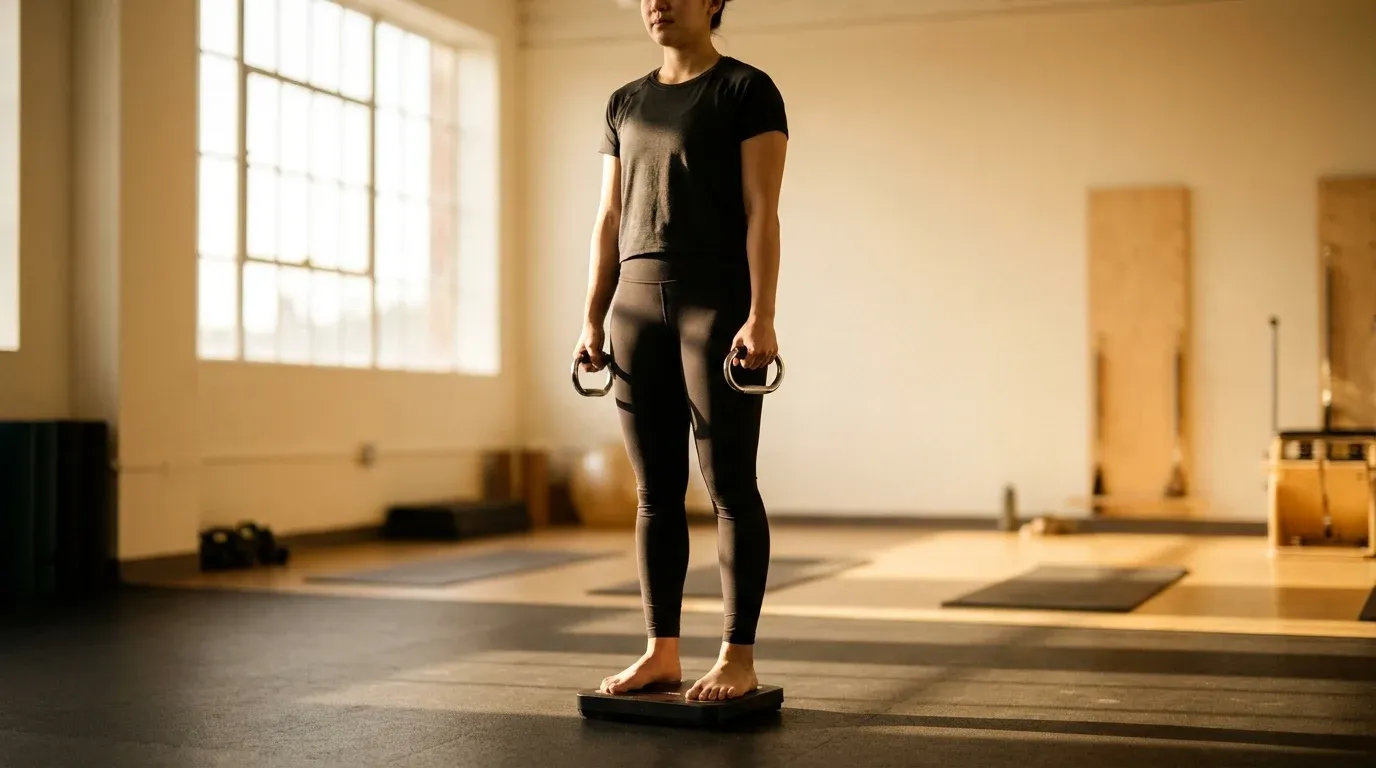
Starting October 30, 2026, every new member joining Auckland Council's Pools and Leisure network will sit down for an onboarding appointment that includes a scan on an InBody body composition analyzer. It's a significant rollout. Auckland Council operates one of the largest publicly funded leisure networks in the Southern Hemisphere, which means tens of thousands of people are about to get their first body composition report handed to them alongside a gym membership card.
Most of them will have no idea what to do with it.
That's not a knock on InBody or on Auckland Council's initiative. Getting people engaged with their health data is genuinely useful. The problem is that body composition data is easy to misread, easy to over-interpret, and routinely used in marketing contexts that obscure its real limitations. This guide tells you what the numbers actually mean, where they fall apart, and how to make them work for your training.
How InBody and Bioelectrical Impedance Devices Work
InBody machines, along with most gym-based body composition analyzers, use bioelectrical impedance analysis (BIA). A low-level electrical current passes through your body, and the device measures resistance. Fat tissue conducts electricity poorly; lean tissue, which holds more water, conducts it well. From that resistance reading, the device estimates your body fat percentage, lean mass, muscle mass, and total body water.
It sounds precise. The output looks precise. Color-coded charts, segmental muscle analysis broken down by limb, a single-digit body fat percentage. The problem is that the underlying measurement, impedance, is a proxy for water content. And your water content changes constantly.
Research consistently shows that BIA readings shift meaningfully based on when you last ate, whether you're dehydrated, where you are in your menstrual cycle, whether you exercised in the last few hours, and even what time of day you're tested. A 2019 analysis comparing BIA to DEXA (the gold standard for body composition) found mean differences in body fat percentage of up to 4 to 8 percentage points depending on the BIA device and the population tested. For a 180-pound person, that margin of error can represent 7 to 14 pounds of fat mass, which is not a rounding error.
None of this means BIA is useless. It means you need to understand what you're actually measuring before acting on the numbers.
The Accuracy Limitations You Need to Know
Here's the short list of factors that will skew your InBody reading in ways that have nothing to do with your actual body composition:
- Hydration state. Even mild dehydration (1 to 2% of body weight) artificially inflates your body fat reading because lean mass appears lower when it holds less water. Drinking a large amount of water right before the test has the opposite effect.
- Recent exercise. A hard session in the hours before your scan shifts fluid distribution and temporarily alters impedance. Post-workout readings are unreliable.
- Menstrual cycle timing. Water retention during the luteal phase can shift the scale by 2 to 5 pounds and meaningfully affect impedance readings. Scans done at different cycle phases are not directly comparable.
- Meal timing. Food and drinks in your digestive system add to total body weight and affect hydration status. Most BIA protocols recommend fasting for at least two to three hours before testing.
- Skin temperature and electrode contact. Cold extremities reduce conductivity and can distort segmental readings.
Auckland Council hasn't published its exact testing protocol yet, but if new members are walking in off the street, potentially post-coffee, mid-afternoon, having skipped or not skipped lunch, the baseline readings will vary for reasons that have nothing to do with their fitness level. That's worth knowing upfront.
Which Metrics Are Actually Worth Tracking
The single most important shift in how you interpret body composition data is this: stop treating individual readings as facts and start treating trends as signal.
A single InBody scan tells you very little with confidence. A series of scans taken under identical conditions, same time of day, same hydration state, same point in your menstrual cycle if applicable, same fasting window, taken two to four months apart, starts to tell you something real.
Skeletal muscle mass trend. This is the metric that matters most for lifters. Are you gaining lean mass over time? If your skeletal muscle mass reading increases by 1 to 2 kg over four months while your training has been consistent, that's a meaningful signal, even accounting for measurement noise. If it's flat or declining, that's worth investigating, whether the culprit is under-eating, poor recovery, or programming that's gone stale. If you're returning to the gym after a significant break, tracking muscle mass over your first three to six months gives you real feedback on whether your program is working. The Smartest Way to Return to Training After a Break covers how to structure those early training blocks to maximize the muscle-building response.
Total body water. Not for body composition purposes per se, but as a quality-control check. If your total body water is unusually low on a given test day, take the rest of the results with skepticism and retest when you're better hydrated.
Segmental lean mass. InBody devices break down muscle mass by body segment, left arm, right arm, trunk, left leg, right leg. Over time, significant imbalances between sides can flag asymmetry worth addressing in training. Don't over-interpret small differences. A 0.2 kg discrepancy between your left and right leg isn't a red flag. A 1.5 kg difference that persists across multiple scans might be worth discussing with a coach.
Which Metrics to Largely Ignore
Single-reading body fat percentage. Given the error margins discussed above, treating any single BIA-derived body fat percentage as accurate to within a few points is not warranted. It can serve as a rough ballpark but shouldn't drive decisions about cutting or bulking phases on its own.
Visceral fat level. InBody machines produce a visceral fat score, and it's one of the most aggressively marketed outputs. Visceral fat, the fat surrounding your organs, is clinically meaningful. But BIA-derived visceral fat estimates have significant accuracy problems. DEXA and MRI are far more reliable for this metric. Don't make health decisions based on a BIA visceral fat score alone.
Basal metabolic rate estimates. Most InBody reports include a BMR estimate derived from your lean mass. The calculation is straightforward and the formula itself is reasonable, but it's only as accurate as the lean mass figure it's built on. If your lean mass reading is off due to hydration, your BMR estimate inherits that error.
How to Use Your Gym Scan Practically
If you're going through Auckland Council's onboarding or any similar program, here's how to get real value from the process.
First, standardize your testing conditions from day one. Take your scan in the morning, before eating, after a normal night of sleep, not the day after a hard training session. Write down those conditions and replicate them every time. That consistency matters more than any individual number.
Second, book a follow-up scan at the same facility. Don't compare a reading from one machine to a reading from a different brand of analyzer. The algorithms differ, the calibrations differ, and the numbers won't be comparable. Stick with the same device for longitudinal tracking.
Third, pair the data with what you're actually doing in the gym. Body composition doesn't change in isolation. If your skeletal muscle mass is climbing, something in your training and nutrition is working. If it's stagnant despite consistent effort, that's a conversation to have with a coach. Which Type of Personal Trainer Do You Actually Need? can help you figure out whether you need programming support, accountability, or something more specialized.
Fourth, factor in life context. Body composition data doesn't exist in a vacuum. Postpartum clients, for example, see meaningful hormonal and structural shifts that affect both training response and BIA readings in ways that don't reflect standard population norms. Coaching Postpartum Clients: A Practical Guide goes deeper on interpreting fitness data in that specific context.
Fifth, don't let a single scan derail your training mindset. A body fat percentage that's higher than you expected, or a muscle mass figure that looks lower than you thought, is not a verdict. It's a data point with meaningful uncertainty attached to it. Act on trends, not snapshots.
The Bigger Picture
Gyms rolling out body composition testing at onboarding is a net positive. Having a baseline, even an imperfect one, is better than having nothing. It gives members something concrete to talk about with staff and coaches, and it creates an early reason to engage with the facility beyond just showing up and using equipment.
But the value of that data depends entirely on how it's explained and used. A number handed to someone without context, particularly a body fat percentage or a visceral fat score, can cause real harm. It can push people toward unnecessary restriction, distort body image, or create anxiety about metrics that were never accurate to begin with.
Body composition testing works best as a coaching tool, not a marketing hook. If you're getting scanned as part of an Auckland Council onboarding or anywhere else, bring the right expectations. Track the trend, standardize the conditions, and use the data to inform your training rather than define your worth.
That's what the technology is actually good for. Everything else is noise.