
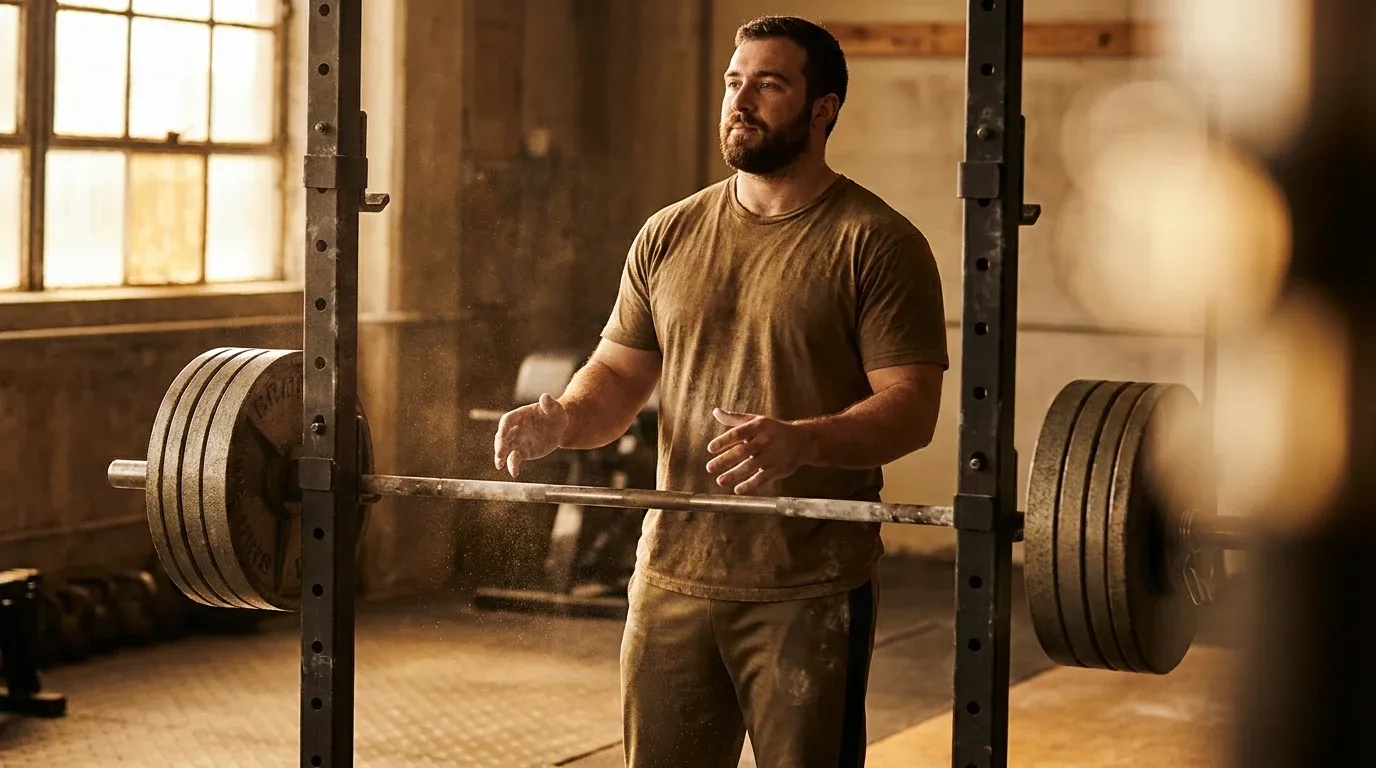
If you've spent any time in a gym, you've probably heard some version of the same advice: push until you can't push anymore, grind out every last rep, leave nothing in the tank. The idea that training to muscular failure is the price of admission for real strength gains has been baked into gym culture for decades.
New guidance from the American College of Sports Medicine (ACSM) suggests that belief needs a serious update. Drawing on 137 systematic reviews and meta-analyses, the ACSM's 2026 evidence-based recommendations confirm that grinding to failure is not required to build strength. For most lifters, it may actually be working against you.
What the ACSM 2026 Update Actually Says
The updated ACSM position stand is one of the most comprehensive reviews of resistance training evidence ever compiled. It synthesized data across populations, training modalities, and outcome measures. The conclusion on failure training is clear: muscular failure is not a necessary condition for strength development.
That doesn't mean effort doesn't matter. It does. But there's a meaningful difference between training hard and training to absolute mechanical failure on every working set. The research consistently shows that staying short of that limit produces comparable, and in some contexts superior, strength outcomes over time.
This matters for a broad range of people. Whether you're a recreational lifter in your 30s, someone managing joint discomfort, or an older adult trying to preserve muscle, the ceiling for effective training is lower than gym culture typically implies. Research on how muscle responds to load across the lifespan supports this view, and understanding your aging muscles' hidden defense mechanism helps explain why strategic effort matters more than maximal effort at every session.
The Minimum Effective Dose for Strength
The ACSM data points to a surprisingly accessible threshold for meaningful strength gains. You don't need six days a week, endless volume, or exotic programming. The evidence supports a straightforward minimum effective dose:
- Load: 80% or more of your one-rep maximum (1RM) per exercise
- Volume: 2 to 3 working sets per exercise
- Frequency: At least twice per week per muscle group
That's a framework that fits into a realistic schedule. Two to three sessions per week, each lasting 45 to 60 minutes, is enough to drive genuine strength adaptation when load and consistency are dialed in. The minimum effective dose concept also aligns with emerging research on frequency and stimulus, including findings that shorter, well-structured training blocks can deliver real results. The principle behind exercise snacking building real strength follows the same logic: stimulus quality and regularity outperform sheer volume.
Heavy loads in the 80%+ range are key because they recruit high-threshold motor units, the muscle fibers most responsive to strength adaptation. Training at lower intensities requires more sets and reps to achieve similar recruitment. If you're training for strength specifically, loading is where you earn your results.
Why Stopping Short of Failure Is the Smarter Play
The ACSM guidance doesn't just say failure isn't necessary. It also highlights real costs to going there regularly. Training to absolute failure increases accumulated fatigue, elevates injury risk, and compromises the quality of subsequent sessions. For most lifters training two or more days per week, those compounding costs add up.
The research-backed approach is to stop 1 to 3 reps short of failure. This is sometimes called Reps in Reserve (RIR). An RIR of 1 to 3 means you could have done more, but you chose not to. This isn't a loophole or a shortcut. It's a calculated decision to preserve technique, protect connective tissue, and stay fresh enough to train again in 48 to 72 hours at full capacity.
Injury risk is not a minor consideration. Heavy compound movements like squats, deadlifts, and overhead presses place significant stress on tendons, ligaments, and joint structures. Grinding through the final reps of a near-maximal set is precisely when form breaks down and tissues are most vulnerable. Stopping one or two reps early eliminates much of that exposure without sacrificing the strength stimulus. Nutritional support for joint resilience also plays a role, and the evidence behind joint health supplement ingredients is worth understanding if you're training heavy consistently.
Recovery between sessions also improves when you're not bottoming out on failure every workout. A lifter who trains to RIR 2 on Tuesday can likely train again on Thursday with full output. A lifter who went to absolute failure on Tuesday may still be compromised by Thursday, leading to a lower quality session even if they show up.
How to Apply This to Push, Pull, and Leg Days
The practical question is how to translate this guidance into a real training week. Here's how to structure each movement pattern without leaving strength gains behind.
Push Days: Chest, Shoulders, Triceps
For horizontal pressing (bench press, dumbbell press), select a weight that represents roughly 80 to 85% of your 1RM. Perform 2 to 3 sets of 4 to 6 reps, stopping when you estimate you have 2 reps remaining. For overhead pressing, the same loading applies. Tricep accessory work can be done at slightly lower loads with higher reps, but still not to failure.
The goal on push days is to finish each set feeling like you had something left. If you reach the end of a set and genuinely couldn't have done one more rep, the load was too high or you held on too long. Adjust accordingly.
Pull Days: Back, Biceps, Rear Delts
Rows and pull-up variations respond well to moderate-to-heavy loading. For barbell or cable rows, target 80% of 1RM for 3 to 5 reps per set, again stopping 1 to 2 reps shy. Pull-ups and lat pulldowns can be trained in slightly higher rep ranges (5 to 8) at 75 to 80% effort.
Back training is often where form degrades first under fatigue, particularly spinal position during rows and deadlifts. Keeping RIR at 2 to 3 on these movements is especially important for protecting the lower back and maintaining posterior chain integrity across the week.
Leg Days: Quads, Hamstrings, Glutes
Squats and deadlifts are the heaviest movements in most programs. Load them at 80 to 90% of 1RM for 2 to 4 sets of 3 to 5 reps. Stop at RIR 2 to 3, no exceptions. The systemic fatigue generated by lower body training at near-maximal loads is higher than upper body work, so the cost of going to failure is steeper here.
Accessory leg work like leg press, Romanian deadlifts, or lunges can be trained at slightly lower intensities with 6 to 10 rep ranges. These are where you can push a little closer to failure (RIR 1 to 2) without the same spinal and systemic load concerns. Keep the primary movements conservative and use accessories to add volume.
Who Benefits Most From This Approach
This framework is relevant for almost everyone, but it's particularly valuable for specific groups.
Lifters over 40 benefit significantly because recovery capacity declines with age and connective tissue becomes less forgiving. The ACSM data supports robust strength gains well into later decades without failure-based training, which aligns with broader research showing that resistance training remains highly effective across the lifespan. The evidence that 12 weeks of lifting after 60 improves something unexpected reinforces just how broadly beneficial structured strength work can be when applied intelligently.
Beginners benefit because they're still developing motor patterns and joint resilience. Training to failure before those foundations are established increases injury risk and can create negative associations with training that lead to dropout.
Intermediate lifters who've been training for two or more years often plateau precisely because they've been over-relying on failure training and accumulating more fatigue than their programming can absorb. Pulling back the intensity while maintaining load often breaks those plateaus without adding a single extra session.
The Effort Threshold Still Matters
None of this means coasting through workouts. Stopping 1 to 3 reps shy of failure at 80%+ of your 1RM is still genuinely hard. You'll feel the work. The sets will be uncomfortable. That's appropriate.
What you're changing is the practice of grinding to absolute mechanical failure, where your technique collapses and your nervous system maxes out, as if that's the only way to signal growth. It isn't. The signal for strength adaptation is a heavy load applied with sufficient frequency. Everything beyond that is noise, and frequently, it's expensive noise that costs you recovery and elevates injury risk.
The 2026 ACSM update doesn't make training easier. It makes it smarter. You still have to show up, load the bar appropriately, and be consistent over weeks and months. That hasn't changed. What's changed is the understanding that the last grueling rep, the one where your form falls apart and you're grinding through gritted teeth, isn't where gains live. It's where injuries often start.
Train heavy. Train consistently. Stop before you hit the wall. That's the updated prescription, and it's backed by more evidence than almost anything else in exercise science right now.