
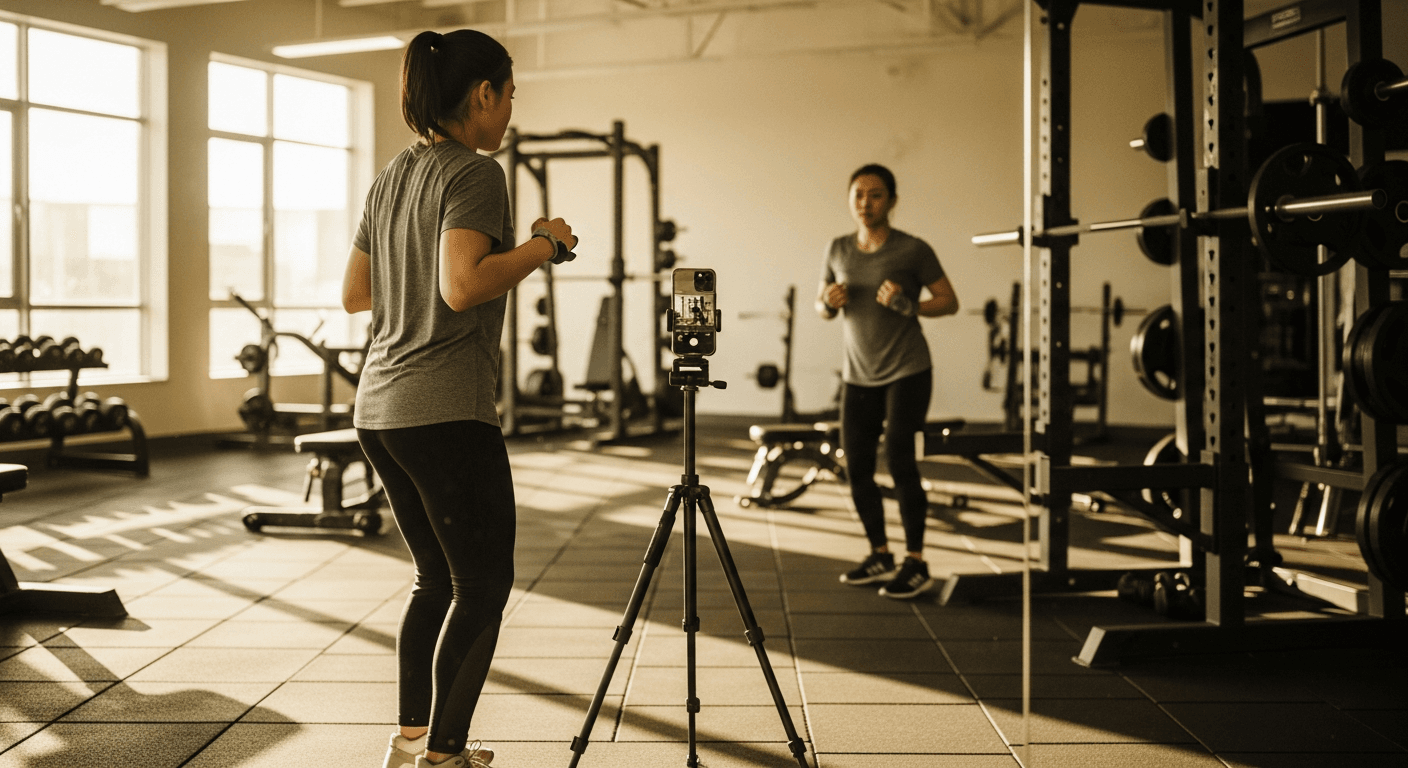
For previous generations, going to the gym was mostly a private habit. You showed up, did the work, and went home. For Gen Z, that model is essentially obsolete. The gym is now a stage, a personal brand, and a social currency. What happens between the squat rack and the locker room is only half the story. The other half happens on TikTok, Instagram Reels, and YouTube Shorts.
This shift isn't just cultural noise. It's reshaping how young people relate to their bodies, how they choose what to eat and supplement, and what they consider worth doing at all if it can't be filmed or shared.
When Fitness Becomes an Identity, Not Just a Habit
Gen Z doesn't just work out. They are people who work out. That distinction matters more than it sounds. Research on adolescent identity formation consistently shows that this generation attaches personal values and self-concept to the communities and aesthetics they consume online. Fitness content isn't just instructional. It's aspirational, tribal, and deeply tied to self-presentation.
Platforms like TikTok have made it easy for a 16-year-old to build a full gym persona with nothing more than a phone and a pre-workout. Hashtags like #GymTok and #FitTok have accumulated billions of views. The algorithm rewards consistency, aesthetics, and relatability over credentials. That means the most influential voices in young people's fitness lives often aren't certified coaches or sports scientists. They're peers with good lighting and a consistent upload schedule.
This has real consequences for how fitness behaviors spread. A study published in JAMA Pediatrics found that adolescents who regularly consumed fitness content on social media were significantly more likely to adopt new exercise behaviors within weeks of exposure. The platform is, functionally, the most powerful fitness coach most teenagers will ever encounter.
One Surprising Upside: Steroid Use Is Falling
Here's something that might surprise you. Despite the intense pressure to look a certain way online, steroid use among adolescents in the United States has been declining. Data from the Monitoring the Future survey, which tracks drug use trends among American youth, shows that anabolic steroid use among 10th and 12th graders has dropped meaningfully over the past decade. In the early 2000s, roughly 2.5% of 12th-grade males reported using steroids. Recent figures put that number well below 1%.
Researchers and public health officials point to several factors, but social media's fitness culture appears to play a real role. The dominant aesthetic on platforms like TikTok leans toward "natural" physiques, functional strength, and lifestyle consistency rather than the extreme mass that characterized steroid-associated body ideals of the 1990s and early 2000s. Influencers who explicitly brand themselves as "natty" (natural) draw enormous followings. The cultural pressure, at least online, has shifted.
What's filling the gap left by steroids isn't nothing. It's legal supplements, and creatine is leading that charge.
Creatine Is Having a Moment With Teenagers
Creatine monohydrate is one of the most extensively researched sports supplements in existence. Decades of studies support its effectiveness for improving strength output, muscle recovery, and short-burst athletic performance. For adults, the safety profile is well established. For teenagers, the picture is murkier, and that's where the conversation is getting more complicated.
Sales data from the US supplement industry show that creatine purchases have risen sharply among consumers under 25 in recent years, driven largely by influencer recommendations on short-form video platforms. If you've spent any time on FitTok in the past two years, you've almost certainly seen a teenager explaining why creatine is "just like eating meat" or showing their morning supplement stack as part of a "get ready with me" format.
The enthusiasm is understandable. Creatine is legal, inexpensive (a standard 500g container runs $20 to $30 at most US retailers), widely available, and genuinely effective. For a young person who wants visible results and feels pressure to perform or look a certain way, it's an appealing shortcut that doesn't come with the criminal or health risks of steroids.
But pediatric health organizations have flagged legitimate concerns. The American Academy of Pediatrics has recommended against routine creatine use in adolescents under 18, citing the fact that their bodies and hormonal systems are still developing. The long-term effects of chronic creatine supplementation on adolescent kidneys, muscle development, and hormonal balance haven't been studied with the same rigor as adult populations. Creatine alters intracellular water retention and affects phosphocreatine metabolism. In a body that's still growing, those effects may not behave identically to how they do in adults.
There's also the question of dosing and source quality. A teenager who learns their supplement routine from a 60-second TikTok video isn't getting clinical guidance. They may be taking higher doses than necessary, stacking products without understanding interactions, or purchasing from brands without reliable third-party testing. If you're navigating the supplement space yourself, understanding why supplement research is often misleading is a useful starting point before trusting any single source.
Short-Form Video Is the New Gym Coach
The mechanics of how Gen Z learns to train deserve more attention than they typically get. Traditional fitness education, gym classes, school sports programs, basic PE instruction, has contracted in many countries. In the US, fewer than half of high school students meet the recommended levels of physical activity. Into that gap, short-form video has stepped with remarkable efficiency.
A teenager today can learn a Romanian deadlift from a 45-second clip, follow a 12-week program from a creator they've never met, and buy every product their favorite influencer uses within ten minutes of watching a single video. The content pipeline from "I saw it online" to "I'm doing it in the gym" has collapsed to almost nothing.
That's not entirely a bad thing. Access to basic, accurate fitness information has never been higher. A first-generation gym-goer with no family context around exercise can find solid instruction without paying for a personal trainer. Platforms have, in some real ways, democratized fitness knowledge.
The problem is that algorithms optimize for engagement, not accuracy or safety. A video showing a dramatic physical transformation will almost always outperform one explaining progressive overload or the importance of sleep for muscle recovery. Sensationalism travels faster than nuance. And for teenagers who haven't yet developed strong critical filters, the line between "this works" and "this person says it works" can get dangerously blurry.
It's worth noting that the same digital habits shaping teen fitness culture have broader health implications. Teen sleep disruption linked to late-night screen time is already a documented public health concern, and sleep is one of the most critical variables in any young person's physical development and recovery.
What Parents, Coaches, and Young Adults Should Actually Do
If you're a parent watching your teenager build a supplement stack based on influencer content, the goal isn't to shut down their interest in fitness. Their enthusiasm for exercise is genuinely positive, especially in an era of rising adolescent sedentary behavior. The goal is to redirect information sources and add some friction between impulse and purchase.
- Ask where the advice is coming from. Not to challenge your teen, but to model the habit of checking credentials and looking for research backing.
- Get a sports medicine or pediatric physician involved before any supplement routine starts. This is especially true for creatine and any product marketed for performance or body composition.
- Focus on food first. Most teenagers don't need supplements to build strength. They need protein, sleep, and consistent training. High-quality protein doesn't have to be expensive, and building a food-first habit early creates a much stronger foundation than any supplement stack.
- Talk about the identity layer. Understanding that fitness content is designed to make you feel like you're missing something is genuinely useful. Influencers earn revenue when you buy. That doesn't make all their advice wrong, but it's a filter worth applying.
For young adults in their early 20s navigating this space themselves, the research on training is actually quite encouraging. Consistency over years matters far more than optimizing any single variable. And if you're slightly older and wondering whether any of this applies to you, the evidence is clear: starting a serious fitness routine after 35 produces meaningful, measurable results that compare favorably with earlier starts.
Gen Z has brought enormous energy and creativity to fitness culture. The democratization of training knowledge, the declining stigma around going to the gym, and the genuine decline in steroid use among teenagers are real positives that shouldn't get lost in the criticism of social media. But energy without accurate information is where the problems start. The platform may be new. The need for good guidance isn't.
Nutrition choices matter just as much as training choices, and that's another area where influencer content often falls short on nuance. Understanding how to time your meals around your workouts is one of those foundational habits that pays dividends at any age, including during the years when social media is your primary source of fitness education.