

Two trajectories that tell the whole story
Eighteen months ago, Lululemon was one of the most admired brands in sportswear. Exceptional margins, a loyal community, the ability to charge premium prices that very few athletic apparel brands could match. In late 2023, the stock was near $500.
Key Takeaways
- Lululemon stock has dropped 70% from its 2023 peak
- Vuori reached a $5.5 billion valuation in 2026
- The global activewear market is worth $380 billion in 2026
Since then, it's lost roughly 70% of its value. CEO Calvin McDonald stepped down in 2024 amid criticism of a stale product pipeline and a slow response to rising competition. Financial results disappointed. Analysts started talking about saturation.
Meanwhile, Vuori, a California-based brand founded in 2015, closed an $825 million raise at a $5.5 billion valuation backed by General Atlantic and Stripes. An IPO is expected in 2026. The brand is planning 100+ international stores, with targeted expansion into Asia and Europe.
These two trajectories didn't cross by accident. They reflect a real shift in what consumers want when they buy athletic apparel.
The market is fragmenting
For over a decade, the activewear market was dominated by a handful of giants: Nike, Adidas, Under Armour at the performance end, Lululemon at the premium athleisure tier. That concentration is eroding.
Over the past 12 months, Alo Yoga and Vuori each gained roughly 1% market share. That sounds small, but in a market worth tens of billions of dollars, it's meaningful. Under Armour, meanwhile, is still losing ground despite years of attempted repositioning.
The pattern is clear: consumers are dispersing toward more specialized brands they perceive as authentic rather than corporate. They're looking less for an all-powerful name and more for a brand that actually fits how they live.
What consumers actually want
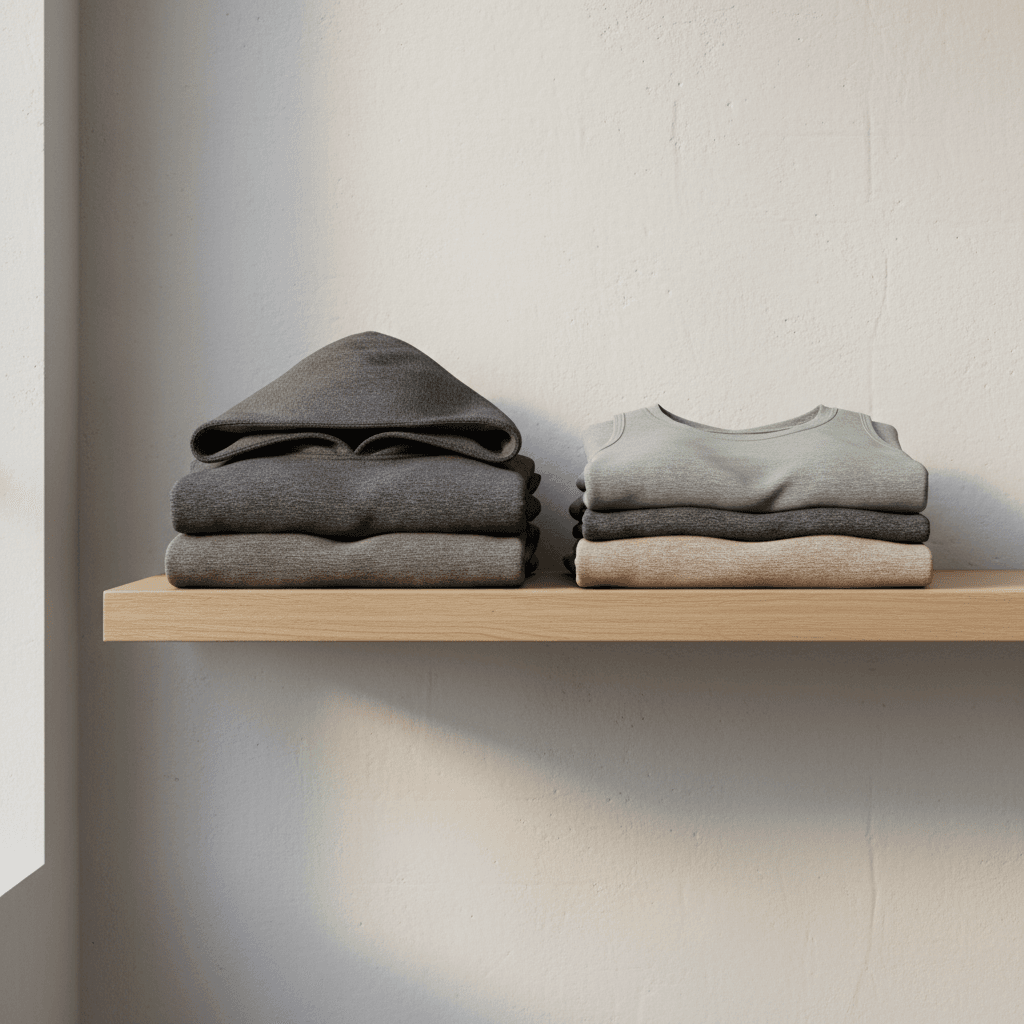
Vuori's market share gains have less to do with technical performance and more to do with what the brand represents culturally. Its clothes are designed to go from the gym to the street without looking like you tried too hard. The fabrics lean toward organic cotton and natural fibers. The aesthetic is California casual, not corporate technical.
That's exactly what post-pandemic consumers started gravitating toward. Hybrid work blurred the line between workout gear and daily wear. People want clothes that work in both contexts without making the transition obvious.
Lululemon used to own that space. The problem is that as the brand chased a broader market, it diluted what made it distinct. Too many SKUs, collaborations that lacked coherence, a visual identity that became generic. Its core customers started looking around.
How legacy brands are responding
The established players aren't watching this happen passively. The most visible response is the NikeSKIMS collaboration, launched in September 2025. By pairing Nike's technical performance credibility with SKIMS' fashion positioning and cultural influence, the brand directly targeted the premium segment Lululemon used to own. It's an implicit acknowledgment that technical performance alone isn't enough anymore: you need cultural relevance to go with it.
Adidas has made similar moves through fashion collaborations. Under Armour is still searching for its answer. The common signal: major brands understand that the next competitive battle isn't going to be won on fabric innovation. It's going to be won on whether people actually identify with what you represent.
What this means if you buy activewear
If you buy workout clothes regularly, you're probably already living this transition without having labeled it. The market is giving you more genuinely differentiated options built around specific lifestyles, and fewer reasons to stay loyal to one default brand.
The criteria for good activewear aren't purely technical anymore. Material durability, the ability to wear pieces outside the gym, whether the aesthetic actually reflects how you see yourself: these things are now fully part of the buying decision for a lot of people.
Also read: Vuori's $5.5B Valuation and HFA Show 2026 Signals for Gym Operators.
What Vuori's rise illustrates is that there's real appetite for brands that understand this. And that brands holding firm on technical performance as their only argument risk finding themselves increasingly out of sync with what their customers are actually looking for.