
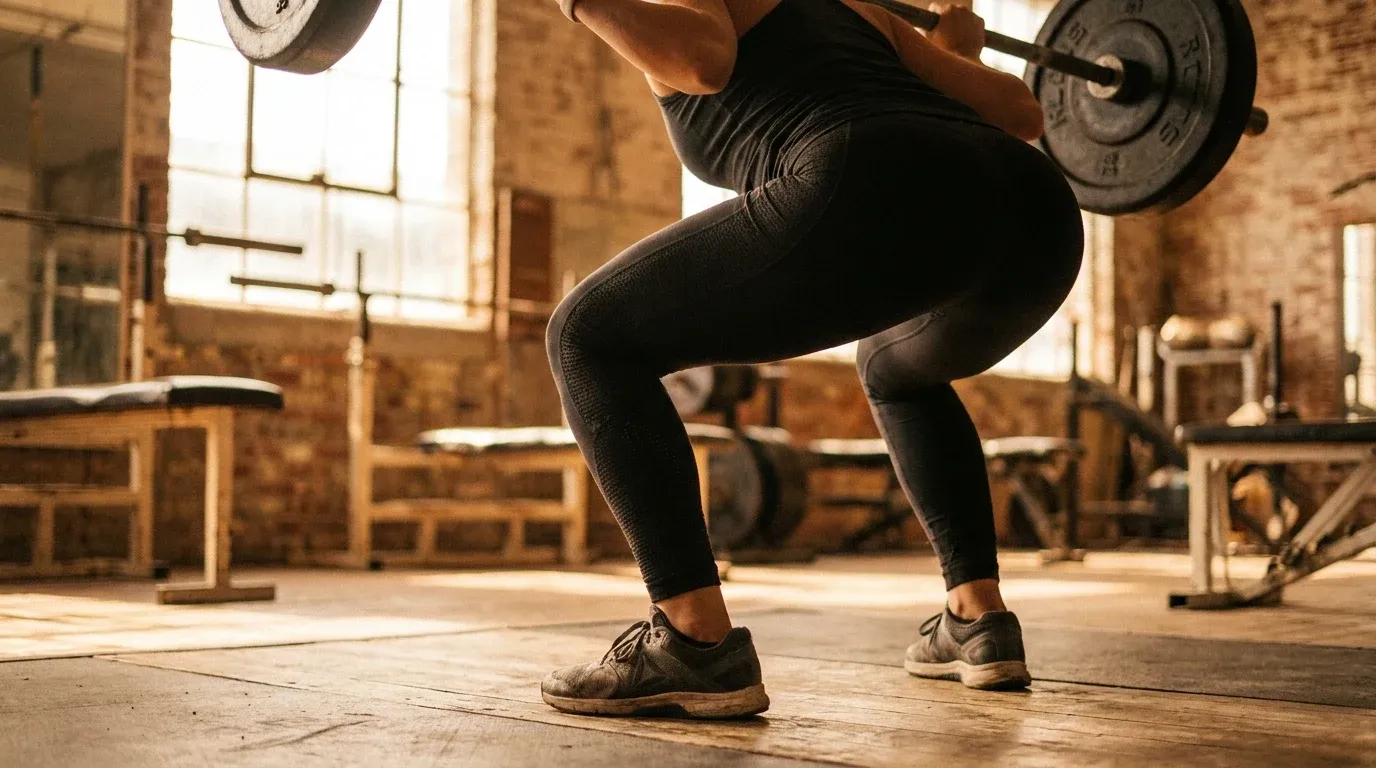
If you're a woman between 40 and 60, you're statistically likely to be doing almost everything for your health except the one thing that would help most. New research published in September 2026 confirms what trainers and sports scientists have suspected for years: there is a significant and persistent strength training gap among women in midlife, and it's not closing on its own.
The findings show that women in this age group are dramatically underrepresented in resistance training compared to younger women, older men, and virtually every other demographic studied. That gap has real consequences. Not abstract, long-term consequences. Consequences that begin accumulating in your forties and compound quickly.
What the Research Actually Found
The September 2026 study analyzed activity data from over 40,000 adults across multiple countries and found that fewer than 22% of women aged 40 to 60 met the resistance training guidelines recommended by major health organizations. Two sessions per week is the threshold. Less than one in five midlife women are hitting it consistently.
What makes this especially striking is the context. Aerobic activity rates among this same group are relatively healthy. Women in midlife are walking, cycling, attending fitness classes, and staying active in general terms. The gap isn't about physical inactivity. It's specifically about lifting, and the distinction matters enormously from a physiological standpoint.
Aerobic exercise and resistance training are not interchangeable. They produce different adaptations, affect different tissues, and address different risks. For women over 40, those risks are increasingly specific.
Why This Life Stage Changes Everything
The perimenopause and menopause transition, which typically begins in the early to mid-forties, triggers a cascade of changes that make resistance training more valuable than at almost any other point in a woman's life. Estrogen decline accelerates muscle loss. Bone density starts dropping at a faster rate. Metabolic rate slows. Fat distribution shifts toward the abdomen and visceral regions, increasing cardiovascular risk independent of total body weight.
Muscle tissue is metabolically active. It burns calories at rest, supports insulin sensitivity, and provides structural protection for joints and bones. As scientists have identified in recent research on why aging muscles lose strength, the neuromuscular changes that come with age aren't simply about mass. They involve how effectively your nervous system recruits muscle fibers. Resistance training directly targets that system in ways that no other form of exercise replicates.
Bone density is arguably the higher-stakes issue. Peak bone mass is set in early adulthood, and the rate of loss after menopause is steep. Resistance training is one of the most effective interventions available for slowing that loss. The mechanical load placed on bone during lifting stimulates remodeling. Walking doesn't produce enough force to achieve the same effect. Yoga doesn't either. This is specific to loading the skeleton with meaningful resistance.
The cardiovascular and metabolic benefits compound this. Research on the risks that exercise actually reduces for women consistently highlights strength training as protective against type 2 diabetes, hypertension, and all-cause mortality. For women navigating hormonal transition, that protective effect becomes more urgent, not less.
The Barriers Are Not What You Think
It would be easy to frame this as a motivation problem. It isn't. The September 2026 research specifically examined barriers, and the data doesn't support the idea that midlife women are uninterested in strength training. Interest is high. Follow-through is low. Those are different problems with different solutions.
The most commonly cited barriers, in order of prevalence in the research, were:
- Gym intimidation and cultural misfit: Weight rooms are still predominantly designed around and occupied by younger men. Equipment layout, music, culture, and even lighting all signal that this space wasn't built for a 52-year-old woman. That signal is received clearly.
- Time constraints in a specific form: Midlife women disproportionately carry caregiving responsibilities for both children and aging parents simultaneously, often while managing peak-career demands. The time issue isn't laziness. It's a structural reality with no simple fix.
- Lack of appropriate programming: Most strength training content targets young men building mass, or young women focused on aesthetics. Programs designed for hormonal context, joint considerations, recovery needs, and realistic time windows for women in their forties and fifties are rare and hard to find.
- Fear of injury or doing it wrong: Without guidance tailored to this life stage, many women worry about hurting themselves, particularly those managing existing joint pain or returning after long gaps in structured exercise.
None of those barriers are about effort or desire. They're about access, environment, and fit. That's a critically different problem.
What Actually Gets Women to Stick With It
The same research that documented the gap also tracked what worked among women who did maintain consistent strength training. A few patterns emerged clearly.
Professional guidance made a substantial difference, but only when it was genuinely tailored. Generic personal training didn't show strong retention effects. What worked was programming that accounted for where a woman actually was: her hormonal status, her recovery capacity, her schedule, and her goals. What makes a trainer-client partnership actually work at this life stage goes well beyond exercise selection. It's about whether the professional understands the context.
Home-based and time-efficient formats also showed strong adherence data. Sessions of 30 to 40 minutes, two to three times per week, produced meaningful results and were sustained at much higher rates than longer gym-based protocols. The idea that you need an hour in a weight room four days a week to get real benefits from resistance training isn't supported by evidence, and that misconception is probably keeping a lot of women from starting at all.
Group settings with women in the same life stage consistently outperformed solo training in retention. This isn't surprising. Social accountability works, and so does the specific experience of training alongside people who understand the same physical and logistical realities you're navigating.
Recovery also emerged as a meaningful differentiator between women who stayed consistent and those who dropped out. Midlife women who were given explicit guidance on recovery, including sleep, nutrition, and managing training load, showed significantly better long-term adherence. This matters because recovery capacity does shift with hormonal changes, and programs that ignore that fact will produce more soreness, more fatigue, and more dropout.
Rethinking What Strength Training Looks Like at This Stage
Part of what's failing midlife women is the image of strength training itself. The dominant cultural picture involves heavy barbells, loud gyms, and a level of intensity that signals this isn't for you. That picture is misleading and counterproductive.
Effective resistance training for a 45-year-old woman doesn't have to look like competitive powerlifting. Resistance bands, dumbbells, bodyweight progressions, and cable machines all provide adequate loading stimulus when programmed correctly. Intensity matters more than equipment. Progressive overload, the gradual increase in challenge over time, is the active mechanism regardless of what tool you use to create it.
It's also worth being clear about what "hard enough" means at this stage. Research on gentle versus moderate intensity exercise has complicated the old assumption that harder is always better. For midlife women managing stress, sleep disruption, and hormonal fluctuation, chronic high-intensity training can backfire. The goal is sufficient stimulus with adequate recovery. That's not an excuse to go easy. It's a more precise target than simply going hard.
Sleep quality is one factor in this equation that often gets overlooked. Poor sleep impairs muscle protein synthesis and slows recovery from training. If you're not recovering between sessions, you're not adapting. That connection between sleep quality and training outcome is increasingly well-documented, and it's particularly relevant for women whose sleep is being disrupted by perimenopause symptoms.
The Window Is Open. It Doesn't Stay Open Forever
There is no age at which strength training stops working. Research consistently shows benefits well into the seventies and eighties. But the argument for starting in midlife isn't just that it's better late than never. It's that the forties and early fifties represent a particularly high-leverage window, one where the hormonal environment is shifting and the protective adaptations from resistance training are most urgently needed.
Bone lost in the decade after menopause is very difficult to recover. Muscle mass that's allowed to decline significantly becomes progressively harder to rebuild. Metabolic shifts that go unaddressed compound over time. The research isn't suggesting you missed your chance if you're 55 and haven't lifted in years. It's saying that if you're in that window right now and not strength training, you're leaving your most powerful available intervention on the table.
The barriers are real. The gap is real. But so is the evidence for what closes it. You don't need a perfect program or a perfect gym. You need enough load, applied consistently, with enough recovery to adapt. That combination is more accessible than the fitness industry has made it appear.