
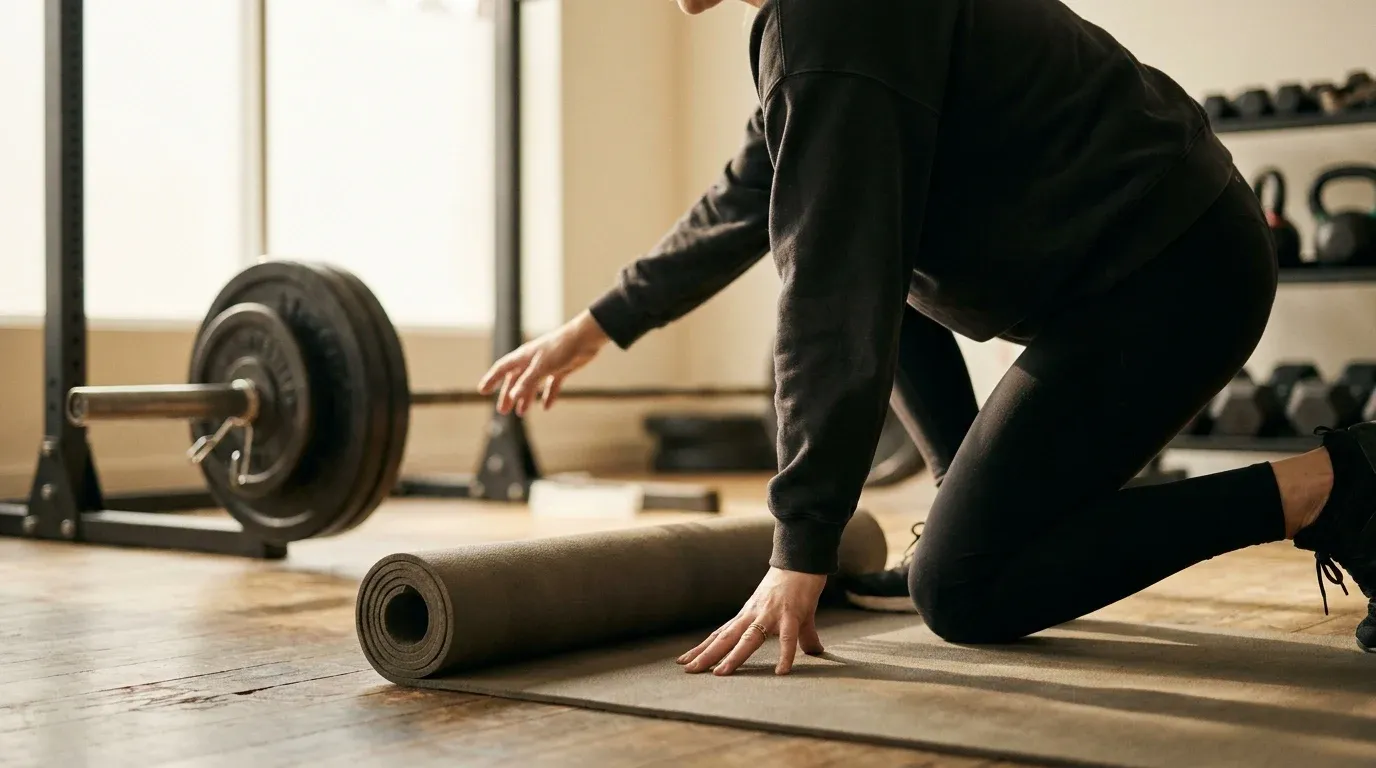
Most people find a training style they enjoy, stick with it for months, and then wonder why their progress has stalled. The squat numbers stop climbing. The yoga class feels easy. The HIIT sessions don't leave them breathless anymore. That frustration has a name: adaptation plateau. And the fix is simpler than most coaches make it sound.
Your body is extraordinarily efficient at solving problems it's seen before. Give it the same stimulus week after week and it stops treating that stimulus as a challenge. It treats it as the new normal. The solution isn't to train harder within the same modality. It's to introduce problems your body hasn't learned to solve yet.
Why Staying in One Lane Slows You Down
Specialization has real value in competitive sport. But for the majority of gym-goers training for health, body composition, and general performance, locking into a single modality is one of the most common mistakes made. The physiological principle behind this is called the SAID principle: Specific Adaptation to Imposed Demands. Your body adapts specifically to what you repeatedly ask of it.
That adaptability is a feature, not a bug. But it means that once adaptation is complete, the same workout produces diminishing returns. Research consistently shows that training variety, when structured intelligently, stimulates broader neuromuscular recruitment, taxes different energy systems, and forces the body to rebuild itself in new ways.
The goal isn't randomness. It's strategic variety. There's a meaningful difference between throwing workouts at the wall and deliberately pairing strength training with disciplines that address your specific weak links.
What Pilates and Yoga Actually Do for Strength
Strength training tends to get all the credit for building a resilient body. But the limiting factor in most people's lifting isn't muscle size. It's mobility and joint stability. You can't express strength through a range of motion you don't have access to. This is where Pilates and yoga earn their place in a serious training program.
Pilates specifically targets deep stabilizing muscles. the transverse abdominis, multifidus, and hip rotators. These aren't muscles you can load heavily with a barbell, but they govern how safely and efficiently you transfer force during compound lifts. Weak stabilizers mean energy leaks, compensation patterns, and eventually injury.
Yoga addresses soft tissue mobility and thoracic spine extension, both of which are chronically limited in people who spend time at a desk or who have trained heavily in the sagittal plane. A study published in the Journal of Strength and Conditioning Research found that regular flexibility work improved squat depth and hip function in recreational lifters. Better positioning means more muscle recruitment and less stress on passive structures.
Adding one or two Pilates or yoga sessions per week to a strength block isn't a detour. It's maintenance work on the infrastructure your heavier lifts depend on. If you're unsure how to structure this kind of integrated approach, speaking with a specialist is worth considering. Which Type of Personal Trainer Do You Actually Need? breaks down the different coaching models and helps you identify the right fit for your goals.
How HIIT Improves Your Strength Training (Not Just Your Cardio)
There's a persistent belief in strength training circles that cardio is the enemy of gains. This idea is outdated. The interference effect. the phenomenon where endurance work blunts hypertrophy. is real, but it's heavily context-dependent. The dose, timing, and type of conditioning work all determine whether it helps or hurts.
When HIIT is added strategically to a strength block, the evidence points in a clear direction: it improves aerobic capacity, which directly improves recovery between sets. If your heart rate drops faster after a heavy set of deadlifts, you can train at higher quality for longer. That translates to more total volume, which is the primary driver of muscle growth over time.
A meta-analysis reviewing concurrent training protocols found that two HIIT sessions per week, placed on days separate from primary strength sessions, produced no meaningful interference with strength or muscle gain while significantly improving VO2 max and work capacity. That's a straightforward trade-off in your favor.
The key is keeping HIIT sessions short and genuinely intense. Twenty minutes of real effort. not moderate-paced treadmill work. is enough to drive the cardiovascular adaptations you're looking for without accumulating the recovery debt that compromises your lifting sessions.
The Underrated Role of Psychological Variety
Physical adaptation is the obvious argument for mixing modalities. But there's an equally important one that doesn't get discussed enough: burnout prevention.
Training adherence is the single most important variable in long-term fitness outcomes. Not periodization. Not macros. Not the specific rep range you're working in. Whether you actually show up consistently over months and years matters more than any program variable. And monotony is one of the most reliable predictors of dropout.
Research on exercise psychology shows that perceived variety is strongly associated with intrinsic motivation. When you enjoy what you're doing. when it feels genuinely different and engaging. you're more likely to sustain it. A yoga session doesn't feel like a compromise from lifting if you understand it's actively making your lifting better. The mental framing changes the experience.
Rotating modalities also gives your nervous system and connective tissue periods of lower systemic stress while keeping you active. This matters especially if you're returning to structured training after a break. The Smartest Way to Return to Training After a Break outlines how to reintroduce volume safely without going straight back to where you left off.
How to Build a Mixed-Modality Week That Actually Works
The practical challenge is structuring variety without creating chaos. Here's a framework that works for most intermediate gym-goers training four to five days per week:
- Two to three strength sessions per week built around compound movements: squat, hinge, press, pull. These are your primary sessions and should be prioritized.
- One to two HIIT sessions on separate days or at least six hours after a strength session. Keep them under 25 minutes and truly high-effort.
- One Pilates or yoga session on a recovery day. This doubles as active recovery and mobility work. It shouldn't feel like a workout in the traditional sense. it should feel like maintenance.
This kind of structure respects the principle of recovery while attacking multiple physiological systems. You're not doing less strength work. You're doing the same amount of quality strength work with better infrastructure around it.
One important note: mixed-modality training doesn't mean jumping between programs every few weeks. You still need progressive overload in your primary training. The variety comes from the complementary work surrounding it, not from constantly changing your main lifts.
Special Populations Worth Mentioning
The argument for mixed-modality training applies broadly, but it's especially relevant for specific groups. Postpartum individuals, for example, often return to training with significant core dysfunction and pelvic floor considerations that make a purely strength-based return both ineffective and potentially harmful. Coaching Postpartum Clients: A Practical Guide addresses how to navigate that re-entry thoughtfully.
Older adults managing joint issues or limited range of motion also benefit disproportionately from integrating Pilates and yoga with resistance training. The stability and mobility gains that younger lifters take for granted become primary training objectives in this population, and they directly support the ability to keep lifting safely into later decades.
People with limited training history may also benefit from techniques that allow meaningful training stimulus without heavy loading. BFR Training: Who Should Actually Use It? covers one such approach that's gaining evidence-based traction as a complement to conventional resistance training.
The Long Game
Fitness is a decades-long project. The training that serves you best at 35 isn't the one that burns the most calories in October. It's the one you're still doing at 45 and 55, with a body that works the way you need it to.
Mixing modalities isn't a soft option or a compromise. It's the most efficient path to durable, compounding progress. Different disciplines speak to different systems: strength builds muscle and bone density, HIIT builds cardiovascular reserve, Pilates and yoga build the structural integrity that holds everything together.
Your body doesn't care about the label on the class. It responds to novel demands, adequate recovery, and consistency over time. Give it all three, and the plateau you've been stuck at starts to look a lot more like a launching pad.