
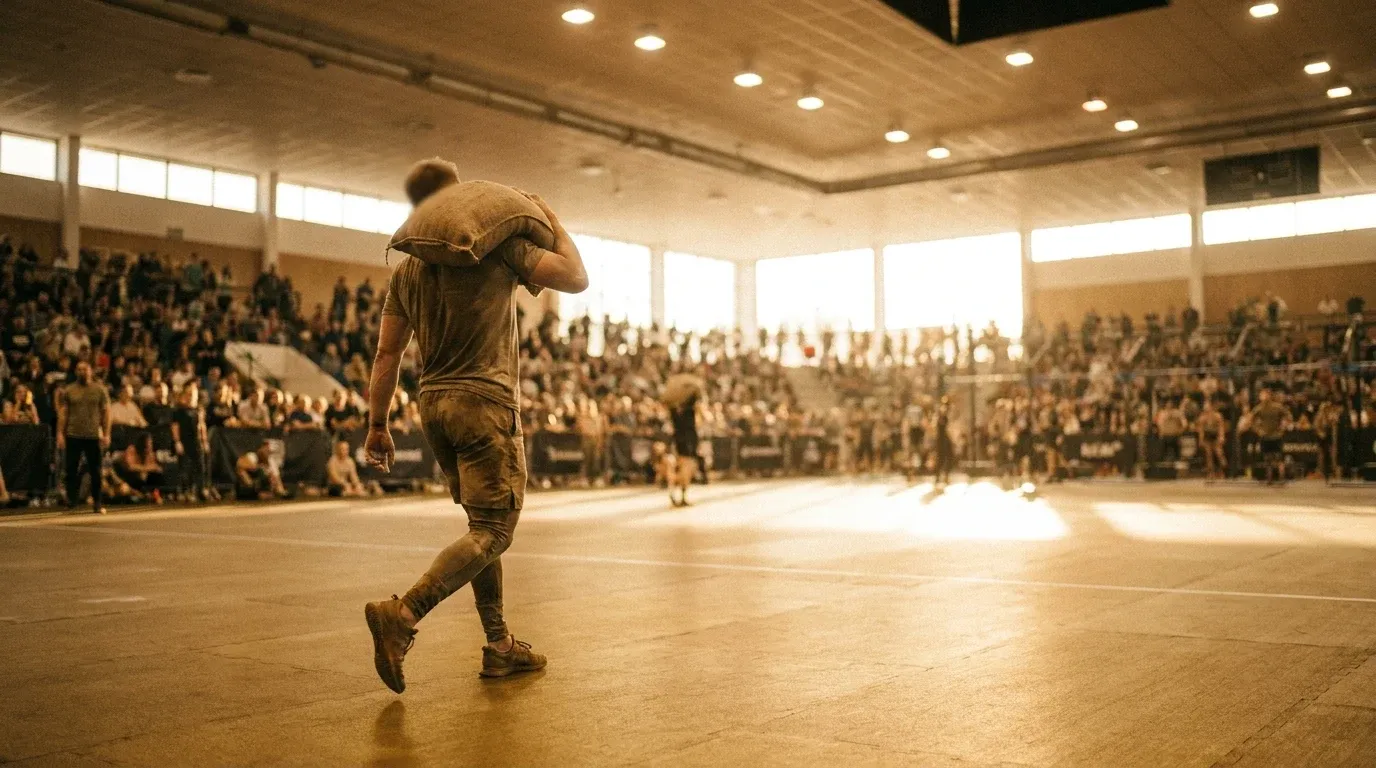
HYROX has gone from a niche European fitness concept to one of the fastest-growing competitive sports on the planet. And now, its organizers aren't shy about where they want to end up: the Olympic Games. With Brisbane 2032 on the horizon, the question isn't just whether HYROX can get there. It's what happens to the sport if it does.
The Numbers That Got Everyone's Attention
The growth figures are hard to ignore. HYROX went from 570,000 registered athletes to 1.5 million in a single competitive season. That's a 163% increase, the kind of trajectory that makes international sports bodies take notice. Most sports spend decades trying to build that kind of participation base. HYROX did it in twelve months.
Organizers are now projecting more than 2.5 million athletes competing worldwide by 2026. Boston alone is running four consecutive days of competition just to absorb demand. That's not a fitness trend. That's a sport scaling at a rate that very few organizations in any category have managed.
For Olympic consideration, global participation is one of the core benchmarks the International Olympic Committee evaluates. HYROX's numbers now put it in the same conversation as sports that took generations to reach this scale. Whether that's enough is a different question entirely.
What Olympic Inclusion Actually Requires
Getting into the Olympics isn't just about popularity. The IOC has a structured pathway that demands institutional maturity, and HYROX, for all its momentum, is still building the scaffolding that established sports have had for decades.
Here's what the road to Olympic status typically involves:
- Recognition by the IOC: A sport must first receive official IOC recognition, which requires demonstrating governance, global reach, and adherence to the Olympic Charter.
- An international federation: HYROX would need a recognized international governing body. Right now, the sport is largely controlled by its private organizer, which is an unusual structure by Olympic standards.
- Anti-doping compliance: Full integration with the World Anti-Doping Agency (WADA) framework is non-negotiable. HYROX events would need to implement testing protocols that meet WADA standards across all competitive levels.
- National federation structures: Individual countries would need to develop their own governing bodies affiliated with the international federation, something that doesn't exist at meaningful scale yet.
- Standardized formats: The current HYROX race format would almost certainly need to be modified or fixed for Olympic competition, with defined athlete qualification pathways, weight categories or divisions, and broadcast-friendly structures.
None of these are insurmountable. But each one represents a significant organizational undertaking, and several of them directly affect how everyday athletes experience the sport.
What Changes for Competitive Athletes
If you're currently competing in HYROX, Olympic inclusion could reshape your experience in ways that go well beyond prestige. The shift from a privately run global event series to an Olympic sport brings structural changes that filter down to every level of competition.
Standardization is the biggest one. Right now, part of HYROX's appeal is its consistency. Every race uses the same format: eight one-kilometer runs separated by eight functional fitness stations. It's clean, repeatable, and easy for athletes to train toward. Olympic formats tend to compress and simplify for television and arena audiences, which could mean shorter formats, different station configurations, or entirely new divisions.
Anti-doping integration would also change the competitive landscape. For elite athletes, this is straightforward. For the amateur majority who make up most of HYROX's participation base, it introduces a layer of bureaucracy and scrutiny that the sport currently doesn't have. Supplements that are legal today could become complications tomorrow. This isn't speculation. It's the standard trajectory for any sport entering the WADA ecosystem.
For a sense of how community-built competition works at its best before institutional pressure sets in, stories like two strangers who met once and then won their age division at HYROX Toronto capture something that formal Olympic structures tend to flatten over time.
The Identity Question
HYROX built its brand on accessibility. You don't need to be a professional athlete to race. Age group categories, the doubles format, and the mixed-ability environment are core to why millions of people sign up. The sport positioned itself as the fitness race for everyone, and that positioning worked.
Olympic sports don't stay that way. The elite tier gets elevated, funding flows toward national programs, and the gap between recreational and competitive participants widens. Look at any sport that made the Olympic transition in the modern era and you'll find the same pattern. Grassroots participation often grows, but the community feel of the early years rarely survives intact.
This matters because HYROX's growth didn't come from elite athletes. It came from people who run half-marathons on weekends, who lift three times a week, who want a structured competitive goal that doesn't require being a full-time athlete. Research consistently shows that functional fitness formats with clear benchmarks drive long-term exercise adherence, and even modest strength training commitments produce measurable longevity benefits. HYROX tapped into that population. Olympic restructuring risks alienating exactly the people who built the sport's numbers.
The Private Ownership Problem
There's a structural issue that doesn't get discussed enough. HYROX is privately owned and operated. The Olympic movement doesn't accommodate private corporate control of a sport's governance. If HYROX wants Olympic status, ownership and governance would need to be separated, at least at the federation level.
That's a significant shift. The current model gives HYROX's organizers direct control over formats, pricing, venue selection, and brand standards. An IOC-recognized international federation operates differently, with member national federations having voting rights and governance responsibilities. The commercial interests that have driven HYROX's rapid growth would need to coexist with the kind of democratic governance structure the IOC requires.
This isn't impossible. Several professional sports leagues operate alongside Olympic federations with some success. But it requires a deliberate legal and organizational restructuring that takes years, not months.
The 2032 Timeline Is Tight
Brisbane 2032 is the stated target. That's roughly seven years away, and the IOC's process for adding sports to an Olympic program is not fast. The IOC typically finalizes the sports program for an Olympics several years before the Games themselves, meaning a realistic deadline for HYROX to have IOC recognition, an established international federation, and demonstrated anti-doping infrastructure is closer to 2028 or 2029.
That's an aggressive timeline given where the sport's governance currently stands. It's not impossible. Skateboarding went from counterculture to Tokyo 2020 in a compressed window. Sport climbing made a similar jump. But both of those sports had international federations with established governance before the Olympic push began.
HYROX is still in the process of building that infrastructure while simultaneously managing explosive participation growth. Running four consecutive days of competition in Boston to meet demand is impressive. But it also signals an organization that's managing growth operationally, not yet one that's built the governance architecture that Olympic inclusion requires.
What This Means for You Right Now
If you're an active HYROX competitor, the Olympic conversation is largely happening above your level. But the decisions made in the next three to five years will shape what the sport looks like when you're racing in it.
The best-case scenario is that Olympic inclusion expands prize money, coaching infrastructure, and global visibility without dismantling the amateur-friendly format that makes the sport work for most people. That would mean more athletes, better events, and a competitive pathway for those who want to pursue elite status without stripping out the age-group divisions and community-driven race culture that define the current experience.
The realistic scenario is more complicated. Structural changes required for Olympic compliance will reshape how HYROX is organized, priced, and experienced at every level. The sport's identity as the fitness race for everyone will be tested. And the athletes who built HYROX's participation numbers, the recreational competitors training alongside the broader functional endurance boom reshaping competitive sport, may find themselves navigating a sport that looks different than the one they signed up for.
That doesn't make Olympic inclusion the wrong goal. It makes it a consequential one. The sport's organizers and the athletes who've driven its growth to 1.5 million competitors deserve a clear-eyed look at what they're asking for. Because the Olympics changes everything it touches, and HYROX is no exception.