
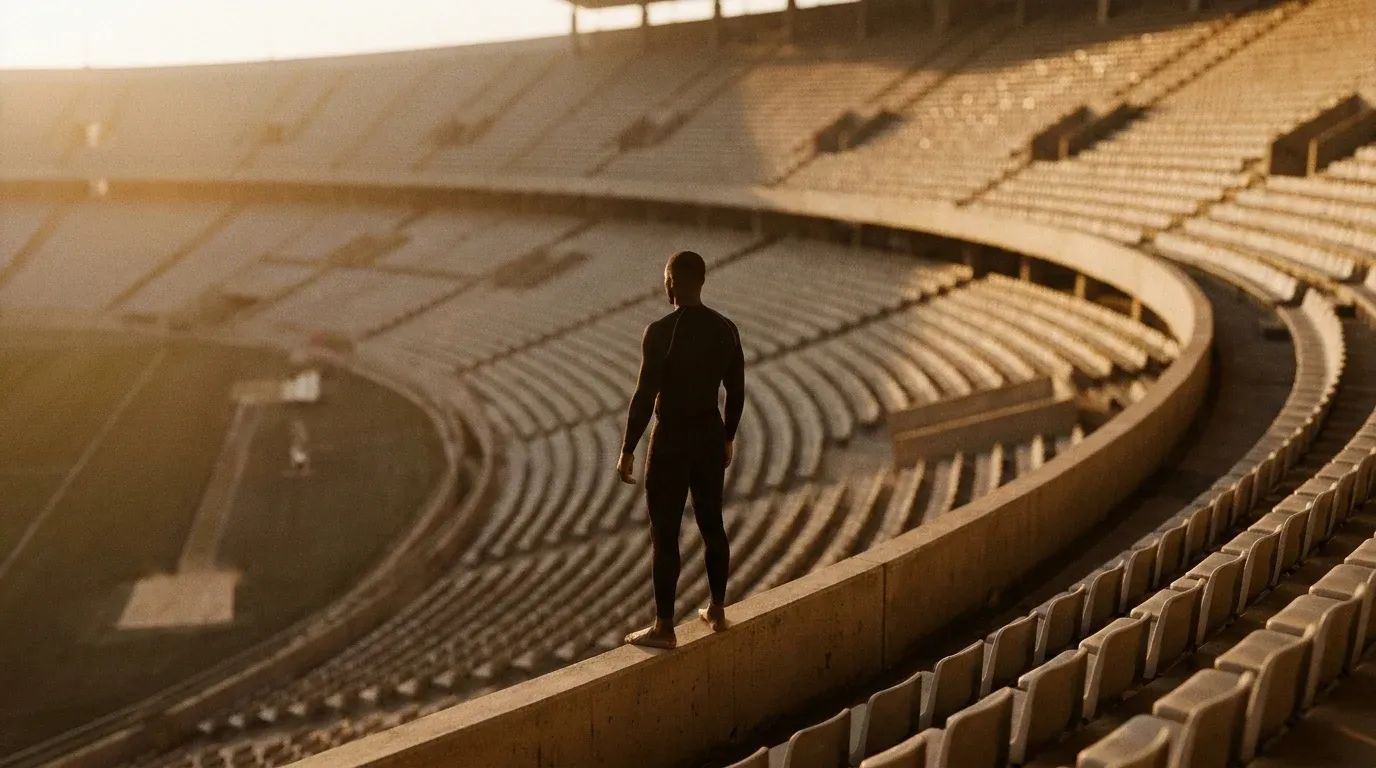
The partnership between HYROX and World Triathlon isn't just a branding exercise. It's the first formal step toward something that seemed almost unthinkable five years ago: HYROX as an Olympic sport. With the Brisbane 2032 Games on the horizon, that window is open. But getting through it will require far more than a handshake agreement with an IOC-recognized federation.
Here's what the deal actually means, what has to happen next, and what history tells us about whether HYROX can pull it off.
Why the World Triathlon Partnership Changes Everything
Before this deal, HYROX operated as a private commercial entity. That's a perfectly viable model for a fitness racing series. It's not a viable model for an Olympic sport. The IOC requires that any sport seeking inclusion be governed by an international federation that meets specific standards around anti-doping, athlete representation, and global reach.
World Triathlon is that federation. It's been IOC-recognized since 1989 and has the governance infrastructure HYROX has never needed to build. By aligning with World Triathlon, HYROX gains access to that infrastructure without starting from zero. As HYROX Joins World Triathlon: What It Means for You outlines, this is the architecture that could eventually bring fitness racing to the Olympic stage.
The word "eventually" matters here. A formal partnership doesn't equal automatic inclusion. It equals eligibility to begin the process. That process is long, politically complex, and unforgiving of half-measures.
The Governance Gap HYROX Has to Close
HYROX currently runs roughly 70 events per year across more than 25 countries. Its format is consistent: an 8km run broken into eight 1km segments, each separated by a functional fitness station. The sport has a genuine global fanbase and a recognizable competitive structure. That's a strong foundation.
But Olympic governance demands more than consistency. It demands transparency, accountability, and compliance with the World Anti-Doping Agency (WADA) code. Right now, HYROX's anti-doping framework is relatively limited compared to Olympic-standard sports. Scaling that up means implementing out-of-competition testing, whereabouts requirements for elite athletes, and a full appeals process. None of that is cheap or simple.
Beyond doping, the IOC looks at whether a sport has a functioning athletes' commission with real input into governance decisions. HYROX will likely need to formalize that structure. Athletes at the top of the sport need a seat at the table, not just a podium photo opportunity.
What Athlete Qualification Would Actually Look Like
Olympic qualification systems are among the most scrutinized elements of any sport's governance. The IOC wants to see clear, merit-based pathways that are accessible across different regions of the world. That means HYROX can't simply seed the Olympic field from its own global championships.
A workable model would likely involve continental qualifying events, a world ranking system built across approved HYROX competitions, and wildcard allocations for underrepresented regions. This mirrors how other individual endurance and fitness sports handle qualification. It also mirrors the kind of system you see developing in weightlifting, where the 2026 Weightlifting Worlds will serve as a critical qualifying event for LA 2028. HYROX would need to build something equally structured well before 2032.
The practical challenge is that HYROX's current competitive ecosystem is still maturing. The gap between elite professionals and strong age-groupers is real but not always formalized in the way Olympic selection demands. A clear professional tier with ranked results, standardized timing, and independent officiating will need to be codified.
Format Adaptations the IOC Will Almost Certainly Require
The current HYROX format is excellent for spectator engagement at large fitness events. It's less obviously suited to a two-week Olympic program where broadcast schedules are negotiated years in advance and venue logistics are relentlessly complex.
Expect pressure to shorten the competitive window. A full HYROX event takes most elite athletes somewhere between 55 and 75 minutes to complete. That's within Olympic broadcast norms for individual endurance events. But the venue requirements are significant. Eight functional fitness stations plus a running loop need substantial space and setup time.
The IOC has shown flexibility on format when a sport's governing body makes a strong case. Breaking's inclusion at Paris 2024, for instance, demonstrated that non-traditional sports can adapt to the Olympic context without losing their identity. HYROX has a similar opportunity, but it will almost certainly need to develop a streamlined "Olympic format" that preserves the sport's essence while fitting into a more constrained operational footprint.
Team or relay formats could also play a role. Mixed-gender relay events have become increasingly popular in Olympic programming. A HYROX relay format already exists at the event level and has proven popular, as seen in recent major competitions covered in the HYROX Abu Dhabi and Tampa weekend roundup. That format could serve as a strong case study for Olympic programming discussions.
What Triathlon's Olympic Journey Teaches HYROX
Triathlon's path to the Sydney 2000 Olympics is the most instructive precedent here. The sport was recognized by the IOC in 1994, giving it six years to build out its qualification systems, anti-doping compliance, and broadcast-ready format before Sydney. Those six years were not smooth. There were disputes over draft-legal versus non-draft racing, arguments about course length, and significant political tensions within the federation.
What triathlon got right was committing fully to IOC standards without trying to preserve every commercial quirk of its pre-Olympic format. The sport accepted constraints because the long-term benefits of Olympic inclusion. greater global participation, funding, and legitimacy. outweighed the short-term compromises.
HYROX's leadership will face the same trade-offs. The sport's commercial identity is built around mass participation, sponsor visibility, and a festival atmosphere. Olympic HYROX would look different from a Saturday morning event in a convention center. That tension is manageable, but it requires deliberate strategic thinking.
The good news is that HYROX has time. If Brisbane 2032 is the target, the sport has roughly seven years to build the necessary infrastructure. Seven years is tight by Olympic governance standards but not impossible. Triathlon did it in six.
The Commercial and Athlete Development Implications
Olympic inclusion would transform HYROX's economics. National federations would begin funding athlete development programs. Government sports agencies in Australia, the UK, Canada, and the US would have formal justification to support elite HYROX athletes. That funding flow doesn't exist in any meaningful way right now.
For athletes currently at the top of the sport, the calculus changes significantly. Right now, making a living as a professional HYROX competitor is genuinely difficult. Prize money exists but isn't consistently life-sustaining at the mid-elite level. Olympic recognition would attract the kind of sponsorship and national federation support that allows athletes to train full-time without supplementing their income through coaching or content creation.
The depth of training culture that's already building, illustrated by experiences like those documented in the HYROX Cruise's 14-hour training format at sea, suggests genuine commitment at the elite and semi-elite levels. That enthusiasm is the raw material Olympic development programs can work with. It needs structure, not inspiration.
What Needs to Happen Before 2032
The next few years will be decisive. Here's what the roadmap will likely require:
- Formal WADA code acceptance by HYROX under the World Triathlon umbrella, with out-of-competition testing implemented at the elite level.
- A global ranking system that recognizes results from approved international competitions and feeds directly into qualification pathways.
- An athletes' commission with genuine governance representation, not just advisory status.
- A defined Olympic format that fits within IOC operational and broadcast requirements, likely involving a condensed course or relay structure.
- Continental development programs to broaden the sport's competitive base beyond its current strongholds in Europe, North America, and Australia.
- An IOC recognition application through World Triathlon, which itself requires demonstrated global reach across a minimum number of countries and continents.
None of these steps is optional. The IOC doesn't make exceptions to its recognition criteria, and Brisbane 2032 organizing committee will face its own pressures around venue capacity and program size.
The Realistic Outlook
HYROX's Olympic ambitions are credible but not guaranteed. The World Triathlon partnership is a necessary first step, not a sufficient one. The sport has momentum, a passionate global community, and a format that genuinely tests human performance in a compelling way. Those are assets.
What HYROX still needs to demonstrate is institutional seriousness. Olympic sports are governed differently from commercial fitness series, and the transition requires accepting constraints that may feel uncomfortable for a brand built on energy and accessibility.
If HYROX's leadership treats the next seven years as a governance build project rather than a marketing opportunity, Brisbane 2032 becomes a realistic target. If they treat it primarily as a branding play, the opportunity will pass. The IOC has seen both approaches. It rewards only one of them.