
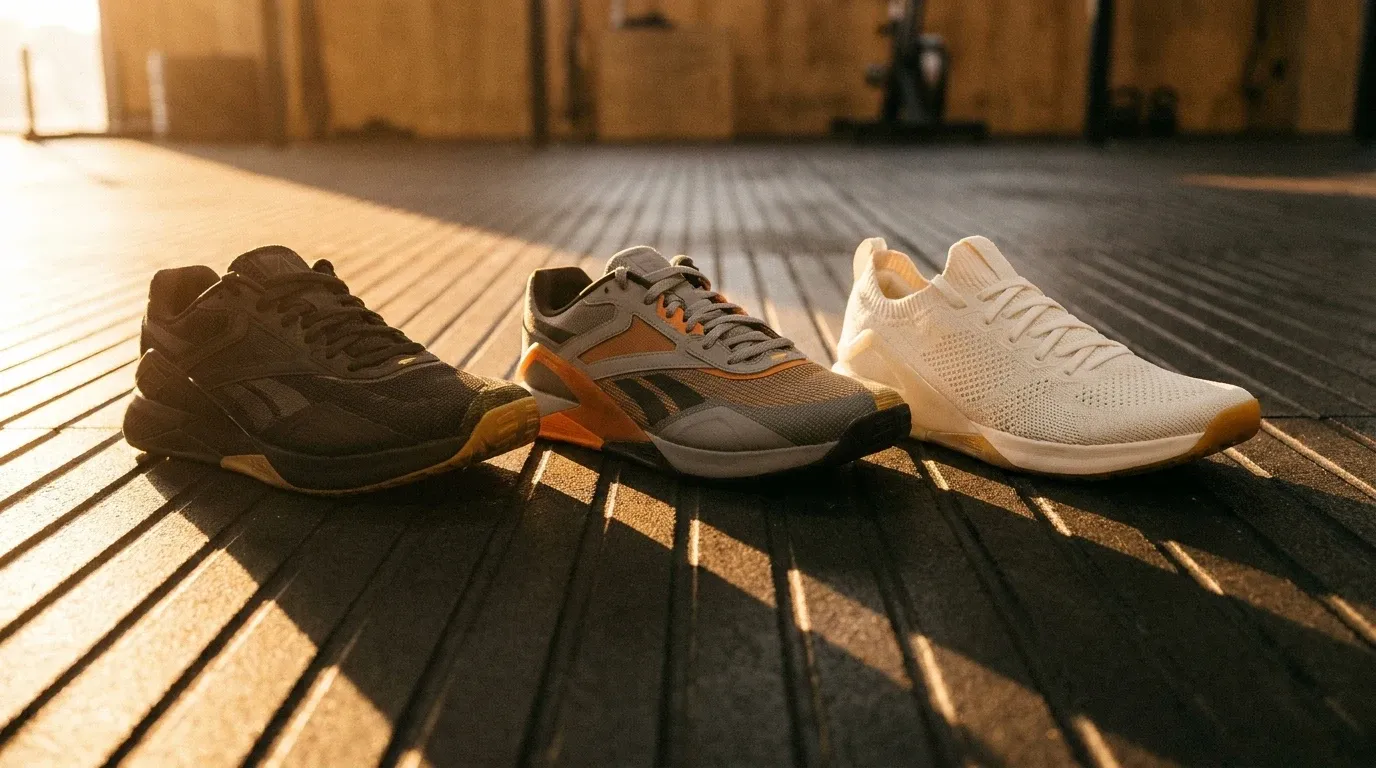
The marketing has arrived in full force. Walk into any major running retailer in 2026 and you'll see shelf space carved out specifically for "hybrid training" footwear, with Nike, Adidas, and Puma all positioning their latest models as the definitive HYROX shoe. The claims are bold. The colorways are aggressive. The price tags range from $160 to $230.
But HYROX athletes don't need a great-looking shoe. They need one that holds up through eight functional stations, eight running kilometers, and whatever the race floor throws at it. That's a genuinely difficult design brief, and no brand has fully cracked it yet. Here's how to cut through the noise and pick the right shoe for how you actually race.
Why 2026 Became the Year Every Brand Went HYROX
HYROX crossed 500,000 registered athletes globally in 2025, with particularly sharp growth in Asia, including South Korea, which now hosts multiple major events annually. Brands don't ignore numbers like that. Nike, Adidas, and Puma each expanded or repositioned hybrid training lines in 2026 with explicit HYROX marketing. Adidas pushed the Adizero line toward "functional fitness racing." Puma relaunched the Cell Regulate in a training-specific variant. Nike leaned into its Metcon heritage while adding more cushioning for longer-format events.
The commercial motivation is obvious. What matters to you is whether the product actually followed. In most cases, the answer is: partially.
If you're competing across different HYROX formats and want context on the demands each places on your gear, HYROX Ultimate, Fast, or Ultra: How to Train for Each Format breaks down the structural differences and how training load varies. Your shoe choice should reflect which format you're targeting.
The Two-Demand Problem No Marketing Addresses
A HYROX shoe has to solve two fundamentally different problems at the same time. First, it needs to carry you through 8km of cumulative running split across eight intervals. Second, it needs to function as a stable training flat across stations that include sled pushes, sled pulls, burpee broad jumps, rowing, ski erg, wall balls, sandbag lunges, and farmer carries.
Running shoes optimize for forward propulsion. Training shoes optimize for multi-directional stability. Most "hybrid" shoes on the market make a compromise and then market that compromise as a feature.
The honest framing is this: every shoe in this category will cost you something. The question is what you're willing to give up, and that answer depends on where you're targeting your finish time.
Cushioning Stack and Target Finish Time
Stack height is probably the most practically useful spec to understand before you buy. If you're targeting a finish time over 90 minutes, you're spending significant time on your feet, your running pace is moderate, and fatigue accumulates across the race. A higher cushioning stack (anything above 28mm in the heel) gives your joints more protection and reduces the muscular cost of each running kilometer. Comfort compounds over time.
Sub-75-minute competitors are a different case. At that pace, you're running your 1km splits at under 4:30 per kilometer or faster. A higher stack creates energy return lag and reduces ground feel, which matters when you're chasing splits that tight. Lower-stack, more responsive shoes with firmer foam profiles favor faster athletes because the shoe's mechanical behavior aligns with how those athletes move.
- Over 90 minutes: Prioritize cushioning stack of 28mm+ in the heel. Nike's Pegasus-derived hybrid construction and Adidas's Boost-cushioned variants perform well here.
- 75 to 90 minutes: Mid-stack shoes with moderate responsiveness are the sweet spot. Puma's Nitro foam platform sits in this range and has earned consistent praise for its balance.
- Sub-75 minutes: Lower stack, firmer heel, maximal ground contact feedback. Adidas's Adizero-influenced designs and Nike's Metcon base platform both target this range, though each makes different trade-offs.
None of these brands publish their HYROX-specific cushioning specs clearly. You'll need to cross-reference the base shoe specs from their standard product pages, then account for any sole modifications made in the hybrid version.
Lateral Stability: The Criterion Most Athletes Skip
Ask most athletes what they look for in a HYROX shoe and they'll describe a running shoe with slightly more grip. That framing misses what may be the most race-critical variable: lateral stability.
Sled pulls, farmer carries, and sandbag lunges all create significant lateral load. Your foot is pushing or bracing against forces that arrive from the side, not just forward and back. Running-specific shoes are engineered for sagittal plane movement. Their medial and lateral walls are often soft, the outsole taper narrows toward the midfoot, and the heel counter is built for heel strike, not lateral bracing.
When you're pulling a sled backward and your foot is loaded laterally across a smooth rubber floor, a running shoe will compress and shift in ways you won't notice on a training run but will absolutely feel during a race.
Puma's Nitro-based hybrid design currently has the widest outsole base of the three brands' flagship hybrid models, which translates to more stable surface contact. Nike's Metcon heritage gives it the most robust lateral wall construction. Adidas's hybrid models prioritize forward-motion efficiency and sacrifice some lateral rigidity as a result.
If sled stations are a known weakness for you, lateral stability should be weighted more heavily than cushioning in your buying decision.
Grip and Outsole Behavior on Functional Station Surfaces
HYROX race surfaces vary by venue. Some sled tracks are dry rubber. Others accumulate moisture from sweat or cleaning between heats. Burpee broad jump zones are often the same material but can get slick in packed heats. Wall ball stations put you in a wide squat stance on a surface that may not match your training gym.
Grip rubber compound matters more than outsole pattern in this context. Softer rubber compounds grip better on smooth rubber floors but wear faster and can feel draggy during running intervals. Harder compounds are more durable and roll more efficiently during running, but lose traction on wet functional surfaces.
All three brands use blended compounds in their hybrid outsoles, but the tuning differs. Adidas's Continental rubber partnership gives its models a grip advantage on smooth, potentially wet surfaces. Nike and Puma use proprietary compounds that perform well dry but test less favorably in wet conditions.
This brings up a point that's worth taking seriously before race day.
Test Under Race Conditions Before You Race
You shouldn't be making your final shoe decision based on how a shoe feels on a treadmill or a typical gym floor. HYROX race conditions are specific, and your shoe needs to be tested against them.
Simulate wet sled track conditions in training. Pour water on a rubber mat or find a gym with a wet sled setup and run your pushes and pulls in your race shoes. Do burpee broad jumps in them. Load a sandbag and lunge. If the shoe fails under those conditions, it'll fail during a race when it matters.
This applies regardless of which brand you choose. A $220 Adidas hybrid that hasn't been tested under friction and load is not a race-ready shoe. It's a purchase you haven't finished evaluating yet.
If you're still building toward your first event and want a structured approach to race preparation, How to Build Your HYROX Winter Training Block Before Season Starts gives you a practical framework for the full preparation cycle, including when to integrate gear testing.
The Brand Breakdown: Where Each Shoe Wins and Loses
Nike (Metcon-hybrid platform): Best lateral stability, solid grip on dry surfaces, well-suited to athletes who prioritize station performance. Cushioning stack is lower, making it a tighter fit for slower competitors or those expecting more than 95 minutes on the course. Priced around $160 to $185.
Adidas (Adizero hybrid and Bounce-cushioned variants): Best grip performance on wet surfaces, excellent forward propulsion efficiency, and the widest range of stack options across its lineup. Lateral stability is the trade-off. Best suited to competitive runners who can handle the speed-focused engineering. Priced around $170 to $220.
Puma (Nitro platform): Best outsole width and lateral contact area, strong balance of cushioning and response for mid-range finish times, and the most consistent positive feedback from athletes in the 75-to-90-minute bracket. Wet surface grip lags behind Adidas. Priced around $160 to $195.
No single shoe wins every category. That's the honest answer the marketing won't give you.
One Final Variable: Sock and Fit Interaction
Hybrid training shoes with wider toe boxes can shift inside a narrow performance sock during long runs. Conversely, a snug-fitting shoe may compress the foot uncomfortably during the extended squat position required for wall balls late in a race when feet have swollen slightly.
Test your race sock with your race shoe under full conditions. A shoe that fits perfectly fresh at 8am may behave differently at the sandbag lunge station in heat three of a morning wave. Fit is dynamic, not static.
As HYROX continues to grow globally and potentially moves closer to the Olympic program as outlined in HYROX's Olympic Bid: What the World Triathlon Deal Really Means, equipment standards will likely tighten and brand R&D will accelerate. The 2026 models are a significant step forward from where hybrid training footwear was in 2023. They're not the finished product yet.
Pick the shoe that matches your target time, your known station weaknesses, and your surface conditions. Test it properly. Then race it.