
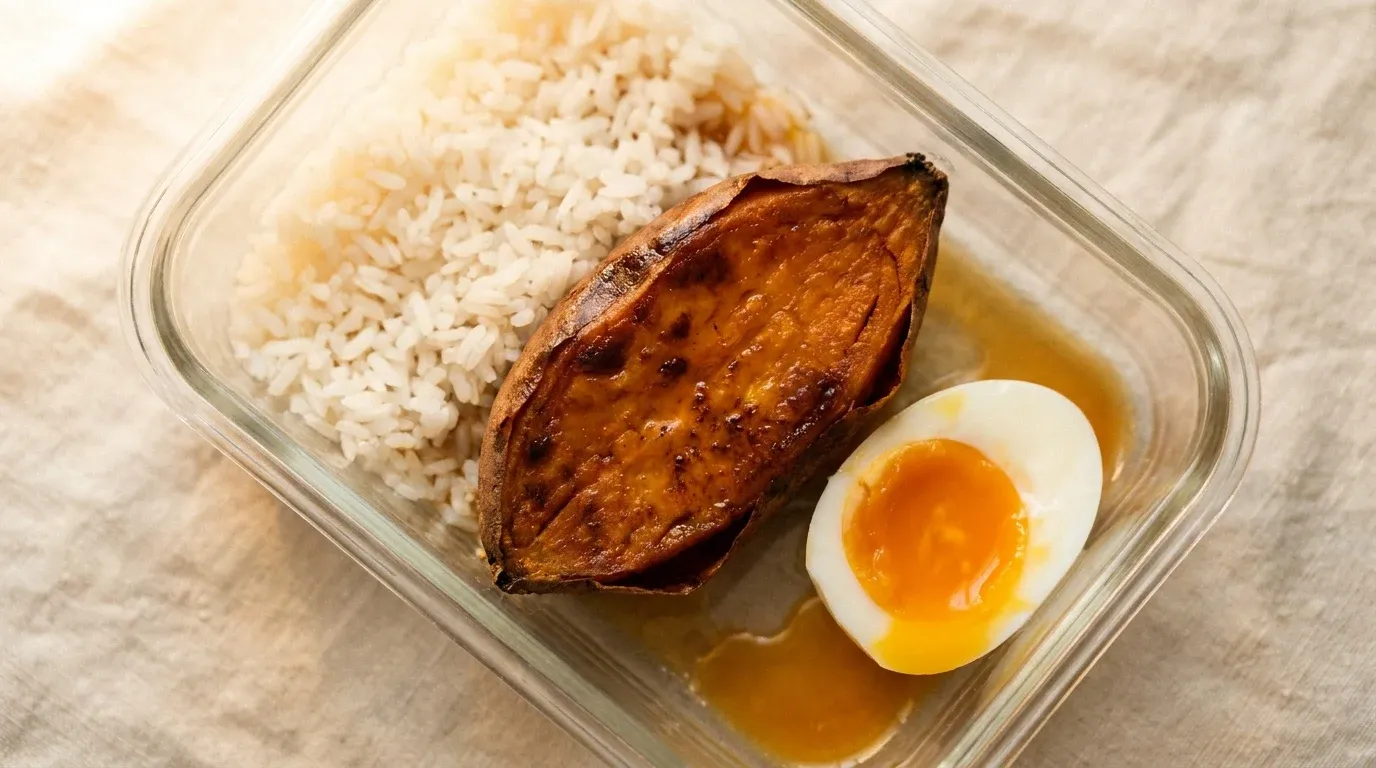
Most meal prep content treats food as a simple math problem. Hit your macros, portion your containers, repeat. What it rarely addresses is how the same bowl of rice or pasta can have a dramatically different effect on your blood sugar depending on how it was cooked, cooled, paired, and reheated. Those variables matter more than most people realize, and understanding them gives you a meaningful edge in managing energy, performance, and body composition.
This guide connects preparation choices directly to glycemic outcomes. No abstract nutrition theory. Just practical decisions you can make in your kitchen that change what your food actually does inside your body.
Cooking and Cooling Carbohydrates Changes Their Structure
When you cook starchy foods like rice, pasta, or potatoes and then allow them to cool, a structural change occurs at the molecular level. The starches partially retrograde, forming what's known as resistant starch. This type of starch passes through your small intestine largely undigested, behaving more like dietary fiber than a fast-burning carbohydrate.
The glycemic impact is significant. Research has shown that cooking, cooling, and consuming rice can lower its glycemic index by up to 40% compared to eating it freshly cooked and hot. Pasta and potatoes show similar effects. For anyone preparing meals ahead of time, this means your Sunday batch-cook session is doing more metabolic work than you thought, provided you're letting those carbohydrates cool properly before storing them.
The cooling process needs time. Refrigerating cooked rice or pasta for at least four hours produces a meaningful increase in resistant starch content. Overnight is better. The difference between eating pasta straight from the pot and eating it the next day from the fridge isn't just temperature. It's a fundamentally different food from a glycemic standpoint.
How You Pair Carbohydrates Determines the Blood Sugar Response
Eating carbohydrates in isolation produces a faster and higher blood glucose spike than eating them alongside protein or fat. This isn't a minor distinction. The mechanism is well-established: protein and fat slow gastric emptying, meaning the stomach releases food into the small intestine more gradually. That slower release translates directly into a blunted glucose response after the meal.
For meal prep, this has direct sequencing implications. If you're building lunch containers, a base of rice sitting alone until you add a protein source at lunchtime is not the same as prepping a combined meal where chicken, olive oil, and rice are portioned together from the start. Combining them in advance isn't just convenient. It's the correct metabolic configuration.
Practically, aim to pair every carbohydrate-dominant component with at least one protein and one fat source in the same container. A grain bowl with chickpeas, tahini, and roasted vegetables will produce a very different blood glucose curve than plain rice with a side of steamed broccoli. Same calories, different physiological outcome. If you're also thinking about how your morning meals shape your energy and hormonal environment throughout the day, Your Breakfast May Be Shaping Your Stress Levels All Day covers the downstream effects of early nutrition decisions in more detail.
Reheating Preserves the Resistant Starch Benefit
One of the most practically useful findings in nutritional science for meal preppers is that reheating previously cooked and cooled starchy foods largely preserves their resistant starch content. The molecular structure that formed during cooling doesn't fully revert when you microwave or reheat on a stovetop, as long as you're not cooking it again at high heat for extended periods.
This means next-day rice and pasta are metabolically different from, and generally superior to, their freshly cooked equivalents for people managing steady energy levels across the day. Your leftovers aren't a compromise. For glycemic management purposes, they're the better option.
There's an important caveat here. Deep re-frying or extended oven reheating at high temperatures can degrade the resistant starch benefit. A quick microwave reheat or a brief warm-up in a pan preserves most of what the cooling process created. The practical takeaway: cook your carbohydrates, cool them overnight, reheat them gently, and eat them. That sequence is working in your favor at each step.
Vinegar and Fermented Condiments Reduce Post-Meal Glucose Spikes
This is one of the more overlooked tools in the meal prep toolkit. Vinegar, including apple cider vinegar and standard white or red wine vinegar, has shown consistent effects on reducing post-meal blood glucose in controlled trials. The acetic acid in vinegar appears to inhibit enzymes responsible for breaking down starches in the digestive tract, slowing glucose absorption and reducing the peak of the glucose response.
Studies have found that consuming as little as one to two tablespoons of vinegar with or before a carbohydrate-containing meal can reduce post-meal blood sugar by a meaningful percentage, with some trials showing reductions of 20 to 34% in glucose area under the curve. These aren't fringe findings. The effect is reproducible across different study designs.
Fermented condiments like kimchi, sauerkraut, and miso carry a related benefit, partly through their acidity and partly through their effect on the gut microbiome, which plays a role in glucose metabolism over time. Adding a tablespoon of kimchi to a prepped meal container, or dressing a grain bowl with an apple cider vinegar-based dressing, costs almost nothing and adds a measurable glycemic benefit. It's one of the simplest upgrades you can make to an existing meal prep routine.
Athletes Are the Exception: When High-GI Carbohydrates Are the Right Choice
Everything above applies to general daily eating and to active people managing energy, body composition, and long-term health. It does not apply uniformly to athletes training multiple sessions per day, particularly in the window immediately following intense exercise.
After a hard training session, your muscles are depleted of glycogen and primed to absorb glucose rapidly. In this specific window, typically 30 to 60 minutes post-workout, higher glycemic index carbohydrates are not just acceptable but strategically appropriate. Faster glucose delivery accelerates glycogen resynthesis, which matters significantly when you have another session later the same day or early the next morning.
White rice, white bread, rice cakes, or sports drinks are all appropriate choices in this context. The low-GI approach that governs the rest of your daily eating doesn't apply here. Eating slow-digesting resistant starch or heavily fat-paired meals immediately post-training will blunt the very glucose spike you actually need for rapid recovery in a high-frequency training context.
If you're training at a competitive level and working with a coach to structure your nutrition around multiple daily sessions, the glycemic considerations around each session should be mapped explicitly. A resource like Plant Protein for Athletes: Does It Actually Perform? is worth reading alongside this if you're navigating plant-based fueling strategies at high training volumes.
Building a Meal Prep System That Reflects These Principles
Translating this into a weekly routine doesn't require overhauling anything dramatically. Here's a framework that incorporates each of the principles above:
- Cook your starches the night before or at least four hours before eating. Rice, pasta, potatoes, and legumes all benefit from being cooked, cooled, and stored before consumption. Plan your cook sessions accordingly.
- Always combine macronutrients in each container. Every prepped meal should include a protein source and a fat source alongside the carbohydrate. Don't prep carbohydrates in isolation unless they're designated post-workout fuel.
- Reheat gently and briefly. A microwave on medium power for two to three minutes, or a quick stovetop warm-up, preserves the resistant starch benefit you created during cooling. Avoid aggressive reheating methods for carbohydrate-heavy meals.
- Add a vinegar-based dressing or fermented element to at least one or two daily meals. A simple dressing of olive oil, apple cider vinegar, and mustard takes two minutes to make and is worth adding as a standard component of your prep.
- Keep a separate set of higher-GI options available for post-workout windows. Don't apply your blood sugar management strategy to recovery nutrition. Have white rice, rice cakes, or similar items on hand and use them intentionally after hard sessions.
The science of blood sugar regulation is increasingly relevant beyond clinical populations. Even without diabetes or insulin resistance, the variability in your daily energy levels, focus, and hunger is substantially driven by your glycemic responses across the day. Meal prep is often framed as a time-saving strategy, and it is. But with a few deliberate adjustments, it also becomes a consistent tool for managing how your body actually processes what you eat.
Your ingredients haven't changed. Your budget hasn't changed. What changes is understanding that the same bowl of rice, prepared and paired differently, is a genuinely different metabolic input. That's the variable most meal prep advice is currently ignoring, and it's one of the more controllable levers you have. If you're also thinking about how your first meal of the day sets the tone for everything that follows, How Breakfast Could Actually Make You More Stress-Resilient explores the hormonal and psychological dimension of early nutrition in more depth.