
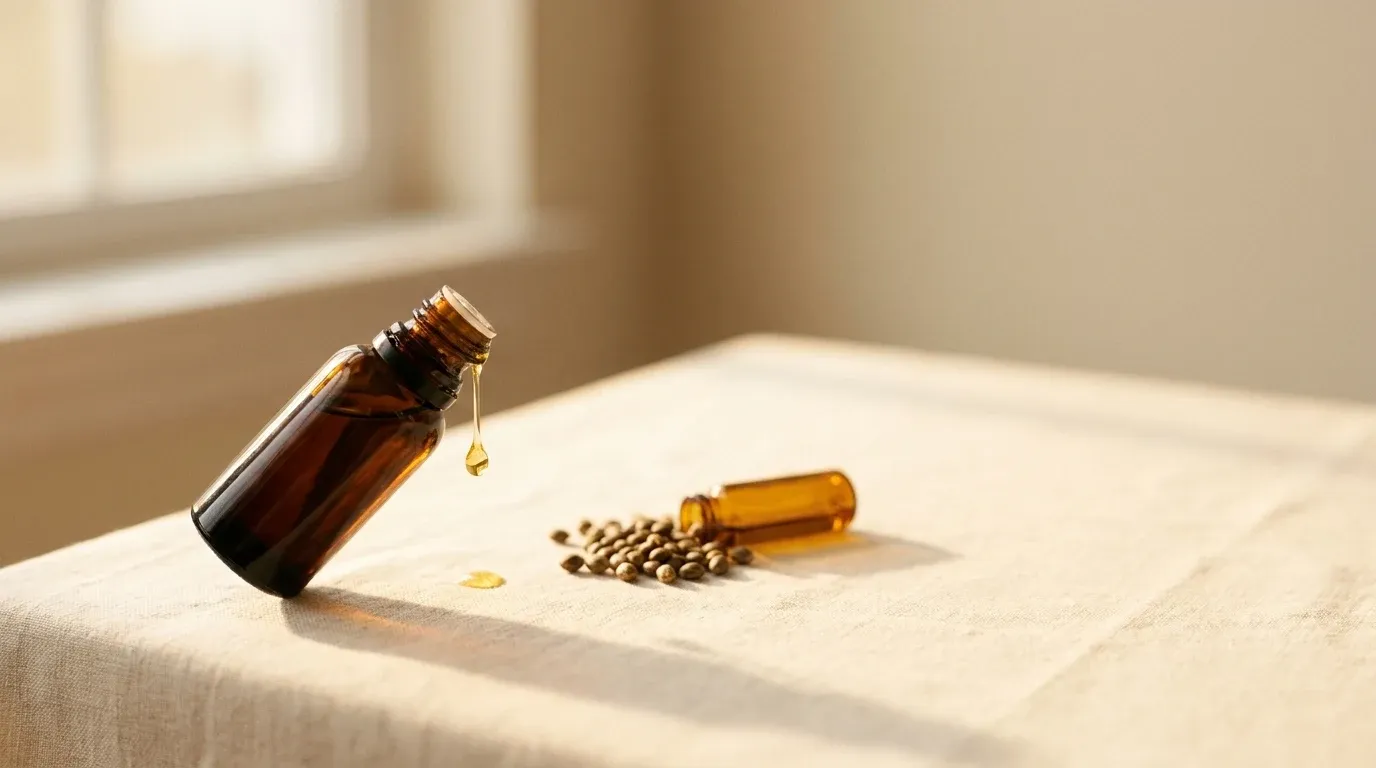
Getting your flu shot every fall feels like a responsible checkbox. But research is starting to suggest that what you take alongside it, and when, could meaningfully change how well it actually works. A recent supplementation trial points to a specific plant oil extract as a potential lever for improving vaccine response, and the implications are worth understanding before your next training block runs into sick season.
What the Study Found
The trial in question examined the effects of black seed oil, derived from Nigella sativa, on influenza vaccine immunogenicity. Participants who supplemented with the extract showed significantly higher antibody titers against flu strains compared to the placebo group. In practical terms, that means their immune systems mounted a stronger, more measurable response to the same vaccine.
The effect wasn't marginal. The supplemented group showed antibody seroconversion rates that outpaced placebo by a clinically meaningful margin, suggesting the extract wasn't just nudging immune markers but producing a response more likely to translate into real-world protection.
Black seed oil contains a compound called thymoquinone, which has been studied for its anti-inflammatory and immunomodulatory properties. The current hypothesis is that it helps prime immune cell activity in a way that allows the body to respond more robustly when a vaccine antigen arrives. It's not creating immunity from nothing. It's helping your immune system do what it was already trying to do.
Timing Is the Variable Most People Miss
One of the more actionable findings from this research is that supplementation timing relative to vaccination appears to matter significantly. Participants who began taking the extract several weeks before receiving the vaccine showed stronger immune responses than those who started closer to or at the time of vaccination.
This is consistent with how immune priming generally works. Your body doesn't shift into high-alert mode overnight. Building a favorable immune environment takes time, which means last-minute supplementation is unlikely to deliver the same effect. If you're planning to get vaccinated in October or November, that suggests starting supplementation in September could be a more effective strategy than grabbing a bottle on the way to the pharmacy.
The exact window isn't fully standardized across studies yet, but the available data points toward a minimum of two to four weeks of prior supplementation producing measurably better outcomes. That's a specific, actionable number, and it changes how you should be thinking about your fall supplement protocol.
Why This Matters for Active Adults
If you train consistently, you already know that a single week of illness can collapse months of carefully built routine. Missing training sessions during a fall or winter block doesn't just set back your fitness. It disrupts sleep patterns, derails nutrition habits, and breaks the behavioral momentum that keeps consistency going. The downstream costs of getting sick are higher than they appear on the surface.
This is part of why the best recovery tool might be the one you're already using, but even great sleep won't fully compensate for a compromised immune response during high-exposure months. The flu vaccine reduces your risk significantly, but vaccine efficacy isn't uniform across individuals. Age, baseline immune function, and prior health status all influence how well it works for any given person.
Supplementation strategies that can improve individual vaccine response are therefore particularly relevant for athletes and active adults who have a strong incentive to stay healthy throughout the training year. You don't have to be immunocompromised to benefit from optimizing your immune response. You just have to care about staying consistent.
What We Know About Black Seed Oil
Black seed oil has a long history of use in traditional medicine across the Middle East and South Asia, but the modern research base is still catching up to its reputation. That said, the mechanistic picture is increasingly coherent.
Thymoquinone, the primary active compound, appears to modulate several immune pathways, including natural killer cell activity and cytokine signaling. Early clinical data on respiratory infections, allergic response, and inflammatory markers have generally been favorable, though effect sizes vary across populations and formulations.
For influenza specifically, the vaccine efficacy data is still emerging. This isn't a decades-old literature with hundreds of trials. But the mechanism is plausible, the safety profile is well-established at typical supplementation doses (usually 500mg to 2g of oil daily), and the risk-to-benefit ratio looks reasonable for healthy adults.
Standardization matters here. Not all black seed oil supplements are equal. Look for products standardized to a specific percentage of thymoquinone, ideally third-party tested, and produced under GMP-certified conditions. Quality control in the supplement space is uneven, as anyone following the ingredient trends shaping formulation in 2027 will already know.
Fitting This Into a Fall Nutrition Stack
If you're already running a structured supplement protocol heading into fall, adding black seed oil doesn't require a major overhaul. It's typically taken with food to minimize any GI sensitivity, and it doesn't appear to have meaningful interactions with common training supplements.
For context, some active adults are already taking foundational supplements like creatine year-round, where the debate between 5g and 10g daily dosing is still an active area of interest. Black seed oil would sit alongside, not replace, that kind of baseline supplementation. These are different tools with different targets.
It's also worth noting that nutrition quality more broadly continues to show meaningful immune effects. Research consistently links diet patterns, micronutrient density, and food access to immune outcomes. The evidence that free healthy food improves health outcomes speaks to a broader principle: what you eat matters at the immune level, not just for body composition.
Black seed oil doesn't replace a solid dietary foundation. It's an add-on with a specific, targeted rationale. Get the basics right first, then consider whether the research here is compelling enough to try it in the weeks ahead of your vaccine appointment.
What the Research Still Doesn't Answer
It's worth being honest about the limitations here. The trial data is promising but not conclusive. Sample sizes in the existing studies are relatively small, and the research hasn't been consistently replicated across diverse populations at scale. The optimal dose, the ideal timing window, and the question of whether effects differ by age group or baseline immune status all remain open.
There's also the formulation variable. Thymoquinone content in commercial products varies widely, and what was used in a clinical trial may not match what's sitting on a supplement shelf. Until standardization improves across the industry, replicating trial-level results in the real world is harder than it looks.
None of this makes the research irrelevant. It means you should treat it as early-stage signal rather than settled science. The mechanism is credible, the safety data is reassuring, and the practical upside of a stronger vaccine response is meaningful for anyone who trains seriously. That's a reasonable basis for experimentation, not a guarantee of results.
The Practical Takeaway
Here's what the current evidence actually supports. If you're planning to get a flu vaccine this fall, and you should be, starting black seed oil supplementation four to six weeks beforehand may improve the antibody response you generate. Use a quality-standardized product, take it with food, and keep the dose within the ranges studied (500mg to 2g of oil daily).
This is a low-cost, low-risk strategy with a plausible mechanism and early trial support. It fits cleanly into a fall health protocol for active adults who can't afford to lose training weeks to illness. It won't make you invincible, but it might help your vaccine work a little harder for you.
And if you're pairing this with broader recovery habits, that stack effect compounds. Consistent sleep, structured training, and a nutrition strategy built around real food all push in the same direction. Sleep in particular remains one of the most underrated immune tools available, and no supplement stack fully replaces it.
Treat your immune system the way you treat your training. Give it the inputs it needs, give it time to adapt, and don't wait until you're already behind to start.