
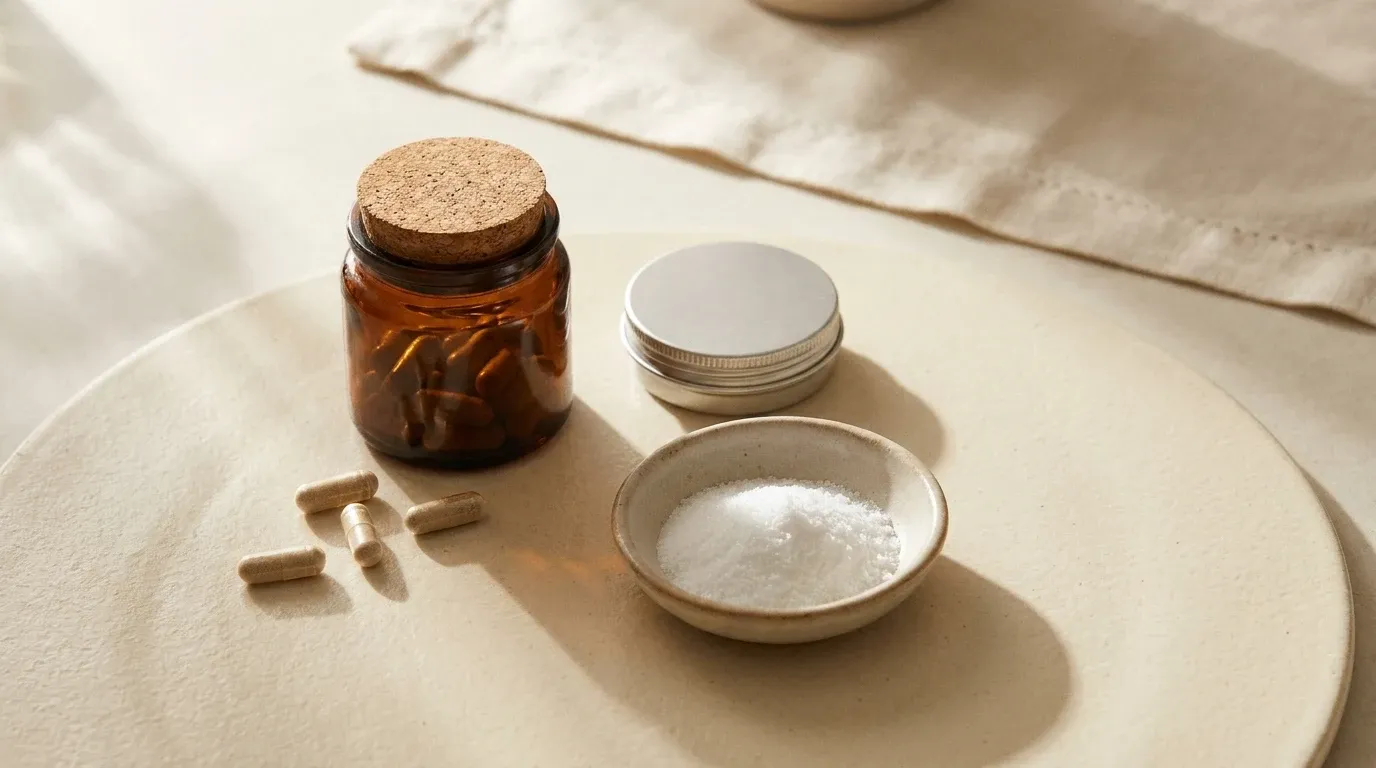
Walk into any supplement store or scroll through a fitness feed and you'll find hundreds of products promising faster recovery, greater strength, and sharper focus. Most of them are built on a foundation of marketing copy, not peer-reviewed evidence. In 2026, the science has matured enough to draw clearer lines between what actually works, what might work, and what's simply riding a hype cycle.
Here's what the current evidence looks like, without the noise.
The Tier-One List Is Shorter Than You Think
When researchers classify ergogenic aids, they use tiered systems based on the strength, consistency, and relevance of available evidence. In 2026, that tier-one list, meaning compounds with robust, replicated human performance data, remains remarkably short. Only a handful of supplements have cleared that bar across a broad range of training goals and populations.
That's not a failure of research. It's the natural result of applying rigorous standards to an industry that has historically set those standards very low. Many supplements are studied in small, short-duration trials with no control group and no placebo. That's not evidence. That's a marketing document with a journal citation attached.
Consumers deserve better framing. If a product claims "clinically studied ingredients," ask what the study actually measured, how many participants were involved, and whether the results were replicated independently.
Creatine and Caffeine Still Lead the Field
Two supplements continue to dominate the evidence base by a significant margin: creatine monohydrate and caffeine. Neither is new. Neither is exciting in a marketing sense. But both have accumulated decades of consistent, high-quality data supporting their use across a wide range of athletic contexts.
Creatine monohydrate remains the most well-supported ergogenic aid in sports nutrition. Its mechanism is well understood. It increases phosphocreatine availability in skeletal muscle, which supports high-intensity, short-duration efforts and accelerates recovery between bouts. Meta-analyses published through 2025 continue to show meaningful gains in strength output and lean mass when creatine is combined with resistance training. The standard dosing protocol, 3 to 5 grams daily, is effective without a loading phase for most users. It's also one of the cheapest supplements per serving you can buy, typically under $0.20 per dose in bulk form.
Caffeine works through adenosine receptor antagonism, reducing perceived effort and improving both endurance and power output. The effective dose range sits between 3 and 6 milligrams per kilogram of body weight, consumed 45 to 60 minutes before exercise. Its effects are well-documented in endurance sports, team sports, and resistance training. Tolerance builds with habitual use, so strategic cycling matters.
One caveat on caffeine: source matters. If you're currently relying on energy drinks to hit your pre-workout caffeine target, it's worth understanding that those products carry risks beyond the caffeine itself. Energy drinks have been linked to significantly elevated cardiac arrest reports, a risk profile that isolated caffeine from coffee or supplement capsules doesn't share.
Second-Tier Compounds With Real But Conditional Evidence
Below creatine and caffeine, a second tier of supplements has reasonable evidence supporting their use in specific contexts, but with meaningful caveats about population, timing, or dose.
- Beta-alanine buffers hydrogen ions during high-intensity efforts lasting 60 to 240 seconds. The evidence for its use in that specific window is solid. Outside that effort duration, the benefit is marginal. The characteristic tingling sensation (paresthesia) is harmless but enough to put many users off.
- Dietary nitrates (beetroot/nitrate supplementation) improve oxygen efficiency and have consistent backing for endurance performance, particularly at altitude or in trained athletes. Whole food sources like beetroot juice are as effective as concentrated supplements for most users.
- Protein supplementation works, but only when it closes an actual dietary gap. If you're already hitting 1.6 to 2.2 grams of protein per kilogram of body weight through food, an additional shake adds cost, not performance. Whey protein is fast-absorbing and leucine-rich, making it a practical post-training option when whole food isn't accessible.
- Tart cherry has a growing evidence base for reducing muscle soreness and markers of oxidative stress after intense exercise. The evidence for tart cherry in recovery deserves closer inspection, especially for athletes training twice daily or in high-volume phases.
Emerging Compounds: Promise Without the Proof
Two compounds generating significant interest in 2025 and 2026 are urolithin A and spermidine. Both operate through pathways that are scientifically compelling, particularly around mitochondrial function and cellular autophagy, the process by which cells clear out damaged components.
Urolithin A, produced in the gut from polyphenols found in pomegranates and walnuts, has shown real mechanistic data in improving mitochondrial efficiency and muscle endurance in older adults. Some early human trials show signal. But the sample sizes are small, the populations studied are often sedentary or elderly, and the translation to trained athletes remains unclear. Recent research on urolithin A and brain blood flow adds another dimension to watch, though it doesn't resolve the core question of performance benefit in healthy, active populations.
Spermidine, found naturally in wheat germ, aged cheese, and soy products, activates autophagy pathways associated with longevity and cellular health. The mechanistic data is interesting. The human performance data, particularly in athletic populations, is still thin. Supplementing with spermidine in 2026 means betting on a mechanism rather than an outcome.
Neither compound should be dismissed. Neither should be prioritized over creatine and protein when budgets are limited. These are ingredients to monitor, not ingredients to stack immediately.
The Combination Stack Problem
One of the most significant trends in sports nutrition over the past three years is the rise of premium combination stacks: multi-ingredient products bundling five, ten, or even fifteen compounds into a single formula, often priced between $60 and $120 per month.
The marketing logic is seductive. If creatine works and beta-alanine works and caffeine works, surely combining them works better? The research doesn't support that assumption cleanly. Studies comparing multi-ingredient pre-workouts to single-compound controls frequently show no meaningful additive benefit. In some cases, the doses of individual ingredients in a stack fall below the threshold shown to be effective in isolation, what's sometimes called "fairy dusting."
Proprietary blends compound the problem. When a label lists a "performance matrix" without disclosing individual ingredient amounts, you have no way to verify whether the dosing is evidence-based. You're paying for branding as much as biochemistry.
If you're going to supplement, building your own stack from single-ingredient products at known, effective doses typically costs significantly less and gives you full control over what you're taking.
The Foundation Still Comes First
No supplement compensates for inadequate sleep, chronically poor nutrition, or programming that doesn't match your goals. That's not a disclaimer. It's a practical hierarchy of return on investment.
Whole-food nutrition remains the most evidence-backed performance intervention available. Regular fish consumption, for example, is supported by substantial data on cardiovascular health, inflammation, and longevity, benefits that no single supplement formula replicates at the same cost and bioavailability.
Similarly, training quality matters more than supplement timing. Research into resistance training technique, including tempo and eccentric loading, shows that how you perform a movement has a direct bearing on adaptation. Controlling the lowering phase of a lift produces measurably different outcomes in muscle growth, independent of anything in your supplement cabinet.
Use supplements to close specific, identified gaps. That means getting your nutrition and training dialed in first, then asking what measurable deficit a supplement might address. Not the other way around.
How to Evaluate Any Supplement Claim in 2026
Before adding anything new to your stack, run it through this filter:
- What is the proposed mechanism? Is it biologically plausible and well-understood, or speculative?
- What is the evidence base? Look for randomized controlled trials in humans, ideally in populations similar to you in training status and age.
- What dose was studied? Does the product you're considering match the dose shown to be effective, or is it significantly lower?
- What is the cost-benefit ratio? A supplement with modest evidence and a $90 monthly price tag competes directly with better food quality, which likely offers more return.
- Is there third-party testing? NSF Certified for Sport, Informed Sport, and similar certifications reduce contamination risk, particularly for competitive athletes subject to testing.
The supplement industry will always move faster than the research. New compounds will be launched with compelling mechanism stories and preliminary data long before large-scale human trials are complete. That's the nature of the market, not a reason for cynicism, but it is a reason for patience.
Stick with what's proven, monitor what's emerging, and don't let marketing urgency substitute for scientific patience. Your physiology rewards consistency far more than novelty.