
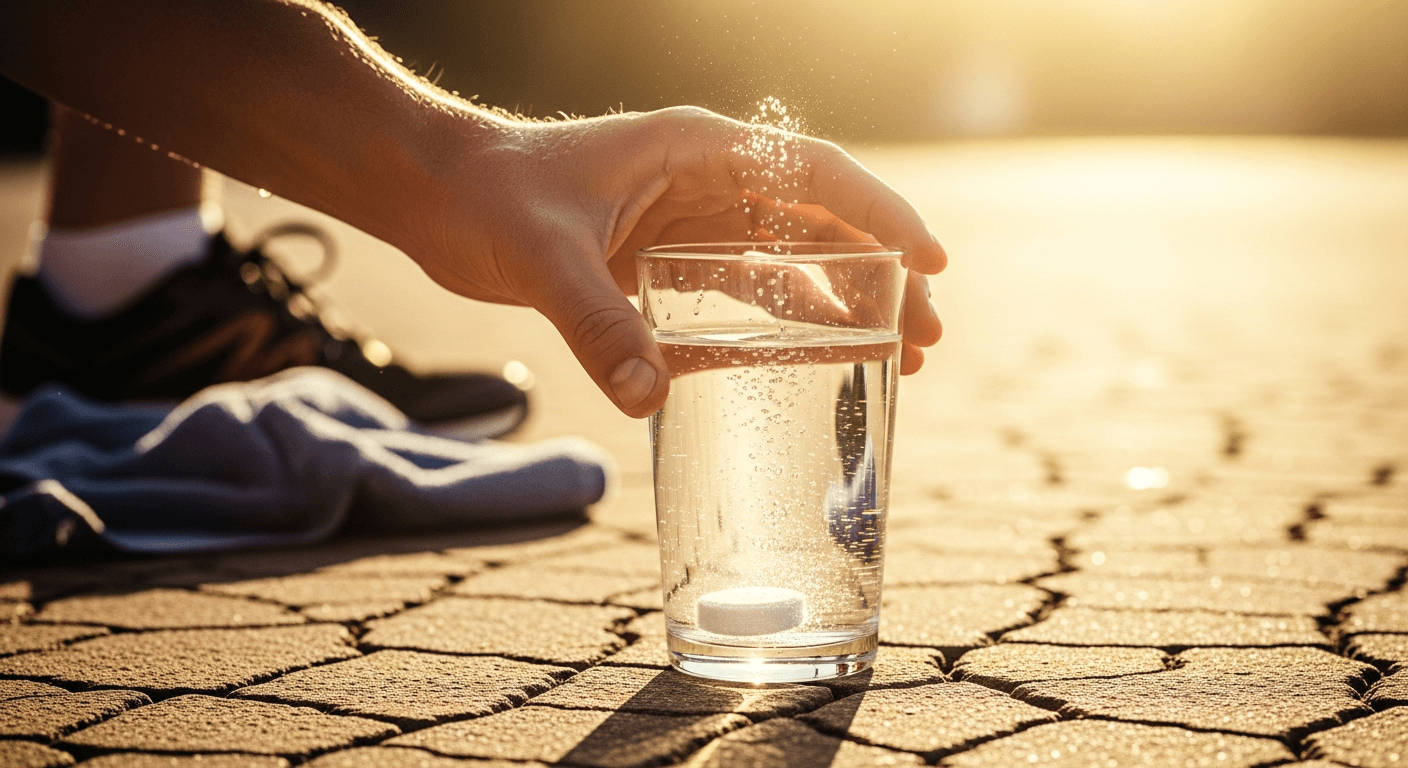
Most athletes know they should drink more water when training in summer. Most athletes also underestimate dehydration until it's already tanking their performance. Research consistently shows that a fluid loss of just 2% of body weight is enough to reduce aerobic capacity, impair decision-making, and increase perceived exertion. At 3 to 4%, you're looking at significant cardiovascular strain.
The problem isn't awareness. It's that generic hydration advice doesn't hold up under real-world conditions. Your environment, your sweat rate, your training intensity, and what you actually drink all interact in ways that simple "eight glasses a day" guidance completely ignores. Here's what the science actually shows, and how to build a hydration protocol that works.
Humidity Changes Everything. Most Protocols Don't Account for It
There's a widespread assumption that hot weather is hot weather. It isn't. Training in dry desert heat at 95°F (35°C) and training in humid coastal heat at the same temperature are physiologically very different experiences, and your hydration needs shift accordingly.
In dry heat, sweat evaporates quickly from your skin. That evaporation is your body's primary cooling mechanism. It works. Core temperature rises, but the system manages itself reasonably well as long as you're replacing fluids. In high humidity, that evaporation is suppressed. Sweat accumulates on the skin without cooling you effectively, so core temperature climbs faster and cardiovascular strain increases earlier in a session.
Studies measuring core temperature response in humid versus dry conditions at matched workloads show significantly higher rectal temperatures and heart rate in humid environments, even when fluid intake is controlled. What this means practically: if you're training in a humid climate, your threshold for heat-related performance decline arrives sooner than the standard tables suggest. You need to start hydrating earlier, not just drink more in total.
A useful benchmark is the wet-bulb globe temperature (WBGT), which accounts for humidity, radiant heat, and air movement. Many sports medicine organizations use WBGT thresholds to guide outdoor training decisions. If you're training where humidity regularly sits above 70%, factor that into your pre-session fluid strategy, not just your during-session intake.
Your Sweat Rate Is Personal. Generic Sodium Targets Don't Work
Here's where most commercial hydration advice falls apart. Electrolyte loss through sweat varies dramatically between individuals, and sodium is the electrolyte that matters most for performance and fluid retention.
Sweat sodium concentration can range from roughly 200 mg per liter to over 2,000 mg per liter depending on the individual. That's a tenfold difference. So when a sports drink label claims it "replaces electrolytes," the question is: replaces them for whom? A low-sodium sweater and a high-sodium sweater doing the same workout in the same heat have completely different replacement needs.
You can estimate your sweat rate without a lab. Weigh yourself without clothes immediately before and after a training session of known duration, controlling for fluid intake. Every kilogram of body weight lost represents roughly one liter of sweat. Do this across several sessions in different conditions and you'll build a useful personal baseline.
Salty-tasting sweat, white residue on dark training gear, and a tendency toward muscle cramping are all signs you may be a high-sodium sweater. If that describes you, plain water during long sessions will dilute your plasma sodium and potentially worsen performance rather than help it. A condition called exercise-associated hyponatremia, where plasma sodium drops dangerously low due to excessive plain water intake, is most common in endurance athletes but has been documented across multiple sports.
Getting your supplementation strategy right matters. If you're relying on commercial electrolyte products, it's also worth understanding the quality control issues in the supplement industry. Supplement Contamination: The Risk Every Athlete Needs to Understand covers what to look for and how to verify what's actually in the products you're using.
Timing Your Fluid Intake Isn't Optional
The timing of hydration relative to your training sessions has a measurable effect on both performance and recovery. Most people react to thirst rather than anticipating it. In hot conditions, that's too late.
Pre-session: Aim to begin every training session in a euhydrated state. A practical check is urine color. Pale yellow indicates adequate hydration. Dark yellow or amber means you're already behind. Consuming 16 to 20 oz (500 to 600 ml) of fluid in the two hours before training, with another 8 oz roughly 15 minutes before starting, is a well-supported pre-loading strategy.
During session: The American College of Sports Medicine recommends drinking to prevent fluid losses exceeding 2% of body weight. In practice, that means drinking on a schedule rather than waiting for thirst, especially in sessions longer than 45 minutes in the heat. Aiming for 6 to 8 oz (180 to 240 ml) every 15 to 20 minutes is a reasonable starting point, adjusted based on your personal sweat rate.
Post-session: Recovery hydration is where most athletes fall short. For every pound (0.45 kg) of body weight lost during training, you need approximately 16 to 24 oz (475 to 710 ml) of fluid to restore fluid balance. Spreading this intake over 2 to 4 hours is more effective than consuming it all at once, since rapid large-volume drinking triggers faster urinary output before full reabsorption occurs.
Pairing post-session hydration with sodium-containing foods or a sodium-containing drink improves fluid retention significantly. This is also the window where nutrition quality matters. If you're optimizing recovery, your protein intake in this period plays an equally important role alongside rehydration. Protein for Muscle Building: What the Science Actually Shows is a useful companion read for structuring your post-training nutrition.
Water, Sports Drinks, and Electrolyte Supplements: Which One, When
These three categories aren't interchangeable. Each has a specific application, and using the wrong one for a given session is a common and avoidable mistake.
Plain water is appropriate for most training sessions under 60 minutes at moderate intensity in temperate conditions. It's also the right choice for general daily hydration outside of training. It isn't optimal for long, hot, or high-intensity sessions where electrolyte loss is significant.
Sports drinks (typically containing 6 to 8% carbohydrate plus sodium and potassium) are designed for sessions lasting 60 to 90 minutes or longer, particularly at high intensity. The carbohydrate content supports muscle glycogen and provides a meaningful energy source. The sodium drives thirst and promotes fluid retention. For sessions in this range during summer heat, a properly formulated sports drink outperforms plain water on performance metrics in multiple controlled trials.
The caveat: many mainstream sports drinks contain high amounts of added sugar and artificial dye that offer no performance benefit. If you're training at moderate intensity or for weight management alongside performance, the caloric load of a full sports drink may not be justified. Diluting commercial products 50/50 with water is a practical middle ground.
Electrolyte supplements (tablets, powders, or capsules without significant carbohydrate) are particularly useful for high-sodium sweaters, for athletes managing caloric intake, and for sessions where carbohydrate intake is deliberately controlled. They're also more portable and allow precise titration of sodium intake based on individual needs.
For athletes currently experimenting with low-carbohydrate dietary approaches, hydration dynamics shift somewhat because glycogen storage affects intracellular fluid retention. Keto vs Carnivore for Fitness: What the 2026 Data Shows breaks down how these dietary strategies affect performance variables including fluid balance.
Heat Adaptation and the Longer Game
One of the most underused tools in summer performance is deliberate heat acclimatization. The body adapts meaningfully to heat stress over 10 to 14 days of progressive heat exposure. Adaptations include increased plasma volume, earlier onset of sweating, lower sweat sodium concentration, and reduced cardiovascular strain at the same workload. All of these changes reduce how aggressively you need to hydrate to maintain performance.
Sauna use outside of training can accelerate some of these adaptations without the performance cost of training in full heat. Research on sauna protocols and their physiological effects is increasingly detailed. Sauna Frequency, Duration, and Temperature: What the Research Shows outlines what the current evidence supports in terms of session structure and frequency.
If you're tracking readiness during a demanding summer training block, monitoring markers of accumulated fatigue alongside hydration status is worth building into your routine. Is Your Nervous System Ready to Train? Here's How to Tell explains how to interpret recovery signals and adjust training load before performance declines.
Building Your Personal Hydration Protocol
There's no universal script. But based on the evidence, here's a practical framework to adapt for your situation:
- Assess your environment. Factor in both temperature and humidity. If WBGT is elevated, build in earlier and more frequent fluid intake.
- Know your sweat rate. Do the pre/post weigh-in test across different conditions. Use it to calibrate during-session drinking rather than relying on thirst alone.
- Match your hydration tool to the session. Water for short or easy sessions. Sports drinks or electrolyte supplements for long, hot, or high-intensity training.
- Start every session hydrated. Monitor urine color as a daily habit, not just on training days.
- Prioritize post-session rehydration. Use sodium and fluid together, spread over 2 to 4 hours, to restore fluid balance effectively.
- Consider heat acclimatization. If your summer training schedule is serious, structured heat exposure over two weeks will pay dividends all season.
Dehydration is quiet until it isn't. Unlike a muscle strain or a poor night's sleep, it doesn't announce itself clearly. Performance drops, effort feels harder, and most athletes attribute it to training load or fatigue rather than fluid status. Getting this right is one of the simplest, most evidence-backed levers available during summer training. Use it deliberately.