
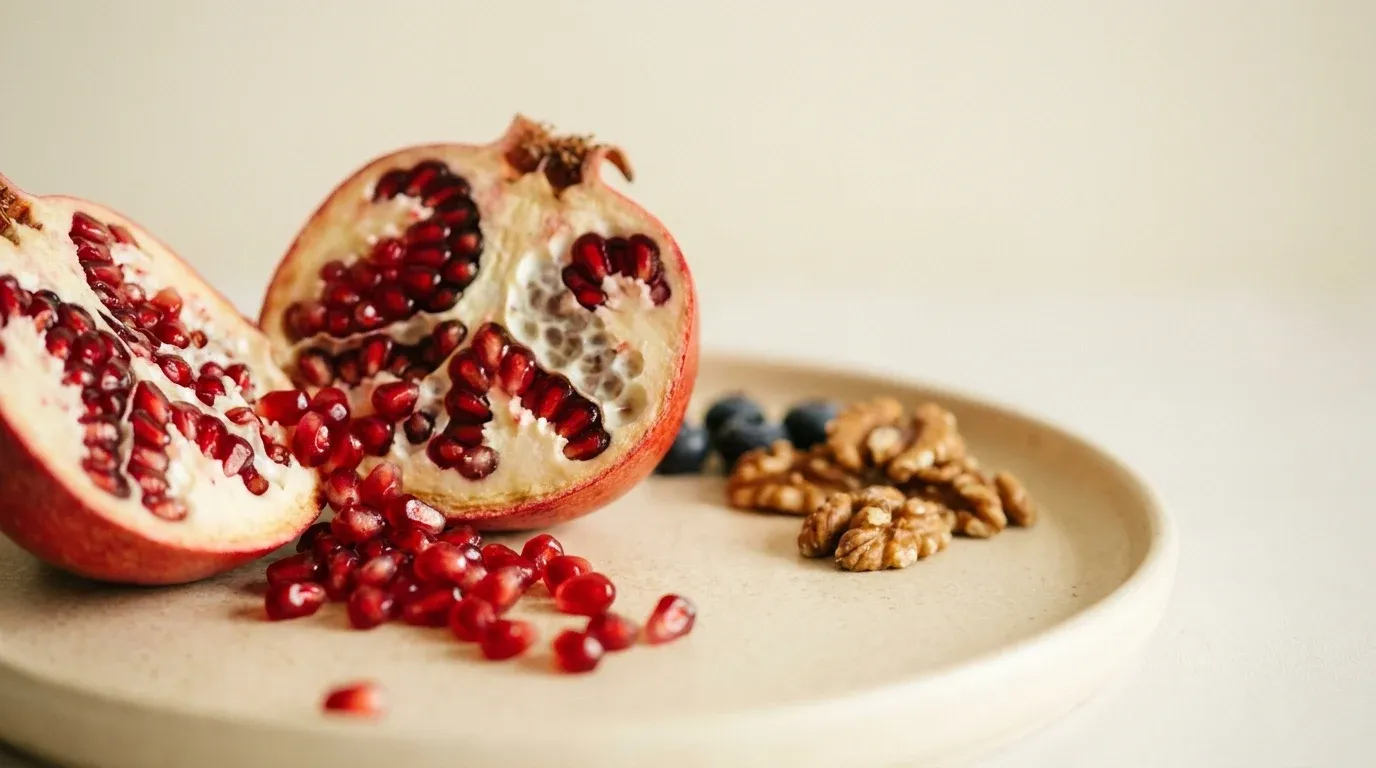
A compound your gut produces after you eat pomegranates, walnuts, and certain berries is showing remarkable effects on heart function. In animal models of a particularly stubborn form of heart failure, Urolithin A improved key measures of heart function by up to 80%. That's not a supplement claim. That's mechanistic data from controlled research, and it's worth understanding what it actually means for how you eat.
What Urolithin A Actually Is
Urolithin A isn't found directly in food. It's a postbiotic, a compound your gut bacteria produce when they break down ellagitannins and ellagic acid, polyphenols found in pomegranates, walnuts, raspberries, and strawberries. Your intestinal bacteria do the conversion work. The compound then enters your bloodstream and acts on cells throughout your body.
This distinction matters more than it might seem. You can eat a pomegranate every day and produce very little Urolithin A if your gut microbiome doesn't contain the right bacterial strains. Researchers have identified three distinct producer types in humans. Some people convert ellagitannins efficiently, some partially, and some produce almost none at all. Gut microbiome composition is the variable that determines which category you fall into.
This is one reason the science around Urolithin A is complicated. It's not like vitamin C, where eating an orange reliably raises your blood levels. The same meal can produce wildly different outcomes in two different people sitting at the same table.
The Heart Failure Findings
The research that's generating serious interest centers on a condition called heart failure with preserved ejection fraction, often referred to as HFpEF. This is a form of heart failure where the heart's pumping function appears normal on basic tests, but the muscle itself has become stiff and can't relax properly between beats. It accounts for roughly half of all heart failure cases and has historically been very difficult to treat. Most medications developed for heart failure work poorly against this specific type.
In animal models of HFpEF, Urolithin A treatment produced substantial improvements in diastolic function, the heart's ability to relax and fill with blood. Measures that reflect the stiffness and compliance of heart tissue improved by up to 80% compared to untreated animals. The proposed mechanism involves mitophagy, the cellular process by which damaged mitochondria are cleared out and replaced. Urolithin A appears to activate this cleanup process in cardiac cells, reducing cellular stress and allowing the tissue to function more normally.
Mitochondrial dysfunction is increasingly recognized as a driver of cardiac stiffness and age-related decline in heart function. The idea that a gut-derived compound could stimulate the heart's own repair mechanisms is genuinely novel and represents a different class of approach than most existing cardiovascular interventions.
The Human Evidence Gap
Here's where the story requires honest framing. The 80% improvement figure comes from animal models, not from humans. Human trials with Urolithin A exist, and they do show positive effects on mitochondrial function, muscle endurance, and inflammatory markers. But they haven't replicated this magnitude of cardiac improvement in humans yet.
The gap between animal and human outcomes in cardiovascular research is well established. Compounds that look transformative in rodent models frequently show much smaller effects in human trials, or fail to translate at all. That doesn't mean these findings are irrelevant. Animal models for HFpEF are scientifically credible, and the mechanistic pathway through mitophagy is biologically plausible in humans. But "up to 80% improvement" in a mouse model is not the same as "up to 80% improvement" in a person with heart failure.
Human trials are ongoing, and the early data on Urolithin A's effects on muscle and metabolic function in aging adults is encouraging enough that serious research institutions have continued investing in the question. The honest position is: this is promising, preliminary, and worth watching closely.
Why Your Gut Microbiome Is the Real Variable
If you want to eat your way toward higher Urolithin A production, the starting point isn't just the food. It's the microbial environment that processes it. Research suggests that people with more diverse gut microbiomes tend to be more efficient Urolithin A producers, though the specific bacterial species involved are still being mapped.
What does support gut diversity? The same dietary patterns that most of the evidence keeps circling back to. High fiber intake, fermented foods, variety in plant foods, and minimal ultra-processed food consumption. These aren't new recommendations, but the Urolithin A research adds another mechanistic reason why a diverse microbiome matters beyond digestion and immune function.
This connects to a broader principle that Whole Foods vs. Supplements: What 2026 Science Actually Prioritizes covers in depth. The emerging picture is that whole foods often work through indirect pathways, including the gut microbiome, that isolated supplements or extracts can't fully replicate. Urolithin A is a good example of why.
The Foods Most Likely to Help
If you want to give your gut bacteria the raw material to work with, these are the foods with the highest ellagitannin content:
- Pomegranate: The richest dietary source of ellagitannins. Both the arils and the juice contain significant amounts, though whole fruit preserves fiber and other compounds.
- Walnuts: The primary nut source, and one that also provides omega-3 fatty acids and other compounds with independent cardiovascular relevance.
- Raspberries: High in ellagic acid and also a good source of fiber that supports microbiome diversity.
- Strawberries: Lower ellagitannin content than raspberries but still a meaningful contributor when consumed regularly.
- Blackberries: Another solid source, often overlooked in favor of blueberries in the antioxidant conversation.
Consistency matters more than quantity in a single sitting. Regular exposure to these foods gives your gut bacteria ongoing substrate to work with, rather than a one-time surge followed by nothing.
Heart Health Doesn't Operate in Isolation
The Urolithin A research doesn't exist in a vacuum. Cardiac stiffness and HFpEF are conditions with multiple contributing drivers, including physical inactivity, chronic inflammation, metabolic dysfunction, and age-related mitochondrial decline. No single compound addresses all of them.
Resistance training, for example, has direct effects on cardiac function, insulin sensitivity, and mitochondrial density in muscle tissue. As The Weekly Lifting Sweet Spot Coaches Should Know details, even moderate volumes of strength work produce measurable benefits for cardiovascular health across age groups. Combining that kind of physical stimulus with a diet that supports Urolithin A production isn't a bad bet, even before human trials deliver definitive answers on the cardiac effects.
Sleep is another axis that intersects here. Mitochondrial repair and cellular cleanup processes like mitophagy are heavily influenced by sleep quality. If you're under-sleeping, you're likely impairing the same cellular machinery that Urolithin A is supposed to support. Sleep and Food Still Beat Every Recovery Gadget makes the case for why these fundamentals consistently outperform more novel interventions when you measure what actually matters.
And for those navigating midlife, it's worth noting that hormonal changes during perimenopause and beyond affect both cardiovascular risk and microbiome composition. Your Protein Needs Change With Life Stage. Here's How. touches on how nutrition strategies need to adapt as these shifts occur, and Urolithin A production is likely another variable that changes with age and hormonal status.
What You Should Actually Do With This Information
You don't need to wait for phase three clinical trials to act on this research. The foods that drive Urolithin A production are the same foods that an overwhelming body of evidence already supports for cardiovascular and overall health. Eating pomegranate regularly, adding walnuts to your routine, and including raspberries and blackberries in your diet costs nothing in terms of health risk and very little in financial terms.
What you don't need to do is rush toward Urolithin A supplements, which are already being marketed aggressively based on the same preliminary data being discussed here. The supplement versions may offer some benefit, particularly for people who are poor producers from food, but the evidence base for supplemental Urolithin A in humans is still thin at therapeutic doses. The food-first approach is the better bet at this stage.
It's also worth keeping your expectations calibrated. Even if human trials eventually show meaningful cardiac benefits from Urolithin A, your individual response will depend significantly on your gut microbiome. Two people eating the same pomegranate-rich diet can have very different outcomes. Understanding that variability is part of applying this science intelligently rather than just adding a superfood and expecting results.
The pomegranate isn't a heart medication. But the biology here is real, the mechanistic pathway is plausible, and the food that supports it is worth eating regardless. That's a straightforward case for acting on this research without overstating what it currently proves.