
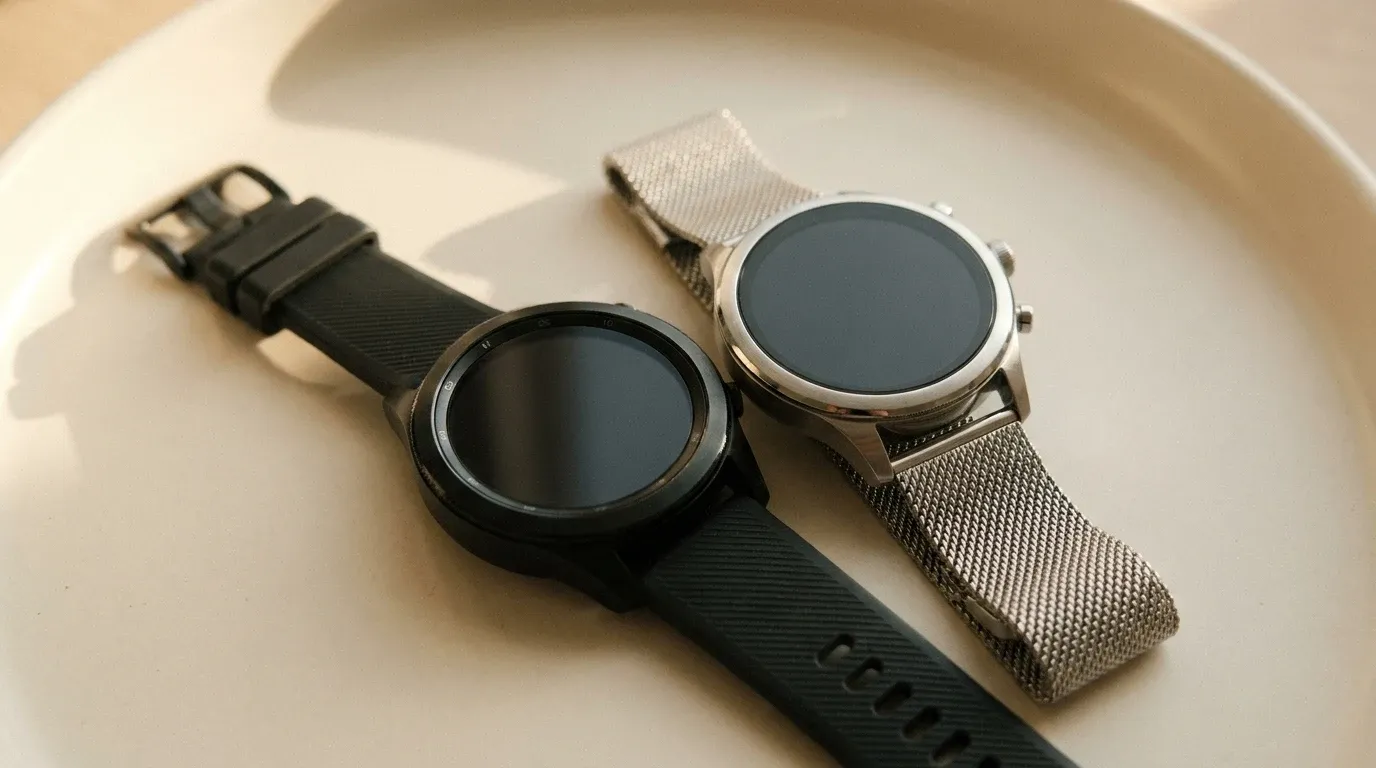
On November 2, 2026, Google unveiled the Fitbit Edge, and the performance wearable market shifted in ways that go well beyond a product launch. This isn't about step counts or sleep scores. It's about Google planting a flag in territory that Garmin, Apple, and WHOOP have spent years building, and signaling where the real revenue wars of 2027 will be fought.
If you're a gym operator, a pro brand, or a supplement company that has started weaving wearable data into your retention stack, the Fitbit Edge changes your competitive calculus. Here's what you need to understand.
Google's Repositioning Play
Fitbit had spent the better part of four years being treated as a mass-market step counter. Useful, affordable, unremarkable. The Edge is a deliberate reversal. Google is pitching it squarely at performance-focused users who currently gravitate toward Garmin's multisport ecosystem or Apple's tightly integrated health suite.
The strategic logic is straightforward. Google already controls search, advertising, and an expanding health data infrastructure through Google Health. Embedding a performance-grade wearable into that stack gives Google something it has never had at scale: continuous, high-resolution biometric data tied to real user identities. That's not a fitness product. That's a first-party data engine.
For brands that have built audience segments around fitness intent, this matters. The Fitbit Edge isn't competing with the Apple Watch on hardware specs alone. It's competing on ecosystem depth, and Google's ecosystem is significantly larger than most brands have been accounting for in their partnership decisions.
What It Means for Garmin, Apple, and WHOOP
Garmin was flagged by analysts as a top fitness stock to watch on November 3, 2026, the day after the Edge announcement. That framing is telling. Analysts aren't panicking about Garmin. They're watching it because its Garmin Connect platform, combined with a diversified lineup spanning running watches, cycling computers, and smartwatches, gives it durable differentiation that a single product launch doesn't immediately erode.
Garmin's core users are serious athletes. They don't switch ecosystems casually. The brand has years of trust with triathletes, ultra-runners, and military users who rely on its GPS precision and battery life in ways that Google hasn't yet had to earn. That loyalty is real, and it creates a window for Garmin to respond before meaningful churn sets in.
Apple's position is different. Its strength is the iPhone integration layer and the depth of its Health app ecosystem. The risk for Apple isn't the Edge converting Apple Watch users. It's Google capturing the next wave of performance-wearable adopters who haven't yet committed to a platform. That's where the trajectory numbers become alarming.
WHOOP and Ultrahuman represent a third model: subscription-first, hardware-subsidized, biometric depth over broad consumer appeal. As covered in our analysis of WHOOP and Ultrahuman's funding strategies and where wearable money is going, both brands have demonstrated that serious athletes will pay recurring fees for data quality. Google's entry at scale pressures that model, because it can effectively subsidize hardware and software through ad revenue in ways that pure-play wearable companies cannot.
The $144 Billion Context
The global wearable fitness tracker market is on a trajectory toward $144 billion, and the Fitbit Edge launch is best understood as a signal about where platform-level advertising and subscription revenue will be concentrated by the time that number is reached.
At that scale, the wearable market isn't a hardware market anymore. It's a data market. The brands that will capture disproportionate value are the ones that control the platforms through which biometric data flows, not necessarily the ones that manufacture the best sensors.
This is why Peloton's decision to unveil new running products in the same news cycle is worth noting. Two major product announcements compressing into the same week is not coincidence. It reflects an industry-wide recognition that the innovation window is closing. Brands that haven't yet built wearable or connected-hardware partnerships are watching the available white space shrink. For operators navigating this, the analysis of Peloton's Q4 connected fitness strategy offers a useful frame for understanding how hardware incumbents are defending their data relationships with consumers.
The Data Ownership Question Every Operator Needs to Answer
Here's the issue that most brands are underestimating. The Fitbit Edge doesn't just collect biometrics. It funnels them into Google's ecosystem, where they become part of a data graph that Google controls, monetizes, and gates. For gyms, coaches, and supplement companies that have built retention tools around wearable insights, that creates a dependency problem.
If your engagement platform is built on pulling Fitbit data through a third-party API, you're one policy update away from losing that access. Google has a documented history of deprecating APIs and shifting developer terms when ecosystem priorities change. That's not speculation. It's pattern recognition.
The operators best positioned to navigate this are the ones building direct data relationships with members, independent of any single wearable platform. That means first-party data capture at the point of check-in, training session, or coaching interaction, not reliance on a feed from a device manufacturer that has its own monetization agenda.
As gym consolidation accelerates across both the US and international markets, as detailed in the reporting on Providence Equity's acquisition of Fitness Park and what it signals for gym consolidation, the brands acquiring scale will have leverage to negotiate direct data-sharing agreements with wearable platforms. Smaller operators won't. That asymmetry is sharpening.
What Pro Brands and Supplement Companies Should Do Now
If you're a supplement brand that has integrated wearable data into personalized recommendation engines or recovery product targeting, the Fitbit Edge announcement should trigger a partnership audit. Specifically:
- Map your current API dependencies. Identify which wearable platforms your data flows depend on and what your exposure looks like if any of those platforms changes its developer terms.
- Prioritize direct data capture. Any wearable integration strategy that doesn't also build a parallel first-party data asset is fragile. Loyalty programs, in-app tracking, and coaching touchpoints that capture behavioral data independently of device manufacturers give you durable signals.
- Evaluate Google's ad ecosystem angle. The Fitbit Edge will almost certainly become a surface for Google's health advertising products. If you're already running performance advertising through Google, the data feedback loop from Edge users could become a targeting asset, but only if you're structured to capture and match it.
- Watch the subscription model pressure. If you have a subscription-based product or service, the expansion of Google's ecosystem into wearables means you'll be competing for consumer wallet share in an environment where Google is offering increasingly comprehensive health features as a bundle.
Premium gym operators face a parallel set of questions. The repositioning of 24 Hour Fitness toward premium membership is an instructive case study in how operators are using data-driven personalization, including wearable integration, to justify higher price points. The Fitbit Edge makes that strategy more viable at the technology layer, but it also means you're now building your member experience on infrastructure Google controls.
Training Integration and the Athlete Experience
For coaches and training brands, the Fitbit Edge introduces a new device into the ecosystem your clients are already navigating. If you're programming structured training for athletes, understanding which platform their data lives on matters for session design, recovery tracking, and load management.
If your training programs aren't yet structured to incorporate wearable readiness data, that's the gap to close first. The device landscape will keep shifting. The methodology for using that data well is what creates lasting value for your athletes. A program like the Winter Strength Block that integrates readiness monitoring and load progression gives clients a framework that works regardless of which device they're wearing.
The proliferation of competing platforms also means coaches need clearer protocols around which metrics actually drive performance decisions, and which ones are noise. Heart rate variability, sleep quality, and training load distribution are actionable. Many of the engagement metrics that wearable platforms surface are designed to maximize app engagement, not athletic outcome.
The Competitive Window Is Shorter Than It Looks
Google's move into performance wearables isn't a signal that the market is about to get easier for brands building in this space. It's a signal that the platform consolidation phase is beginning. When a company with Google's distribution, advertising infrastructure, and ecosystem depth decides a category is worth owning, the independent operators in that category need to move faster than they're probably comfortable with.
For pro brands, the Fitbit Edge is a forcing function. It accelerates the timeline for decisions you may have been treating as 2027 or 2028 problems. Data ownership, platform partnerships, API risk, and subscription model positioning are all live questions now. The brands that answer them clearly in the next twelve months will be in a materially stronger position when the consolidation fully plays out.
The wearable market at $144 billion isn't a rising tide that lifts every boat. It's a concentration event. Position accordingly.