
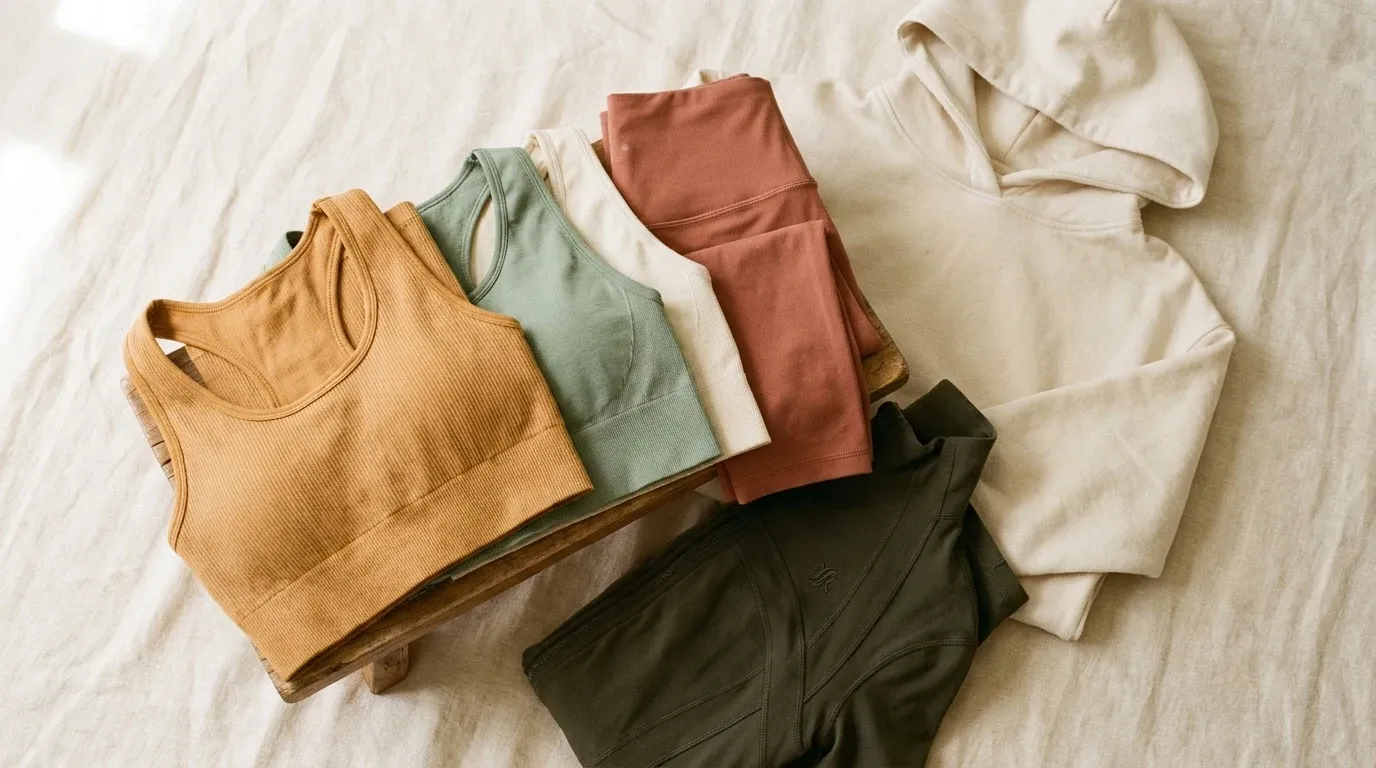
The global athleisure market was valued at $430.15 billion in 2025 and is projected to reach $782.21 billion by 2034, growing at a 6.87% CAGR. That number is large enough that every major player looks like they're winning. But market growth obscures a more uncomfortable reality for incumbents: smaller, TikTok-native brands are capturing a disproportionate share of the demographic that will define the next decade of this market.
If you're running a fitness brand with an apparel line, a supplement company expanding into lifestyle products, or a gym brand building out retail, this is not a trend to monitor. It's a distribution decision you're already late on.
The Incumbents Are Reacting, Not Leading
Under Armour has been candid about the problem. Weak consumer demand in North America has pressured its revenue, and its recent strategic pivots have focused more on brand repositioning than product innovation. The company that built its identity on performance compression gear is now trying to figure out how to compete in a cultural moment it didn't architect.
Lululemon is in a more defensible position, but it's not immune. The brand is actively pivoting its design strategy and making visible investments in nylon recycling and sustainability credentials. These are smart moves, but they're reactive signals. When a premium brand starts leaning into materials ethics and capsule redesigns, it's typically because the product narrative alone is no longer holding the price premium at the margins it once did.
Both brands are dealing with the same structural problem: they were built for a retail and wholesale distribution world, optimized for search intent and in-store discovery. That world still exists, but it no longer commands the attention of consumers under 35.
What TikTok-Native Brands Are Actually Doing Differently
The playbook isn't complicated, but it's hard to replicate at scale inside a legacy organization. Smaller activewear brands on TikTok are winning on three levers: novelty drops, creator seeding, and community identity.
Novelty drops create urgency without requiring advertising spend. A limited colorway or silhouette posted by three mid-tier creators on the same Tuesday generates the kind of earned demand that a full-funnel paid campaign struggles to match. These brands understand that scarcity is a conversion mechanism, not just a positioning tool.
Creator seeding replaces the traditional influencer contract model with something closer to affiliate-native distribution. Creators receive product, post organically if they like it, and earn on commission through TikTok Shop. The brand pays on performance. The creator has skin in the game. The content doesn't look like advertising because, in the traditional sense, it isn't.
Community identity is the hardest to manufacture but the most durable. The brands that are breaking through aren't positioning around performance specs. They're positioning around who you are when you wear them. That's a fundamentally different value proposition than "moisture-wicking four-way stretch." It's closer to what Supreme built in streetwear, applied to activewear through a vertical that is growing at nearly 7% annually.
Legacy brands can't replicate this architecture quickly. Their compliance processes, agency relationships, and content approval chains are designed for a broadcast model. By the time a major label approves a creator brief, the cultural moment has moved.
The Mid-Market Opening That Aritzia Is Already Filling
While Under Armour and Lululemon manage their existing positioning, Aritzia has made its strategic intent explicit. The Canadian retailer has publicly stated a goal to more than double sales by 2032, driven by new categories and global expansion. That's not an aspiration. It's a market map.
Aritzia is targeting the white space between fast-fashion activewear (think $25 leggings on SHEIN) and premium performance brands (think $148 Lululemon Align). It's a wide band of willingness-to-pay that has historically been underserved by brands with both product credibility and aesthetic coherence. Aritzia has both. And it's investing in the US market specifically, where that mid-tier gap is widest.
For fitness brands watching from the sidelines, Aritzia's expansion is a signal that the structural demand for lifestyle-adjacent activewear is real and capitalized. You don't need to compete with Aritzia directly. But if you're not thinking about where your apparel line sits in that spectrum, you're leaving positioning and margin on the table.
North America Now, Europe Next
North America currently holds the largest share of the global athleisure market, but Europe is the fastest-growing region. That has direct implications for brands building international distribution strategies right now.
TikTok's commerce infrastructure is maturing in the UK faster than in most other European markets, partly due to language and partly due to platform rollout sequencing. If you're a fitness brand with US traction and UK customers already in your database, TikTok Shop in the UK is the lowest-friction international commerce expansion available to you today.
The creator-affiliate model also travels better than traditional influencer campaigns because it doesn't require localized agency relationships or market-specific media buys. A UK-based creator seeding your product for a commission operates on the same mechanics as a US-based one. The infrastructure is already built.
What This Means for Fitness Brands With Apparel Lines
If your brand sells apparel as part of a broader fitness product ecosystem, the strategic implication is direct. TikTok Shop and creator-affiliate architecture is no longer a test-and-learn budget line. It's a primary acquisition channel for consumers under 35, and treating it as experimental while your competitors treat it as operational is a compounding disadvantage.
Here's what the channel shift actually requires:
- Product designed for content, not just performance. If your legging has no visual hook in the first two seconds of a video, it's competing on spec sheets against brands that are competing on story. That's a structural mismatch.
- A creator seeding program with real commission architecture. This isn't gifting. It's a performance-based distribution channel with inventory allocated accordingly.
- Drop cadence that creates organic conversation. Monthly or quarterly collection drops are a wholesale model. TikTok-native brands drop more frequently, with smaller quantities, and treat each drop as a media event.
- Community, not just customer base. The brands winning on TikTok have comment sections that function like brand communities. That requires content strategy, not just product strategy.
This shift is happening in the same market context where fitness brands are also navigating growing demand from GLP-1 users who are buying more supplements and where fitness tech investors are prioritizing AI and data infrastructure over traditional gym models. The consumer is changing. The distribution is changing. The brands that act on both simultaneously will have structural advantages that are hard to close later.
The Broader Fitness Culture Connection
It's also worth noting that athleisure's growth isn't happening in isolation. It's being driven by a broader cultural shift toward fitness identity. More people are training consistently, wearing their fitness practice as a social signal, and making purchasing decisions through the communities they're already in.
The rise of strength training across age groups, including the documented effectiveness of even minimal resistance work for older adults covered in research around how little strength training is needed to produce measurable results after 60, has expanded the market of people who identify as active. And people who identify as active buy activewear, not just for the gym, but for the lifestyle signaling that comes with it.
Similarly, the growth of Pilates as a mainstream fitness category, documented in large-scale research and reflected in how big-box gyms are physically rebuilding their floor plans to accommodate demand, is producing a new cohort of consumers who want athleisure that signals low-impact aesthetic identity rather than high-performance sport. That's a different product, a different creator, and a different TikTok feed. Brands that understand these sub-cultures will seed into them with precision.
The Decision in Front of You
The $430 billion market growing toward $782 billion is not a rising tide that lifts all boats equally. The brands structurally positioned to capture the under-35 consumer through creator-native distribution and community-driven product drops will take share from brands that aren't. That's already happening.
Under Armour and Lululemon have balance sheets and brand equity that give them time. Smaller established brands with apparel lines don't have that runway. If your acquisition strategy for athleisure products still centers on paid social and wholesale placement, you're optimizing for a consumer journey that a growing segment of your market has already moved on from.
The question isn't whether TikTok-native distribution matters. It's whether you're building toward it fast enough to matter in the next 24 months, not the next decade.