
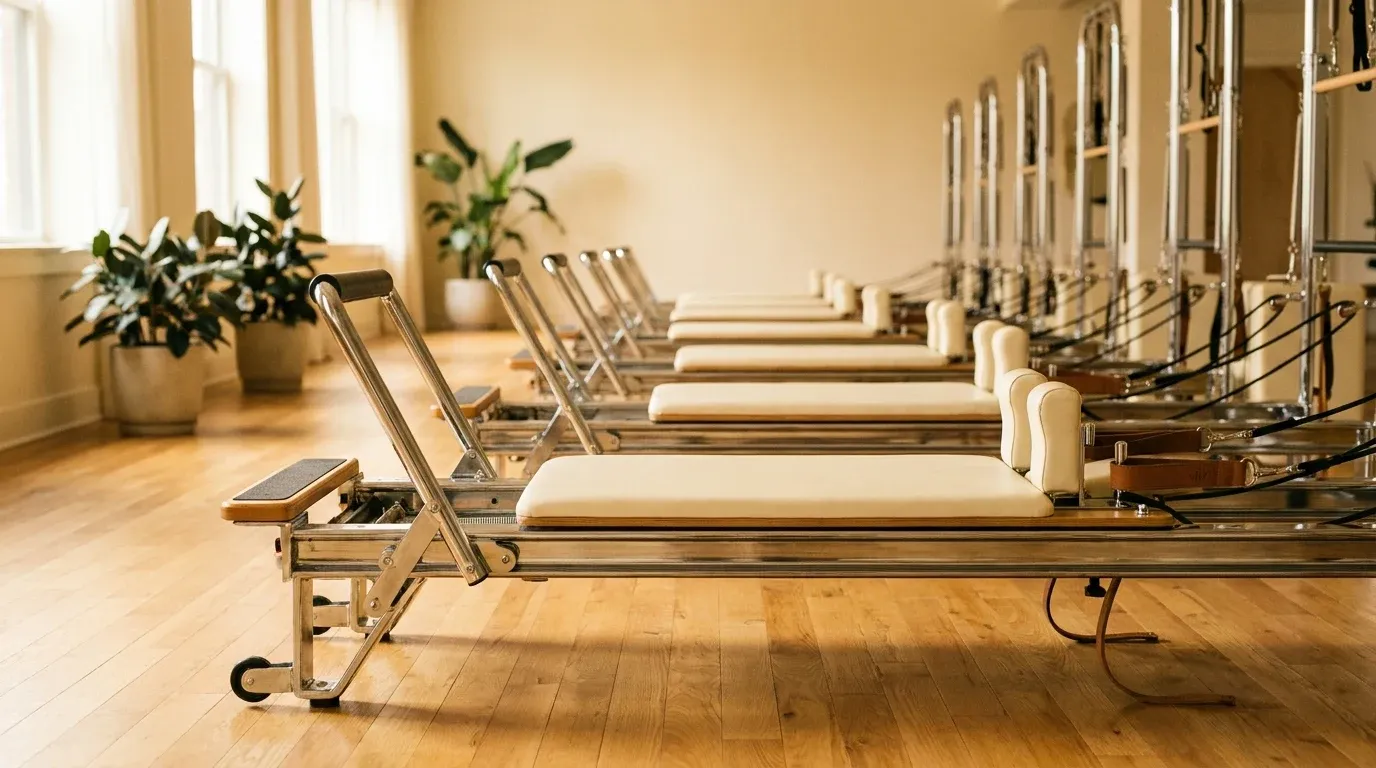
Strong Pilates, the Australian-born reformer Pilates concept, has signed a master franchise agreement with Xtreme Brands, Poland's largest wellness franchise operator, to enter Poland and the Czech Republic. The deal, announced August 3, 2026, is backed by bValue Fund and pushes Strong Pilates toward a presence in 16 countries. It's one of the clearest signals yet that boutique fitness is entering a new phase of global expansion.
For an industry that spent years chasing density in the US, UK, and Australia, the move into Central and Eastern Europe marks a deliberate shift in strategy. The question isn't whether boutique fitness can travel. It already has. The question is how fast, and at what cost.
What the Xtreme Brands Deal Actually Means
A master franchise agreement isn't a simple licensing deal. The master franchisee, in this case Xtreme Brands, acquires the rights to develop, sell, and support sub-franchises across a defined territory. That means Xtreme Brands handles local recruitment, real estate sourcing, operator training, and ongoing compliance, all under the Strong Pilates system.
For Strong Pilates, this structure dramatically reduces capital exposure. The brand doesn't need to build out infrastructure in Warsaw or Prague. It exports its model, collects fees, and scales through a local partner that already knows how the market works.
Xtreme Brands is not a passive vehicle here. As Poland's largest wellness franchise operator, it brings an established network, regulatory familiarity, and a track record of scaling fitness concepts in a market where the rules, the real estate, and the consumer behavior are all meaningfully different from Western Europe or the US.
The bValue Fund backing adds a capital layer that signals serious intent. This isn't an exploratory pilot. It's a structured rollout with investment support, which tends to compress the timeline between signed agreement and open studios.
Why Central and Eastern Europe, and Why Now
Gym penetration rates in Central and Eastern Europe remain well below Western European averages. In markets like Poland and the Czech Republic, penetration typically sits in the 6 to 8 percent range, compared to 12 to 15 percent in markets like the UK, Germany, or Sweden. That gap isn't a liability. For a franchise operator, it's the point.
First-mover positioning in an underserved market carries compounding value. The brand that establishes category leadership in Warsaw or Prague in 2026 doesn't just win early customers. It shapes what "Pilates studio" means in that market, attracts the best local operators, and builds defensible real estate positions before competitors arrive.
The timing also aligns with broader demographic and economic shifts in the region. Rising middle-class incomes, growing urban professional populations, and increased health awareness are creating the consumer base that boutique fitness requires. These aren't emerging-market characteristics anymore. Poland's GDP per capita has grown substantially over the past decade, and its urban fitness consumer increasingly resembles what you'd find in London or Toronto.
If you want context on how gym market demographics are shifting across income segments, the trend analysis in Gen Z and Seniors Are Driving the Gym Market Now is directly relevant. The same generational dynamics driving boutique growth in English-speaking markets are appearing, with a slight lag, across Central Europe.
The Master Franchise Model Is Becoming the Default for European Entry
Strong Pilates isn't alone in using this structure. Across boutique fitness, master franchise agreements have become the standard vehicle for brands entering European markets they don't fully control operationally.
The logic is consistent. European markets are fragmented by language, regulation, and consumer culture. A single-territory direct franchise approach requires local expertise that most international brands don't have. A master franchisee bridges that gap. They absorb local complexity in exchange for territorial exclusivity and a margin on sub-franchise fees.
For comparison, On Air Fitness's plan to reach 145 clubs by end of 2026 uses a similar growth logic: aggressive territorial expansion through structured partnerships rather than direct corporate ownership. The brands with capital-efficient models are moving faster than those trying to own every unit.
This matters for the broader fitness industry because it shifts where brand value accumulates. In a master franchise system, the franchisor's equity comes from brand strength, system quality, and network effects, not from owning real estate or managing staff. That's a fundamentally different business model, and one that scales internationally at a pace corporate-owned networks simply can't match.
What Strong Pilates Is Selling, and to Whom
Understanding why this deal makes sense requires understanding what Strong Pilates actually offers. The brand is built around reformer Pilates, a format that uses spring-resistance equipment to deliver full-body workouts combining strength, mobility, and controlled movement. It's not a casual stretching class. Done consistently, reformer Pilates builds measurable functional strength.
The research base supporting strength-focused training continues to grow. Evidence connecting regular resistance training to reduced mortality risk and improved long-term health outcomes is now substantial enough that it's reshaping how consumers think about their exercise choices. If you want the data, Strength Training Adds Years to Your Life: Harvard Study covers the key findings in accessible terms.
Strong Pilates positions itself at the intersection of clinical credibility and boutique experience. Its target customer isn't a casual gym-goer. It's an educated, health-conscious professional who wants a structured program, qualified instruction, and a studio environment that doesn't feel like a warehouse gym. That profile exists in Warsaw and Prague as clearly as it does in Sydney or Chicago.
Pricing in the boutique Pilates segment typically runs from $30 to $55 per class in major US cities, with monthly memberships ranging from $200 to $400 depending on market and session frequency. Central European markets will likely enter at a modest discount to those benchmarks, but as disposable incomes rise, the gap narrows.
16 Countries and the Internationalization Curve
The expansion into Poland and the Czech Republic brings Strong Pilates toward a 16-country footprint. That number matters not just for brand marketing, but for the operational and financial signals it sends to prospective franchisees globally.
International presence reduces perceived risk for new master franchise applicants. A brand operating in 16 countries has proven it can export its system across regulatory environments, cultural contexts, and competitive landscapes. That track record is itself a sales asset when approaching the next territory.
The boutique fitness sector has seen consistent internationalization pressure over the past decade. Formats that once seemed culturally specific to their home markets, including cycling, HIIT, reformer Pilates, and functional training, have demonstrated cross-border viability repeatedly. The category is no longer testing whether it can travel. It's optimizing how fast it does.
For brands considering how to build a fitness business that compounds over time, the interplay between format credibility and operational infrastructure is critical. Strong Pilates has built both. The Xtreme Brands deal is the mechanism that puts them to work in a new geography.
What This Signals for the Wider Fitness Industry
This deal is worth watching beyond its immediate market scope for a few reasons.
- Capital efficiency is now a competitive advantage. Brands that can scale internationally without proportional capital deployment will outpace those that can't. Master franchise structures make that possible.
- Underserved markets don't stay underserved for long. Once one credible operator establishes category awareness in a market like Poland, competitors follow quickly. The first-mover window is real, but it's not permanent.
- Institutional backing is changing the pace of boutique expansion. The involvement of bValue Fund in this deal reflects a broader pattern of private capital accelerating fitness brand internationalization. You're not just watching organic brand growth anymore. You're watching structured investment strategies playing out through franchise vehicles.
- Consumer demand for structured, expert-led training is global. The reformer Pilates format benefits from the same tailwinds driving broader strength and functional fitness adoption across markets. That demand doesn't stop at the EU's eastern border.
The fitness investment landscape is moving fast across formats. For a broader view of where capital is flowing in health and fitness right now, Digital Health Raised $7.4B in H1 2026 provides useful context on where institutional money is placing its bets.
Strong Pilates entering Central Europe through a capitalized master franchise partner isn't a minor news item. It's a concrete illustration of how boutique fitness brands are executing global strategy in 2026. Fast, asset-light, and backed by partners who carry the local operational load. Whether this model delivers in Warsaw and Prague at the pace investors expect will be worth watching closely over the next 18 months.