
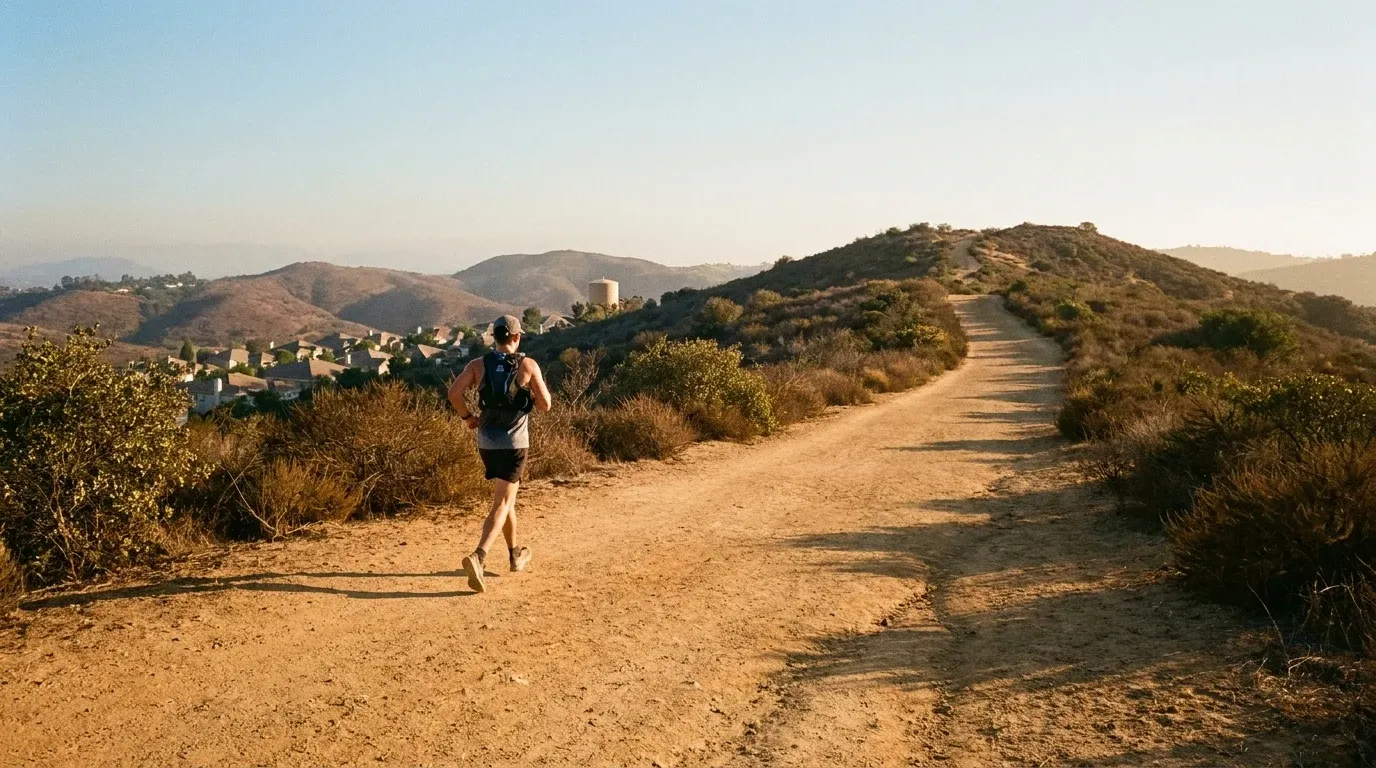
When most runners picture trail running, they imagine alpine ridgelines, remote wilderness, or weekend pilgrimages to the nearest national park. Irvine, California. a master-planned suburban city of roughly 300,000 people tucked between Los Angeles and San Diego. doesn't fit that picture. And that's exactly what makes it worth paying attention to.
Trail Running Project and several endurance publications have recently spotlighted Irvine as one of the more underrated trail towns in the American West. Not because it competes with Moab or Bend on drama, but because it delivers something those places can't: consistent, accessible, well-maintained trail running that you can fit into a Tuesday morning before work.
What Irvine Actually Offers
The city sits on the edge of the Santa Ana Mountains and borders the Irvine Ranch Natural Landmarks, a collection of open space preserves covering over 50,000 acres. Within that system, runners can access everything from groomed dirt paths to technical single-track with meaningful elevation gain.
Lomas Ridge, Weir Canyon, and the Irvine Ranch Open Space trails give you varied terrain across multiple distance options. You're not locked into one loop. On any given morning you can choose a flat 5-mile warm-up through coastal sage scrub or push into a 2,000-foot climb toward panoramic views that most visitors to Orange County never see.
The trail network connects directly to adjacent wilderness areas, meaning ambitious runners can string together routes far longer than the city's suburban reputation would suggest. Several ultramarathon runners based in Southern California use Irvine's trail system as their primary weekday training ground.
Why Suburban Trail Towns Get Underestimated
There's a bias in trail running culture that equates difficulty of access with quality. If you had to drive three hours and camp overnight to get there, it must be worth it. That logic ignores the reality of how most runners actually train.
Consistency beats heroics in endurance sport. A trail system you can reach in 15 minutes, run safely in the dark with good footing, and return from without burning an entire weekend. that's genuinely valuable. Irvine's trails are well-marked, regularly maintained, and supported by a local running community that's organized races and group runs for years.
The broader trend here is significant. Trail running has grown by an estimated 30 percent in participation over the past decade according to industry tracking data, and much of that growth is happening in suburban and peri-urban environments where most people actually live. Events like the first para athlete prize purse in trail running signal how seriously the sport is maturing, and that maturation is pulling trail culture into more accessible spaces.
The Running Community That Makes It Work
Trails don't create a trail town on their own. What distinguishes Irvine is the infrastructure that's grown around the terrain: local running shops that organize group trail runs, a calendar of smaller local races that provide low-pressure competition, and an active community on platforms like Strava and local Facebook groups where route beta gets shared freely.
That community element matters more than most runners account for when evaluating a place to train. Having people who know the trails, can tell you when seasonal closures apply, and show up on Saturday mornings for a group long run. those factors compound significantly over months of training.
Orange County's weather also removes one of trail running's biggest friction points. With over 280 sunny days annually and mild temperatures for most of the year, the logistical barriers are low. You're not managing ice, mud season, or the kind of heat that makes summer trail running genuinely dangerous in hotter inland regions. If heat management during training is something you're navigating, understanding what your body goes through when racing in extreme heat and humidity is worth reviewing before your summer training ramps up.
How to Find Your Own Irvine
The more useful takeaway from Irvine's trail running story isn't that you should move to Orange County. It's that most runners are probably underestimating what's already close to home. Here's a framework for evaluating your local trail options with fresh eyes.
Start with open space inventories, not trail apps. AllTrails and Strava heatmaps show you where other runners already go, which biases toward crowded and obvious routes. Instead, check your county or regional parks department website, look for watershed authority lands, utility corridor greenways, and conservation easements. These often contain maintained trail networks that don't show up prominently in consumer apps.
Look for trail systems with at least 15 miles of connected routes. Below that threshold, you're running the same loops constantly, which gets mentally stale. A network with 15 to 30 miles gives you enough variation to sustain months of training without repetition becoming a limiting factor.
Evaluate elevation within context. You don't need mountains. Even 500 to 800 feet of cumulative gain over a 10-mile run is enough to build strength and simulate race demands for most trail events. Research suggests that consistent moderate hill work produces comparable muscular adaptations to occasional big vertical days, provided the volume is maintained.
Check for active local running clubs. A trail running club or weekly group run is a strong signal that the trail system is genuinely usable year-round. Clubs don't sustain themselves on terrain that's only runnable four months a year.
- Search for local chapters of national organizations like Trail Sisters or Hash House Harriers
- Check local running shop event calendars for trail-specific group runs
- Search Meetup.com for trail running groups within 20 miles of your location
- Look for regional race series. recurring events signal that local organizers believe in the terrain
Factor in access time honestly. A stunning trail that's 90 minutes away will get used twice a month. A good trail that's 20 minutes away will get used twice a week. Over a training cycle, the math heavily favors proximity. This is the central insight that makes a place like Irvine genuinely competitive with destinations that look better on Instagram.
Making the Most of Accessible Trail Running
Once you've identified quality local trails, the question becomes how to train on them intelligently rather than just logging miles. Accessible trail systems invite higher frequency, which means recovery and fueling practices matter more than they do for the once-a-weekend mountain runner.
Running trails on consecutive days. even easy terrain. generates cumulative fatigue in ways that road running doesn't, largely because of the neuromuscular demands of variable footing and the eccentric load from descents. Fueling your recovery appropriately becomes non-negotiable. Getting your race-day fueling strategy right starts with getting your daily training nutrition right first, and that's especially true when trail frequency increases.
Easy paces also tend to be harder to manage on trails than on roads because terrain variation naturally spikes effort. Research consistently supports keeping the majority of your training volume genuinely easy, and understanding the real benefits of running at an easy pace can reshape how you approach your weekday trail sessions. Effort-based running by feel or heart rate works better on trails than chasing pace targets.
The Bigger Picture for Trail Running
Irvine's emergence as a recognized trail town says something useful about where trail running is heading. The sport built its identity around remote suffering. that identity is expanding to include accessible, community-oriented, frequently-practiced trail running that fits real lives.
This is good for participation numbers, good for diversity within the sport, and good for the quality of everyday training that most runners actually do. You don't need to be a destination marathon traveler or a wilderness expedition runner to build a serious trail practice. You need terrain that's runnable, a community that shows up, and the willingness to look at what's already near you with more curiosity than you have before.
Irvine figured that out. Plenty of other cities are sitting on the same potential, waiting for runners to notice.