
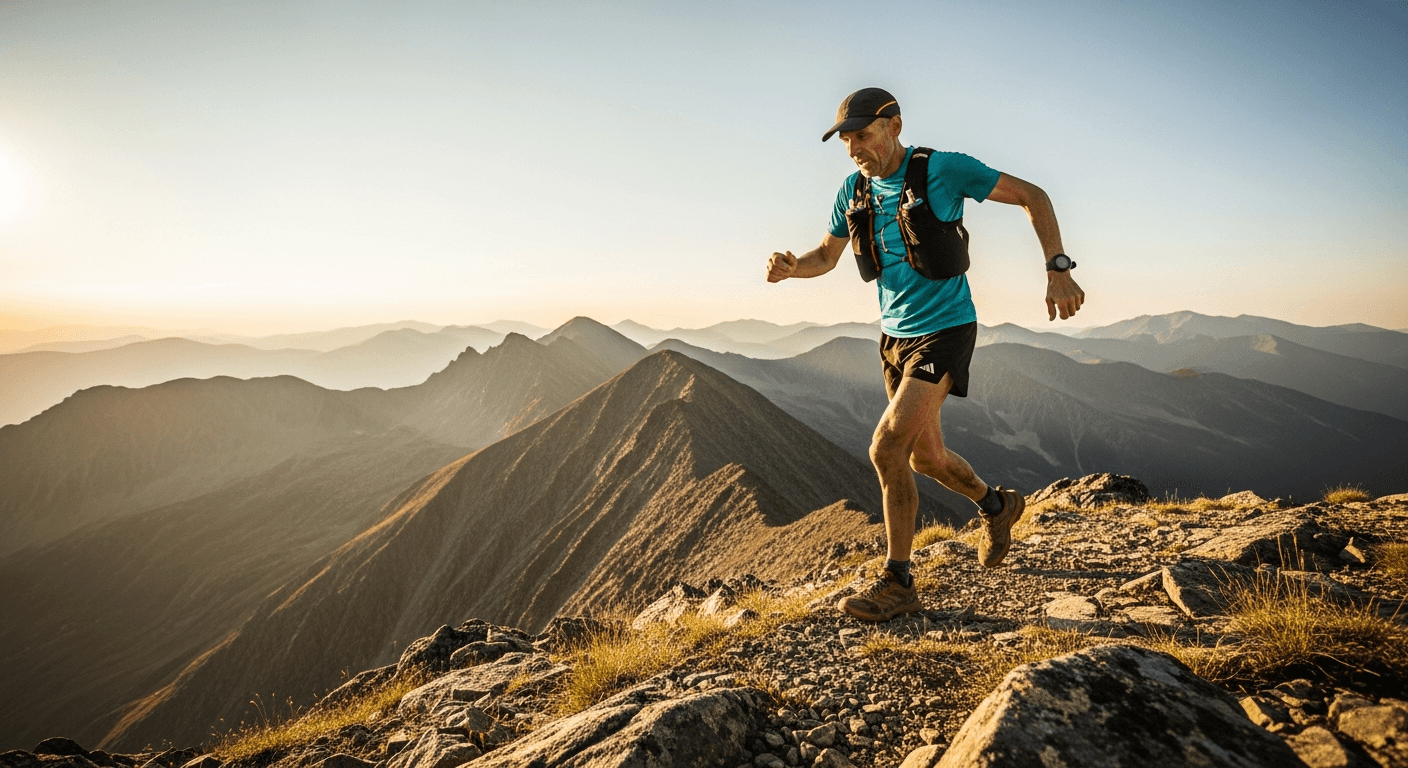
Some performances stop you mid-scroll. Ludovic Pommeret's finish at the 2025 Hardrock 100 is one of them. The French trail runner crossed the line in 21 hours, 11 minutes, and 36 seconds, smashing his own clockwise course record by more than 20 minutes. He's 50 years old. And he just became the first athlete in the race's history to win three consecutive titles.
If you've ever used age as a reason to slow down your ambitions, Pommeret just made that argument significantly harder to defend.
What Happened at Hardrock 100
The Hardrock 100 Endurance Run is held every summer in the San Juan Mountains of southwestern Colorado. The course covers 100.5 miles with roughly 33,000 feet of elevation gain and loss, crossing terrain above 12,000 feet for much of the route. It's routinely described as one of the most demanding 100-mile races on the planet.
This year's clockwise edition of the course is considered the harder direction by most athletes who have run both. High altitude, technical rock fields, exposed ridgelines, and unpredictable mountain weather make pacing and execution as important as raw fitness. Cutting 20-plus minutes from your own record on that course isn't a marginal improvement. It's a statement.
Pommeret completed the race faster than he ever has, faster than anyone else has on the clockwise course, and did it a decade into what most athletes would consider the back half of their competitive window.
Three Consecutive Wins: Why That Number Matters
Winning Hardrock once is an achievement that earns respect across the entire trail running world. The field includes some of the best mountain ultra runners on the planet, and the lottery system that controls entry makes just toeing the start line a years-long commitment for many runners.
Winning it twice puts you in rare company. Winning it three times in a row, while setting a course record on your final attempt, is something the race has never seen before. Pommeret isn't just accumulating titles. He's raising the performance ceiling of what's possible at his age, in this event, on this course.
The trail running community has responded accordingly. Across social media, coaching circles, and race forums, the reaction has been consistent: this is a landmark result for masters athletes in endurance sport.
The Science Behind Aging and Ultramarathon Performance
Pommeret's win isn't just inspiring. It's backed by a growing body of research showing that endurance performance doesn't follow the same aging curve that shorter, faster disciplines do. Studies on masters ultramarathon runners consistently show that the performance decline in events lasting 12 hours or more is significantly smaller than in marathons or track events.
Several physiological factors help explain this. Fat oxidation efficiency, which is critical for ultra-distance pacing, tends to remain robust well into the fifth and sixth decades of life. Experience-driven pacing, the ability to read your body accurately over many hours, is also a skill that compounds over time rather than deteriorating. And mental toughness, the capacity to manage discomfort across an entire day and night of racing, doesn't weaken with age.
Research on how different athletes manage effort over long distances has shown that strategic pacing and fuel management often separate finishers more than raw VO2 max. That's partly why conversations about why some athletes handle the marathon wall better than others have become increasingly relevant to masters runners who are optimizing long-race strategy rather than chasing peak speed.
For athletes in their 40s and 50s who want to compete seriously, the data supports a training approach built around consistency, recovery, and smart load management rather than volume alone. On that front, it's worth noting that the old 10% weekly mileage rule doesn't hold up under current injury science, and coaches working with masters athletes are increasingly moving toward individualized load metrics instead.
What Elite Masters Performance Looks Like in Practice
Pommeret's approach to training and racing at 50 reflects principles that are becoming more common among elite masters athletes. Recovery isn't treated as optional. Nutrition is precise and intentional. Sleep is managed as a performance variable, not an afterthought.
For ultramarathon athletes specifically, fueling strategy during a 21-hour effort is as complex as any aspect of race preparation. At altitude, appetite suppression is a genuine challenge, and the body's ability to process carbohydrates shifts under hypoxic stress. Getting sodium and electrolyte balance right over that duration is non-negotiable. If you're training for long mountain efforts, understanding what your body actually needs from electrolytes during extended heat and exertion is foundational, not optional.
Supplement use is also common in the ultra community, and increasingly, athletes are scrutinizing what they're actually consuming. The question of whether product labels reflect what's inside the packaging remains a live issue, and knowing how to evaluate supplement label accuracy matters when you're depending on those products over a 20-plus-hour race.
The Broader Moment for Masters Athletes
Pommeret's performance lands at a specific moment in endurance sport. Masters participation in trail running and ultramarathon events has grown sharply over the past decade. Race entry data from major events consistently shows that the 45-to-60 age bracket is one of the fastest-growing segments. More people are starting to run seriously later in life, and more lifelong runners are refusing to treat their 50s as a wind-down phase.
That shift in mindset is showing up at the front of races, not just in the age group results. Pommeret is the clearest current example, but he's not alone. Across elite ultra results globally, athletes in their mid-to-late 40s are regularly placing in the overall top ten at major mountain races.
The trail running world has also been evolving structurally. Events in the Western US have faced pressure from environmental factors this summer, with Colorado wildfires forcing cancellations of several summer trail races. Hardrock's completion this year, and the quality of performance it produced, felt particularly significant against that backdrop.
What You Can Take From This
You don't need to be an elite trail runner to find something useful in Pommeret's result. But if you're a runner in your 40s or beyond who's been wondering whether your best performances are behind you, the answer from the current evidence is: probably not, especially if your goal events are long ones.
Here's what masters runners who are improving tend to have in common:
- Consistent, multi-year training blocks. Pommeret has been competing at the highest level of trail running for well over a decade. Accumulated aerobic fitness doesn't disappear quickly, and it builds in ways that short training cycles can't replicate.
- Prioritized recovery. Masters athletes who continue improving almost universally treat recovery as part of training, not separate from it. Sleep, nutrition timing, and load management are all active practices, not passive ones.
- Dialed-in race nutrition. Long events reward athletes who know exactly how to fuel themselves. The gap between good and poor fueling strategy over 20 hours is enormous.
- Adaptable training structure. Rigid programs built for younger athletes often don't serve masters runners well. Flexibility in weekly structure, response to recovery signals, and willingness to adjust based on how your body responds matters more with age, not less.
- Mental experience. Knowing what suffering feels like, and knowing you've come through it before, is a competitive asset. It's one that only accumulates over time.
None of this is abstract. Pommeret ran 100 miles through the Colorado mountains faster than he ever has, at 50, and beat everyone else on the course. That's not inspiration content. That's data.
A Record That Will Define the Conversation
Course records in ultramarathon running are genuinely hard to compare across years because conditions vary so significantly. Weather, snow coverage, and route conditions on the day can swing finish times by hours. That makes Pommeret's margin of improvement, more than 20 minutes faster than his own previous best, even more significant. He didn't squeak past his old mark. He moved it substantially.
For the trail running community, the conversation around what masters athletes can achieve just shifted. The ceiling got higher. And the person who raised it did it with a third consecutive win, on one of the world's hardest courses, at an age when most people are deciding whether to take up golf.
If you're building toward a long-term running career, or you're already in it and wondering what's still possible, Ludovic Pommeret just answered that question more clearly than any study or coaching framework could.