
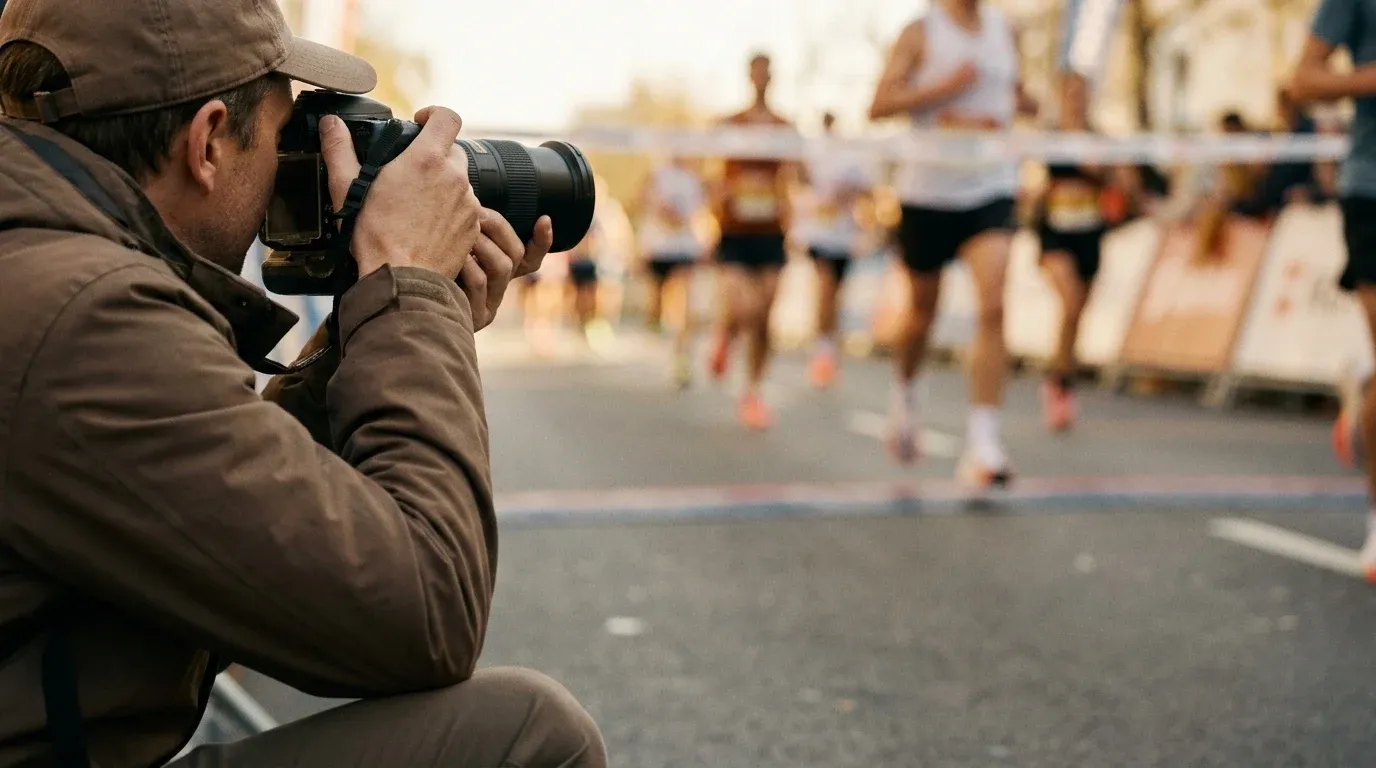
Race photography platform Sportograf has confirmed a global partnership with The Running Conference 2026, presented by haku. The deal positions Sportograf alongside race directors, event organizers, and industry stakeholders at one of the sport's most influential annual gatherings. And it signals something worth paying attention to: race-day media is no longer an afterthought. It's becoming a core part of how running events generate revenue, build loyalty, and attract participants.
If you organize races or follow the business side of endurance sports, this partnership tells you where investment is heading.
What Sportograf Actually Does
Sportograf is one of the largest dedicated race photography platforms in endurance sports. The company deploys professional photographers across mass-participation events, then uses automated facial recognition and bib-detection technology to match finish-line and on-course photos to individual runners. Participants can find, preview, and purchase their photos within hours of crossing the finish line.
The platform operates across hundreds of events globally, covering marathons, triathlons, obstacle races, and cycling sportives. For race organizers, Sportograf functions as a white-label media partner: the company handles staffing, editing, distribution, and sales, while organizers receive a revenue share and a built-in participant benefit they can promote in their marketing.
That model has made race photography a legitimate commercial line item for events that previously treated it as a courtesy service. At major marathons, photo packages typically range from $25 to $60 per runner, and with fields of tens of thousands of finishers, the numbers add up quickly.
The Running Conference 2026: Why It Matters
The Running Conference, presented by haku, brings together race directors, timing companies, registration platforms, sponsors, and media brands to discuss the state of the sport and the business behind it. It's the kind of event where partnerships get formed, deals get announced, and the industry's priorities become visible.
Running events have seen sustained growth over the past several years. Participation in road races across the US and internationally has rebounded strongly from pandemic-era lows, and the pipeline of new runners entering the sport shows no signs of slowing. Women-only running events are among the fastest-growing formats in 2026, reflecting broader demographic shifts in who is showing up at start lines and what they want from the experience.
That growth creates pressure on race directors to deliver better experiences, more compelling content, and stronger commercial results. The Running Conference is where those pressures get addressed directly. Sportograf's decision to come in as a global partner is a statement that race-day media belongs in that conversation at the highest level.
Why Race Photography Is a Business Story Now
For a long time, race photography occupied a secondary position in event operations. Organizers would hire a few photographers, post images to a Facebook album, and call it done. The commercial opportunity was largely ignored, and participant satisfaction with photo quality and delivery was notoriously inconsistent.
That's changed. Technology has transformed what's possible. Automated photo matching means a runner who finishes a 40,000-person marathon can find their photos in under an hour without scrolling through thousands of images. High-resolution action shots from multiple course positions give participants content worth purchasing and sharing. And social sharing of race photos has become one of the most effective organic marketing channels available to event organizers.
When a runner posts a professional finish-line photo to Instagram or shares it with family, they're effectively advertising the event to people who might not have heard of it. That reach has real value. Race directors who have quantified it report that photo-driven social content consistently outperforms their paid advertising in terms of engagement and registration intent from new participants.
The economics have also matured. Platforms like Sportograf have shifted the model from upfront photography fees to revenue-share arrangements, reducing financial risk for organizers while aligning incentives around participant purchase rates. It's a structure that makes race photography accessible to mid-sized events, not just the majors.
What This Partnership Signals for the Industry
Sportograf's entry as a global partner at The Running Conference isn't just a sponsorship. It's a positioning move. By aligning with haku, one of the prominent technology platforms in the event registration and management space, Sportograf is placing itself at the intersection of two trends that are reshaping running events: the demand for better participant experiences and the push for diversified event revenue.
Race directors are under real financial pressure. Entry fees have risen sharply. Permitting costs, insurance, staffing, and course logistics have all increased. Finding revenue streams beyond registration is no longer optional for many events. Media and photography, done at scale through the right platform, represent one of the cleaner solutions to that problem.
The partnership also reflects a broader shift in how running events think about their product. If you're building a race that attracts repeat participants and generates word-of-mouth growth, the experience has to extend beyond the finish line. Photos, video highlights, personalized content, and digital keepsakes are part of what runners are now comparing when they choose between events. The Chicago Marathon's 2026 edition is a useful reference point: major events are investing heavily in participant media because they understand it drives both satisfaction and return registration.
How Race Directors Should Be Thinking About This
If you run an event or work in race operations, the Sportograf-Running Conference partnership is a prompt to audit how your event handles participant media. Here are the questions worth asking:
- Are you leaving revenue on the table? If your current photography setup involves a flat-fee photographer and free photo downloads, you have no revenue share, no automated matching, and no data on participant behavior around photos.
- What's your content strategy post-race? The 48-hour window after a race is when participants are most active on social media. A platform that delivers high-quality, personalized photos quickly is a direct driver of that activity.
- How does your media offering compare to competing events? Participants compare events. If your competitors offer faster, better photo delivery and you don't, it registers. Not always consciously, but it registers.
- Are you capturing data from photo engagement? Who's buying, who's sharing, and which course locations generate the most purchases are all signals you can use in event design and marketing strategy.
The running industry is maturing. What worked operationally five years ago isn't the benchmark anymore. Technology partnerships, data-driven decisions, and diversified revenue streams are table stakes at the event director level.
The Bigger Picture for Running in 2026
This partnership fits into a wider pattern of professionalization across the running industry. Events are investing in timing technology, app-based participant communication, sustainability programs, and now media infrastructure at levels that would have seemed excessive a decade ago. The sport's growth justifies the investment.
Running is also attracting participants from more diverse backgrounds and with more varied goals than ever. The runner who signs up for their first 5K and the ultramarathoner pushing through a 100-mile finish in the dark are both part of the same ecosystem. Stories like Paul Wilson's comeback from a shattered leg to complete a 160K ultramarathon illustrate the emotional stakes involved in endurance events. Race-day media exists to capture those moments, and when it does that well, it reinforces why people keep running and keep entering events.
The growth trajectory is also creating opportunities for adjacent businesses. Event technology, coaching apps, nutrition companies, and now race media platforms are all building sustainable models around a participant base that's growing and willing to spend. Trail running in particular is expanding its calendar and its audience, adding new events that need the same media and technology infrastructure that road racing has been developing for years.
Sportograf joining The Running Conference 2026 as a global partner is a concrete data point in that story. It tells you that race photography has crossed from a nice-to-have service into a recognized pillar of event business strategy. And it tells you that the organizations shaping the running industry's future are treating participant media with the same seriousness they bring to timing, registration, and course design.
If you're involved in running events at any level, from organizing local 5Ks to managing large-scale marathons, that's the shift worth understanding now rather than after everyone else has already built it into their operations.