
Most people who try running quit within the first two weeks. Not because running is too hard, but because they start it wrong. They lace up, head out the door, and push too fast, too soon. Their lungs burn, their legs ache, and they decide running simply isn't for them.
Key Takeaways
- An 8-week run/walk program safely takes you from zero to 30 continuous minutes
- 3 runs per week with rest days between each is enough for beginners
- Most beginner injuries come from increasing weekly volume by more than 10%
It is for them. It's for you. You just need a smarter starting point.
This 8-week plan takes you from your very first run-walk interval to 30 continuous minutes of running. Every session is mapped out. Every week builds on the last. You don't need a gym, a coach, or expensive gear. You need a pair of decent shoes and the discipline to keep the pace easy.
The Number One Beginner Mistake: Going Too Fast
Here's the thing most new runners don't know. The pace that feels embarrassingly slow is often the correct pace. Research consistently shows that beginners overestimate their effort, running at intensities that exceed 80% of their maximum heart rate when they should be closer to 60-70%.
At that easy effort, you should be able to hold a full conversation without gasping. If you can't say a complete sentence out loud, you're running too fast. Slow down. Walk if you need to. This isn't a compromise. It's the method.
Running slow builds your aerobic base, the foundation that eventually lets you run faster and longer without breaking down. Skipping this phase is why shins splint, knees ache, and motivation collapses by week three. Protect the process by keeping it comfortable, especially in the first four weeks.
How to Pick the Right Running Shoes
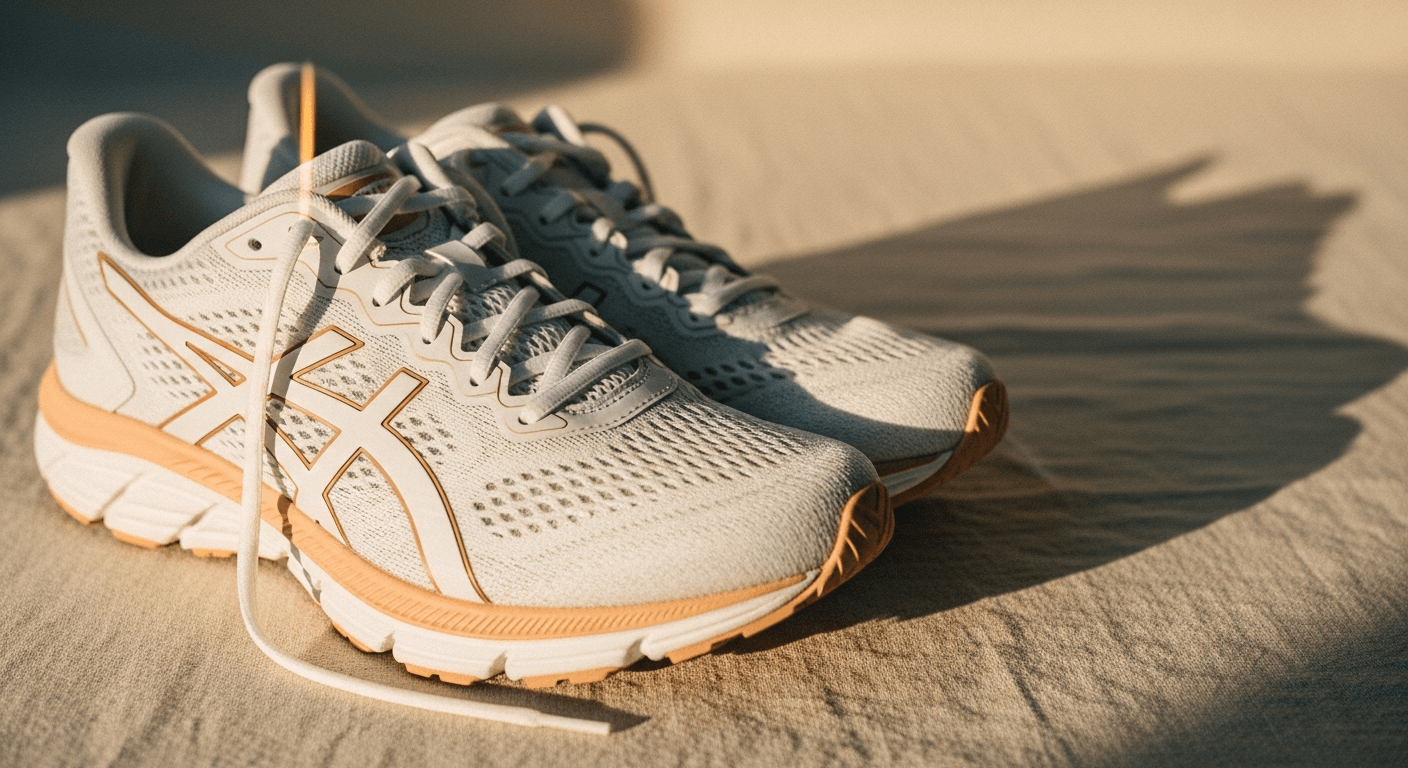
You don't need to spend $200 on running shoes. You do need shoes that are designed for running, not cross-training, fashion, or the gym floor. The distinction matters because running shoes are built to absorb repetitive forward-impact forces that other athletic shoes simply aren't designed for.
Here's what to look for when choosing a pair:
- A proper fit with thumb's width of space between your longest toe and the end of the shoe. Your foot swells during a run.
- A stack height that suits your gait. If you're new to running, a moderate cushion (not maximalist, not barefoot-style) is the safest starting point.
- No heel pinching or lateral slipping. The heel should feel snug but never tight.
- A shoe bought at the end of the day, when your feet are at their largest.
Brands like ASICS, New Balance, Brooks, and Saucony all offer solid entry-level options in the $80-$120 range that will serve you well through this entire program and beyond. If you can visit a specialty running store for a quick gait assessment, do it. Many offer this for free.
The 8-Week Walk-Run Plan
Each week includes three sessions. Rest at least one full day between each run. The sessions below describe what to do once you've warmed up with 3-5 minutes of brisk walking. Always finish with 3-5 minutes of easy walking to cool down.
Week 1: Build the Habit
Session structure: Run 1 minute, walk 2 minutes. Repeat 7 times. Total active time: 21 minutes.
This feels easy. That's intentional. Your tendons, ligaments, and connective tissue need more time to adapt than your cardiovascular system does. Going easy now prevents the overuse injuries that derail most beginners. Resist the urge to do more.
Week 2: Extend the Running Intervals
Session structure: Run 2 minutes, walk 2 minutes. Repeat 6 times. Total active time: 24 minutes.
You're doubling your run intervals while keeping the rest equal. Pay attention to your breathing. If you're panting after the first 30 seconds of each interval, slow down. The run should feel controlled, not urgent.
Week 3: Shift the Ratio
Session structure: Run 3 minutes, walk 2 minutes. Repeat 5 times. Total active time: 25 minutes.
This is where the run-to-walk ratio tips in running's favor for the first time. Some runners feel a mental shift here. Others feel the first signs of leg fatigue. Both are normal. Make sure you're sleeping enough. Recovery happens outside the run.
Week 4: Consolidate
Session structure: Run 5 minutes, walk 2 minutes. Repeat 4 times. Total active time: 28 minutes.
Week 4 is a confidence week. You're running five continuous minutes at a stretch, which is a real milestone. Don't celebrate by going faster. Stay conversational. Consistent pace across all four intervals is the goal.
Week 5: Longer Blocks
Session structure: Run 8 minutes, walk 2 minutes. Repeat 3 times. Total active time: 30 minutes.
Eight minutes is often the point where running starts to feel rhythmic rather than effortful. Your breathing settles, your stride finds its pattern. If that doesn't happen yet, it will. Give it time and don't force the pace.
Week 6: Approaching the Threshold
Session structure: Run 12 minutes, walk 2 minutes. Repeat 2 times, then run 6 minutes. Total running time: 30 minutes.
You're now running more than you're walking in each session by a wide margin. The final 6-minute block at the end tests your mental endurance as much as your physical stamina. Start each interval slower than you think you need to. You'll finish stronger for it.
Week 7: The Bridge
Session structure: Run 20 minutes, walk 2 minutes, run 10 minutes. Total running time: 30 minutes.
One 20-minute continuous run is a genuine achievement. Keep your effort easy throughout. If 20 minutes feels hard, it means you're running too fast. Slow down by 30 seconds per kilometer and notice how much more sustainable it becomes.
Week 8: The Full 30
Session structure: Run 30 minutes non-stop. Do this three times this week.
You're there. Thirty minutes, no walking breaks, no shortcuts. By this point your body has built the aerobic base, the structural resilience, and the movement economy to sustain it. The only job now is to trust the work you've done and keep the pace honest.
3 Common Beginner Injuries and How to Avoid Them
Running injuries don't appear randomly. They follow predictable patterns, almost always triggered by doing too much, too soon, too fast. Here are the three you're most likely to encounter and what to do about them.
Shin Splints
Shin splints, or medial tibial stress syndrome, cause a dull aching pain along the inner edge of the shinbone. They're extremely common in new runners and almost always a result of ramping up volume or intensity before the tibia and surrounding muscle have adapted.
To avoid them, follow the plan as written and don't skip the walk intervals in early weeks. Running on softer surfaces like grass or packed dirt instead of concrete reduces impact forces. If you feel shin pain, take two rest days and ice the area for 15-20 minutes. Don't run through sharp or worsening pain.
Runner's Knee
Runner's knee, or patellofemoral pain syndrome, presents as a dull ache around or behind the kneecap, often worse going downhill or after sitting for long periods. Studies suggest it accounts for roughly 25% of all running injuries, making it the most frequently reported overuse problem in the sport.
Weak hips are a primary driver. Adding two sessions per week of basic hip and glute strengthening, think clamshells, single-leg bridges, and side-lying leg raises, significantly reduces your risk. Avoid overstriding, which places excessive load on the knee. Your foot should land roughly under your hips, not far in front of them.
Plantar Fasciitis
Plantar fasciitis causes a stabbing pain in the heel or arch of the foot, often sharpest during the first steps of the morning. It develops when the thick band of tissue connecting your heel to your toes becomes inflamed, usually due to rapid increases in mileage or inadequate footwear.
Wearing supportive shoes (not worn-out ones) is the first line of defense. Rolling the sole of your foot over a frozen water bottle for five minutes after each run helps manage inflammation. Calf stretching, specifically with a straight knee and then a bent knee, addresses the tightness that typically contributes to the condition.
How to Stay on Track for 8 Weeks
Consistency beats intensity at every stage of beginner running. Three sessions per week, done reliably, will always outperform five sessions done erratically. Schedule your runs like appointments. Put them in your calendar and treat missed sessions as rescheduled, not cancelled.
On days when motivation is low, shorten the session if you must, but go. Even 15 minutes of easy running maintains the habit and protects your progress. The psychological continuity of showing up matters more than the perfect execution of every interval.
Track your sessions simply. A note in your phone with the date, the session completed, and how you felt is enough. Over eight weeks, that log becomes evidence of what you're capable of. And that evidence is one of the most reliable sources of motivation that exists.
You started at zero. Thirty minutes from now, you won't be there anymore. Keep the pace easy, trust the plan, and let the weeks do their work.
For more guidance on building your running base, explore our full running training hub.
Frequently Asked Questions
How long to go from zero to 30 minutes?
A progressive 8-week plan takes you from zero to 30 continuous minutes by alternating walking and running, with progressively longer running intervals.
How fast should beginners run?
At conversational pace: you should be able to talk while running. If you're too breathless, slow down. Aerobic endurance builds at low intensity.
Should beginners run every day?
No, 3 runs per week with rest days between each is enough. Tendons and joints need time to adapt. Too much too soon means injury.
Related articles
- Hydration During Running: What to Drink and When
- Courtney Dauwalter Erases a 4-Minute Deficit in 15km to Win Chianti Ultra Trail
- 10 minutes of daily mobility: the complete routine