
Stephanie Case Runs 100 Miles in Antarctica: A First for Women in Extreme Endurance
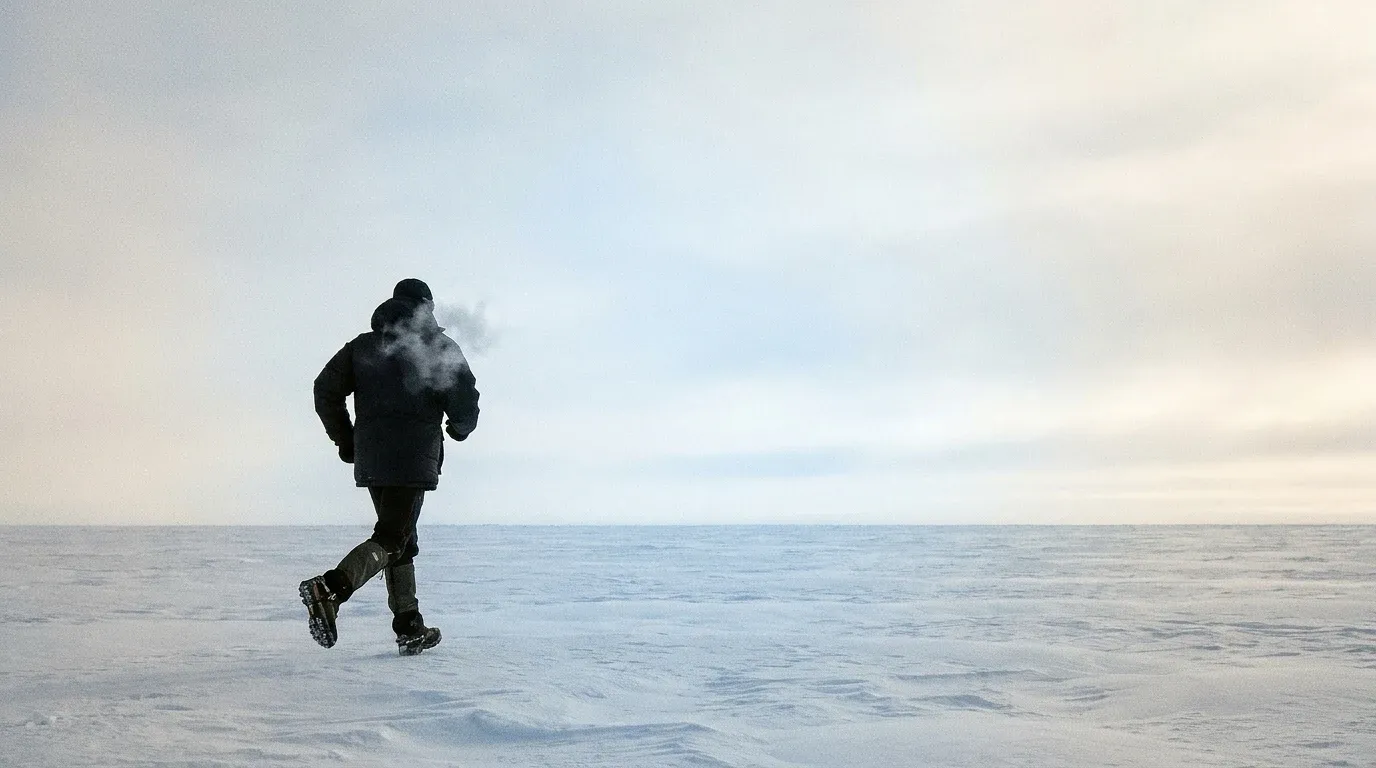
In early 2026, Canadian ultrarunner Stephanie Case completed a 100-mile run across Antarctic terrain, becoming the first woman in history to do so. No pacer, no temperate weather, no forgiving trail surface. Just ice, wind, and 100 miles of one of the most hostile environments on the planet. It's the kind of achievement that reframes what human endurance actually looks like.
If you've ever talked yourself out of a training run because it was too cold or too dark outside, Case's story is worth sitting with for a moment.
What the Run Actually Involved
Running 100 miles anywhere is an extraordinary physical undertaking. Running 100 miles in Antarctica is something categorically different. Temperatures in the region can drop well below -20°C (-4°F), surface conditions range from compacted snow to unpredictable ice, and the logistical challenge of operating in such a remote environment adds a layer of complexity that most race directors would never attempt to manage.
Case completed the distance in conditions that demanded not just elite fitness but precise preparation. Gear failure isn't just uncomfortable in Antarctica. It can be life-threatening. Nutrition, hydration strategy, layering systems, and foot care all require a level of planning that goes far beyond the standard ultramarathon checklist.
She finished. That's the headline. But the details of how she got there matter just as much as the result itself.
Who Is Stephanie Case?
Case is a Canadian athlete with a résumé that doesn't fit neatly into the typical elite runner profile. She's a former United Nations human rights lawyer who has worked in conflict zones including Afghanistan and Iraq. She founded Free to Run, a nonprofit that uses outdoor sports and running to empower women and girls in regions affected by conflict.
That background gives her story a texture that most extreme sports achievements don't have. She isn't running away from something or chasing a sponsorship contract. Her relationship with running is rooted in what it can do for communities, not just for personal performance metrics.
She's also just a very fast ultrarunner. Case has podium finishes at some of the world's most prestigious ultra events, including top results at races in mountainous terrain across Europe and Asia. The Antarctic 100-miler is the latest data point in a career that keeps expanding the edges of what's possible.
Why Antarctica? Why Now?
Extreme endurance running has been moving toward more remote and hostile environments for the past decade. The 6633 Arctic Ultra in Canada's Yukon, the Montane Spine Race in the UK, and various Antarctic expedition formats have created a new category of running that sits somewhere between traditional ultramarathon and full-scale polar expedition.
What makes Case's run significant isn't just the distance or the gender milestone, though both matter. It's what the achievement signals about where the sport is heading. Ultra and adventure running are no longer niche pursuits reserved for a small community of specialists. They've become a global movement, drawing in athletes from wildly different backgrounds who share a common interest in testing themselves against difficult terrain and conditions.
Events like the Boston Half 2026, where course records were broken and fast finishes made headlines, reflect the mainstream growth of competitive running. But the Antarctic end of the spectrum represents something different: an appetite for challenge that goes well beyond finish-line times.
The Explosive Growth of Ultra Running as a Global Movement
The numbers back this up. Participation in ultramarathons has grown by more than 1,700 percent over the past two decades globally, according to data from race organizers and athletics bodies. What was once a sport dominated by a small group of specialists is now a category that attracts engineers, nurses, teachers, and lawyers, often alongside elite athletes.
Social media has played a role, but it's not the whole story. Adventure running fills a specific psychological need that road racing doesn't always meet. It combines fitness with exploration, physical challenge with mental resilience, and individual effort with a strong community culture.
That community element is part of what makes Case's story so resonant. She's not performing an achievement in isolation. Her work with Free to Run connects elite-level endurance sport directly to grassroots participation in environments where running isn't a lifestyle choice but an act of resistance.
If you're tracking the broader fitness landscape, the rise of multi-format challenge events is part of the same trend. The growth of hybrid fitness competitions, including formats discussed in HYROX Ultimate, Fast, or Ultra: How to Train for Each Format, reflects a broader hunger for structured challenge that goes beyond a single discipline.
What Extreme Cold Does to the Body
Running in Antarctic conditions creates physiological demands that are genuinely different from hot-weather ultras or high-altitude racing. Cold air reduces the efficiency of the respiratory system and increases the energy cost of breathing. Muscles operate less efficiently at low temperatures. The risk of frostbite, particularly on the extremities and face, requires constant monitoring.
Caloric demands increase significantly in cold environments. The body burns more energy simply maintaining core temperature, which means nutrition strategy in an Antarctic run looks very different from a standard 100-miler. Athletes in polar conditions can burn upward of 8,000 to 10,000 calories per day depending on effort level and temperature exposure.
Hydration is a counterintuitive challenge in cold weather. The sensation of thirst decreases in low temperatures, which means athletes can become dehydrated without realizing it. Cold-induced diuresis, a physiological response to cold exposure, further complicates fluid management.
Case's ability to manage all of these variables over 100 miles, while maintaining the pace and focus required to complete the distance, is what separates this achievement from a theoretical exercise. It actually happened.
What Everyday Runners Can Take From This
You don't need to book a flight to the Antarctic to find meaning in this story. What Case's achievement does, practically speaking, is recalibrate your sense of what's difficult and what's genuinely impossible.
Most runners set their limits based on what they've done before or what their immediate peer group has attempted. That's a reasonable heuristic, but it's also one that tends to undersell human capacity significantly. Research consistently shows that perceived exertion is as much a mental construct as a physiological one. The body has more capacity than the mind is typically willing to access.
If you're in the early stages of building fitness or training for your first long-distance event, the fundamentals still apply: progressive overload, recovery, nutrition, and consistency over time. A structured approach, like the kind outlined in this eight-week winter training block guide, gives you a framework to build toward harder goals without burning out before you get there.
The specifics of what you're training for matter less than the commitment to showing up and extending your edge, even incrementally.
The Broader Signal for Competitive Running in 2026
Case's Antarctic run lands in a year that has already seen significant momentum in the running world. Record performances at major events, expanded race calendars, and increasing media attention on adventure and ultra formats all point to a sport in an expansive phase.
For a full picture of what's been happening across the racing landscape recently, This Week in Running: November 9, 2026 covers the latest results and developments across distances and formats.
The Antarctic milestone fits into this moment precisely because it represents the outer edge of what competitive running can look like. It's not a stunt. It's a data point that shifts the conversation about human potential in sport.
A Story That's About More Than Running
What makes Stephanie Case's story unusually compelling is that the running is almost a secondary element. The primary story is about a person who has spent her career working in some of the world's most difficult environments, using sport as a vehicle for change, and then choosing to test herself against one of the planet's most extreme physical challenges.
That combination of purpose, competence, and courage is rare. It's also deeply motivating for anyone who runs, regardless of pace, distance, or experience level.
She didn't run 100 miles in Antarctica to prove something to the running world. She did it because it was the next thing worth doing. That's as good a reason as any.