
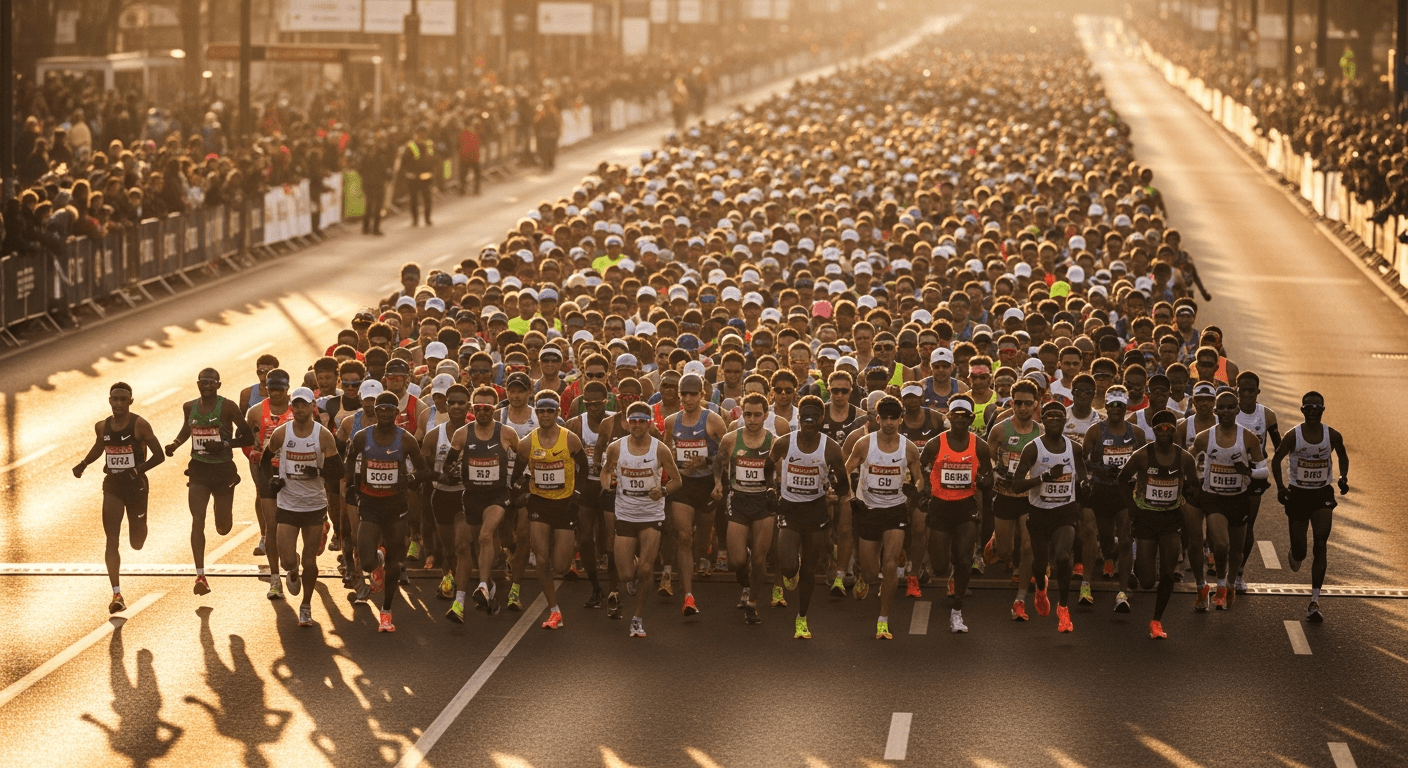
The 2026 Tokyo Marathon delivered two completely different races on the same course on the same day. In the women's field, Brigid Kosgei ran alone and ran fast. In the men's field, four athletes traded positions for 42 kilometers before separating by a single second at the finish line. If you watched both races, you watched two different sports.
Key Takeaways
- Kosgei set a new course record at the 2026 Tokyo Marathon
- Takele defended his title with a second consecutive victory
- The Tokyo Marathon is one of the 6 World Marathon Majors
Kosgei Rewrites the Tokyo Record Books
Brigid Kosgei crossed the finish line in 2:14:29, smashing the previous Tokyo Marathon course record by 90 seconds. That margin isn't a close shave. It's a statement. Kosgei didn't just win. She ran a category of her own from the early stages, dropping the chase pack well before the halfway point and building a lead that was never under threat.
The performance puts her among the fastest women ever over the marathon distance. Her 2:14:29 is a time that would have been considered extraordinary even five years ago, and it signals that elite women's marathon running continues to push into territory that once seemed unreachable. Tokyo's flat, fast course helped, but courses don't run themselves at that pace.
What made this performance particularly striking was its control. Kosgei didn't go out recklessly. She ran with discipline and structure, building through the race rather than gambling on an aggressive opening. By the time any rival might have attempted to respond, the gap was already decisive. That's the signature of a runner who knows exactly what she's doing at every kilometer.
A Men's Race Decided by One Second
The men's race told a completely different story. Tadese Takele won in 2:03:37, but the finish line drama was unlike almost anything seen at a World Marathon Major in recent memory. Geoffrey Toroitich also clocked 2:03:37. Alexander Mutiso Munyao finished in 2:03:38. Three men. One second. After 42.195 kilometers of racing.
That kind of finish isn't the result of a tactical failure. It's the result of four elite athletes. The fourth, who finished just outside that cluster, was equally part of the strategic chess match that unfolded across the second half of the course. Nobody wanted to lead. Nobody wanted to commit. And when the sprint finally opened up in the closing meters, the margins were almost too small to call.
Takele's ability to find another gear in that final sprint, after a race that had been deliberately controlled by the lead pack, reflects the kind of finishing speed that separates good marathon runners from great ones. Covering the last stretch at that pace, after more than two hours at world-class effort, is a different athletic skill than endurance alone.
Takele Makes History at Tokyo
Beyond the finish-line drama, Takele's victory carries historical weight. He's now the first repeat men's champion at Tokyo since Birhanu Legese won back-to-back titles in 2019 and 2020. Consecutive wins at a World Marathon Major are rare. The depth of global marathon talent makes defending any major title genuinely difficult. The field that showed up in Tokyo on March 1, 2026 underlines why.
Takele didn't have the luxury of a comfortable lead to defend. He had to earn his second title the hard way, in a sprint finish against two athletes who finished within a breath of him. That version of a repeat win might actually be harder to execute than one built on a comfortable margin. You don't just need fitness. You need composure, positioning, and perfect timing when it matters most.
Wheelchair Division: Hug and Debrunner Continue Their Dominance
Marcel Hug won the men's wheelchair division and Catherine Debrunner took the women's wheelchair title. Neither result is a surprise if you follow Paralympic and wheelchair racing, but both matter. Hug and Debrunner are the defining athletes of their generation in this discipline. Their combined presence at Tokyo 2026 brought a level of quality to the wheelchair field that matches the elite open divisions.
Wheelchair racing often gets treated as a footnote in marathon coverage. It shouldn't. The tactical demands, the physical output, and the athletic caliber of athletes like Hug and Debrunner deserve the same dedicated attention as any other division on the start list.
What Tokyo 2026 Means for the Rest of the Season
Tokyo traditionally opens the World Marathon Majors calendar, and the 2026 edition set a high bar early. Kosgei's 2:14:29 course record and the men's sprint finish will be the reference points every major broadcaster and media outlet reaches for when building context around Boston, London, and Berlin later in the year.
Here's what the rest of the season now has to contend with:
- A new Tokyo course record that resets expectations for what elite women can run on a fast, flat major course.
- A men's narrative around Takele's repeat title and whether a third consecutive win is possible at any future edition.
- Three men finishing within one second, which sets up rematch storylines for London and Berlin if the same athletes show up.
- Wheelchair dominance from Hug and Debrunner that will be tested across the remaining majors.
The marathon season doesn't build in isolation. Each major feeds into the next. A course record in March changes how training blocks are structured for April and beyond. Coaches and athletes are already mapping what Tokyo's performances mean for their own preparation and race strategies heading into the Northern Hemisphere spring. Runners targeting the TCS London Marathon next month will be paying particularly close attention to pacing and taper decisions in light of what unfolded here.
Two Races Worth Watching Again
If you only caught highlights of Tokyo 2026, go back and watch both races in full. They're not just fast. They're instructive. Kosgei's solo performance shows you what disciplined, structured marathon execution looks like when it comes from a runner at the peak of her ability. The men's race shows you what happens when world-class athletes refuse to blink until the very last moment. For anyone curious about the speed work and VO2max training that underpins this kind of sprint-finish capability, the science behind it is worth understanding.
The 2026 World Marathon Majors season is three days old and already has its first defining moments. Boston, London, and Berlin have been put on notice. The bar has been set early, and it's been set high.