
The recovery technology market is growing fast. Spending on consumer recovery devices, from percussive massage guns to infrared saunas and wearable compression systems, is projected to exceed $35 billion globally by 2027. The marketing is compelling, the aesthetics are slick, and the athlete endorsements are everywhere. But before you spend $400 on a recovery device, it's worth asking a harder question: does the evidence actually support it for someone like you?
The answer depends almost entirely on what you've already built. Here's how to think about it honestly.
Why Pro Teams Use These Tools (And Why That Context Doesn't Apply to You)
Elite sports organizations are adopting recovery technology at an unprecedented rate. Cryotherapy chambers, pneumatic compression suits, real-time heart rate variability monitoring, and hyperbaric oxygen units are increasingly standard in professional facilities. But the reasoning behind that investment matters.
When a franchise pays a player $20 million per season, the financial return on keeping that athlete available for every game is enormous. A single missed playoff appearance due to injury can cost an organization tens of millions in revenue. In that context, spending $50,000 on a recovery system that improves athlete availability by even a few percentage points is straightforward math.
For everyday athletes, that calculation simply doesn't exist. You're not generating revenue by training. The pressure to compress a 48-hour recovery window into 24 hours isn't there, and critically, the research on these devices has largely been conducted on elite populations with training volumes, stress loads, and physiological profiles that don't reflect recreational sport.
The "48-Hours Into 24" Claim Doesn't Hold Up for Amateur Athletes
Several high-end recovery systems are marketed around the idea that they can dramatically accelerate recovery timelines. Some claim to halve the time needed between hard sessions. It's an appealing idea if you're trying to train five days a week while balancing work and family.
The problem is that peer-reviewed trials validating these specific claims in recreational athletes are essentially nonexistent. Studies that do exist often involve small sample sizes, short durations, elite subjects, and outcomes that measure perceived soreness rather than objective performance markers. That's a long way from proof that a $500 device will meaningfully change your training capacity.
The placebo effect in recovery research is also substantial. Feeling less sore after using a device isn't the same as recovering faster. Subjective comfort and actual physiological repair are different things, and most consumer-facing recovery research doesn't adequately separate them.
What Actually Has the Evidence Behind It
Before evaluating any technology, it's useful to know what the science consistently supports. Several fundamentals have decades of rigorous research and repeatedly outperform newer interventions in head-to-head comparisons.
Sleep quality and duration are the single most validated recovery inputs available. Sleep is when growth hormone peaks, when muscle protein synthesis is most active, and when the nervous system resets. Studies consistently show that athletes sleeping fewer than seven hours per night show measurably worse recovery, higher injury rates, and reduced reaction time. No device comes close to replicating what an additional hour of quality sleep provides.
Protein intake and timing are nearly as well-supported. Distributing protein evenly across meals, rather than concentrating it at dinner, produces meaningfully better muscle protein synthesis over a 24-hour period. If you're not optimizing your protein distribution, you're leaving one of the most evidence-backed recovery levers untouched. How to Spread Your Protein to Actually Build Muscle goes deeper on the practical mechanics.
Hydration is chronically underestimated. Even mild dehydration of around 2% body weight impairs strength, endurance, and cognitive function. Rehydrating effectively after training, including replacing electrolytes, is a zero-cost recovery intervention that most recreational athletes don't execute well.
Cold water immersion has a stronger evidence base than most consumer devices on the market. Research consistently shows reductions in perceived soreness and inflammatory markers following whole-body or lower-limb immersion at temperatures between 10 and 15 degrees Celsius. A cold bath or accessible contrast shower delivers much of this benefit without a $3,000 system.
It's also worth noting that nutrition and recovery aren't fully separable. Gut function, microbiome health, and nutrient absorption all interact with how well your body repairs after training. The emerging research here is genuinely interesting. Gut Health and Athletic Performance: The 2026 Evidence covers what's currently supported and what's still speculative.
A Simple Decision Framework Before You Buy Anything
There's a useful filter that applies to almost every recovery product or protocol. It isn't complicated, but most people skip it.
- Are you sleeping seven to nine hours most nights, with consistent sleep and wake times? If not, no recovery device addresses this gap.
- Are you hitting your daily protein target and distributing it across meals? Most recreational athletes aren't getting adequate protein, let alone timing it effectively.
- Are you hydrating before, during, and after training, including electrolyte replacement after long or intense sessions?
- Are you managing training load sensibly? Adding more recovery tools to an already excessive training volume doesn't solve overtraining. It masks it temporarily.
- Are you managing chronic stress? Psychological stress directly elevates cortisol and suppresses recovery. One Simple Habit Reduces Stress, Says Landmark Study is worth reading if this is a limiting factor.
If you can't honestly check all five of those boxes, any money spent on recovery technology is likely providing marginal benefit at best. The fundamentals aren't glamorous, but they're where the real return on investment sits.
When Technology Does Make Sense
This isn't an argument against recovery tools categorically. Some devices genuinely provide incremental value for athletes who've already built a solid foundation. The key word is incremental.
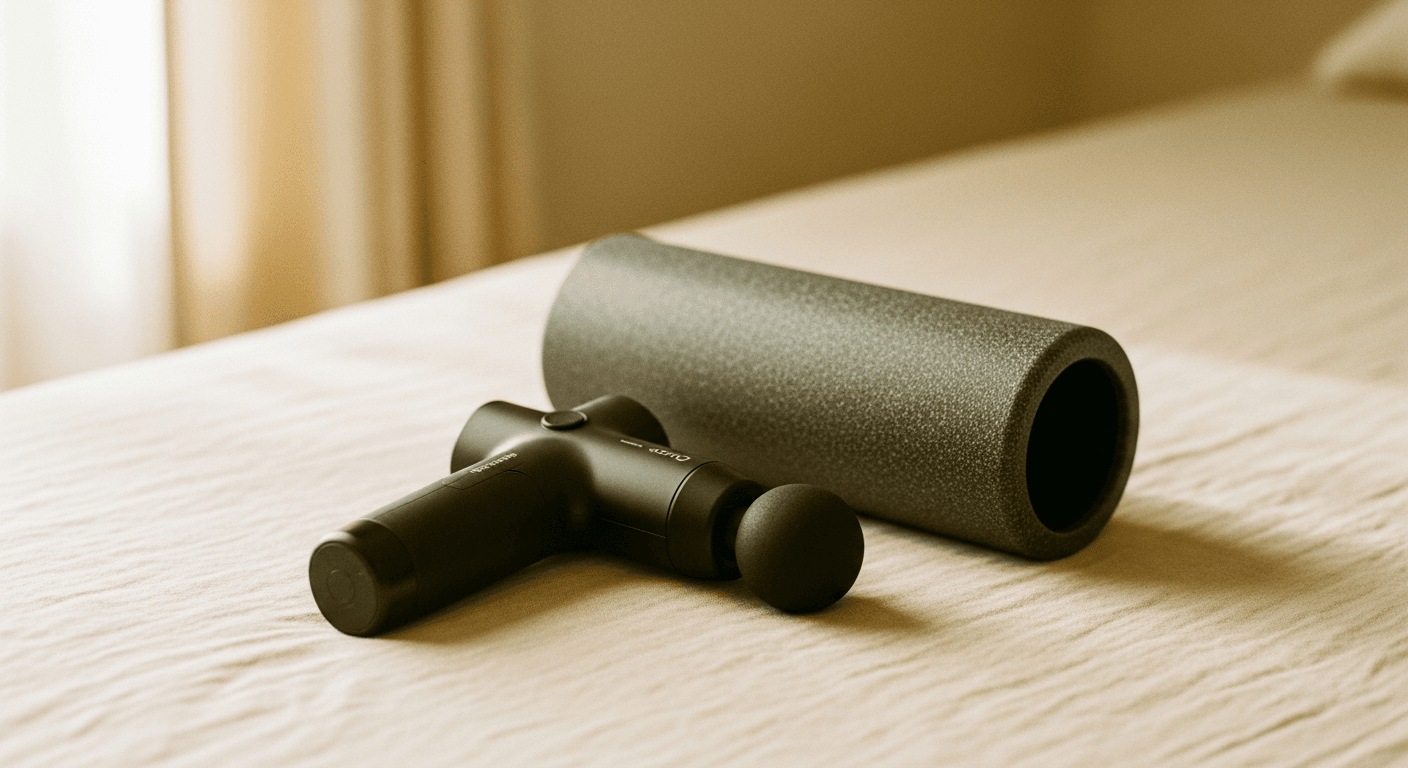
Massage guns are the clearest example of a consumer device with reasonable supporting evidence and accessible pricing. Percussive therapy has been shown to reduce perceived muscle soreness and improve short-term range of motion. A quality device in the $150 to $300 range offers real utility for athletes who are already recovering well, and who want to maintain movement quality between sessions without excessive time investment.
Compression garments have a credible evidence base for reducing muscle soreness and swelling after high-intensity exercise. The effect sizes are modest but consistent across multiple studies. They're low-risk, low-cost relative to many alternatives, and usable immediately after training or during travel. Graduated compression tights or sleeves in the $60 to $120 range are reasonable purchases for athletes who've handled the basics.
Heart rate variability monitoring can provide useful data on readiness if you're willing to interpret it correctly. HRV reflects nervous system status and offers an objective signal when recovery is incomplete. That said, it's a tool for adjusting training input, not for accelerating recovery itself. Without the foundational habits, a low HRV score just tells you what you already know.
What's less clearly justified at consumer price points? Infrared saunas, whole-body cryotherapy units, and some wearable electrical stimulation devices all have mixed or thin evidence in non-elite populations. They may provide benefit, but you'd be paying a significant premium for outcomes that haven't been robustly demonstrated outside of professional athletic contexts.
The Supplement Question
Recovery supplements occupy a similar position to recovery devices. There's a large market, heavy marketing, and a highly variable evidence base. Some compounds, including creatine monohydrate and tart cherry extract, have genuine peer-reviewed support for specific recovery applications. Many others don't. Recovery Supplements in 2026: What Works and What Doesn't provides a current breakdown if you're evaluating options in this space.
The same hierarchy applies: supplements added on top of poor sleep, inadequate protein, and inconsistent hydration won't meaningfully change your outcomes. The order of operations matters as much as the individual choices.
Where to Actually Spend Your Resources
Recovery isn't just about what you do after training. It connects directly to how you train. If you're building sessions around evidence-backed principles, such as managing eccentric load intelligently, the downstream recovery demand decreases. Slow Eccentric Reps Build More Muscle With Less Pain is a practical read on structuring training to reduce unnecessary soreness without sacrificing adaptation.
The practical takeaway is this: allocate your recovery budget in sequence. Optimize sleep first. Get your protein distribution right. Hydrate properly. Use cold water immersion after hard sessions if it fits your routine. Only after those are genuinely handled should you consider devices, and when you do, start with the low-cost, evidence-adjacent options before moving toward premium technology.
The best recovery system you can build is the one you'll actually do consistently. For most athletes, that means mastering the fundamentals, not outsourcing recovery to a device that costs more than a month of groceries.