

The research behind the headlines
In January 2026, Stanford Medicine published results for SleepFM, an AI model trained on nearly 600,000 hours of polysomnography data. The headline finding: the model can predict risk for over 100 different health conditions from a single night's recordings.
Key Takeaways
- The research behind the headlines In January 2026, Stanford Medicine published results for SleepFM, an AI model trained on nearly 600,000 hours of polysomnography data.
- The headline finding: the model can predict risk for over 100 different health conditions from a single night's recordings.
- Around 20 simultaneous data channels, recorded through the entire night.
Cardiovascular disease, metabolic disorders, neurological conditions, respiratory pathologies: SleepFM identified correlations between physiological sleep signals and medical conditions that traditional human analysis couldn't systematically detect at this scale.
The headlines were loud. But before you understand what this actually means, you need to understand what polysomnography is measuring in the first place.
What polysomnography is (and isn't)
Polysomnography is a full sleep recording done in a clinical setting. In practice: electrodes on your scalp reading brain waves, sensors on your chest tracking breathing and heart rate, pulse oximeters measuring blood oxygen, sensors tracking eye movements and muscle activity. Around 20 simultaneous data channels, recorded through the entire night.
It's the gold-standard tool for diagnosing sleep disorders: obstructive sleep apnea, narcolepsy, circadian rhythm disorders. It's not a fitness tracker. It's not an Oura Ring. It's not your iPhone accelerometer.
SleepFM was trained on this high-density clinical data. That's what allows it to simultaneously analyze brain waves, respiratory patterns, heart rate variability, and oxygen levels, and identify signals that no human analyst could process systematically across hundreds of thousands of sessions.
Where the research actually stands
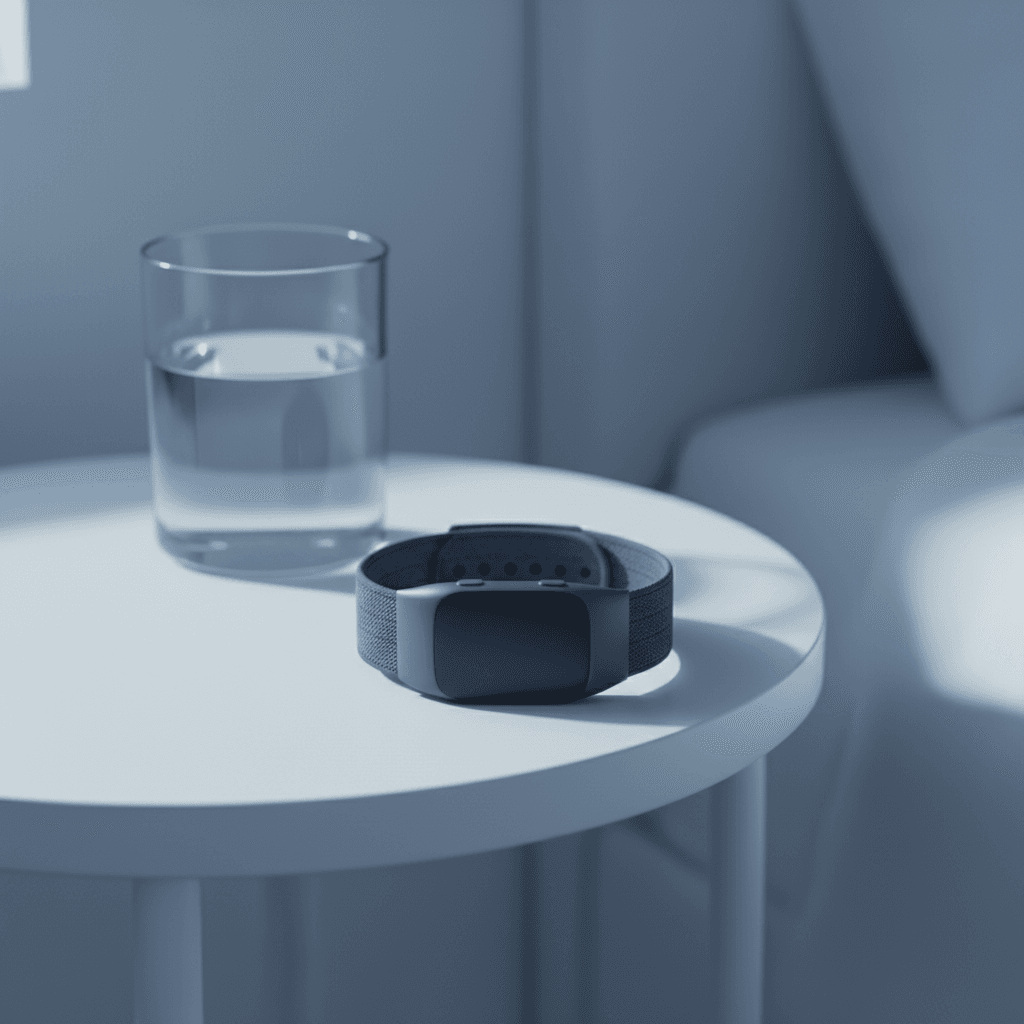
This is where most coverage missed the important caveat. SleepFM is a research prototype, tested in clinical settings. It's not available outside research labs. It's not integrated into any consumer device. It won't work on the data from your smartwatch.
Using SleepFM in its current state means spending a night in a sleep lab connected to polysomnography equipment. That's a procedure costing several hundred dollars that most people can't access without a medical referral.
The study demonstrates remarkable predictive capability. It doesn't say that capability will be on your phone in six months.
What this signals for the next 3-5 years
The relevant question for anyone paying attention to their health is: when does this kind of analysis become accessible?
The honest answer: within 3 to 5 years, probably in a simplified form. Oura, Apple, and Garmin are actively developing adapted versions of multi-signal sleep analysis for their devices. They can't replicate the data density of a full polysomnography recording, but they can capture enough cardiac, respiratory, and movement signals to feed predictive models significantly more powerful than what exists in consumer wearables today.
Stanford's research essentially creates proof of concept that this approach works. It'll accelerate development at wearable manufacturers and direct investment toward this area. In that sense, SleepFM isn't a product: it's a demonstration that will shape the products that follow.
What this confirms about sleep as a health signal
Beyond the technology, there's a more fundamental takeaway from this research. The fact that sleep data can predict risk for 100+ different conditions isn't a surprise to sleep researchers. It's a large-scale confirmation of something that's already well established: sleep quality is one of the most sensitive indicators of overall health status.
Sleep disruption isn't just a consequence of chronic disease. It precedes it. Sleep patterns tend to deteriorate months or years before clinical symptoms appear. That's exactly what makes this signal so valuable from a preventive standpoint.
Also read: Sleep and Athletic Performance and Insomnia Isn't Just About Sleep.
You don't need to wait for SleepFM to act on that. Taking your sleep seriously, tracking its quality, and responding when it deteriorates persistently is already one of the most useful things you can do for your long-term health. The technology is just confirming what your biology has been signaling all along.
Frequently Asked Questions
How many hours of sleep do athletes need for optimal recovery?
Most active adults need 7 to 9 hours. Athletes in heavy training phases benefit from the higher end of that range, as growth hormone release and muscle repair peak during deep sleep.
What are the signs of poor recovery?
Persistent fatigue, declining performance, sleep issues, irritability, unusual joint pain, and plateauing despite consistent training are the main warning signs.
Do wearables accurately measure recovery?
Fitness wearables provide useful trends, especially for sleep and HRV tracking. But they don't replace listening to your body and working with a qualified professional.