
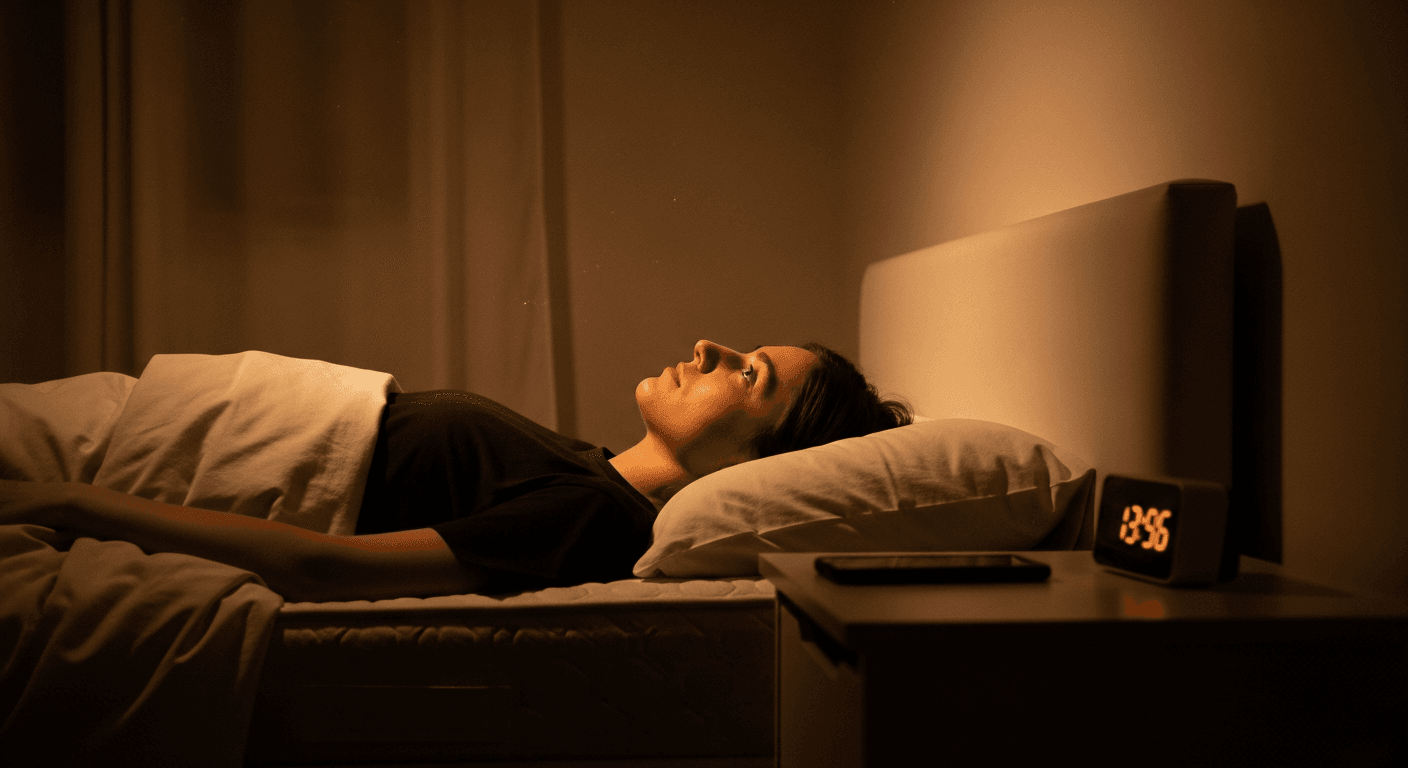
Most burnout prevention strategies are built around the wrong problem. Companies invest in mental health apps, employee assistance programs, and mindfulness workshops. Meanwhile, the single biggest mental health challenge reported by employees in 2026 goes largely unaddressed. According to Spring Health's April 2026 Workplace Mental Health Report, that challenge is sleep. And HR leaders, almost across the board, are underestimating it.
The gap between what employees are struggling with and what organizations are prioritizing isn't just an oversight. It's a structural failure. One that's quietly fueling the silent burnout epidemic already reshaping how people work, leave work, and disengage from work entirely.
The Benefits Confidence Gap Is Getting Wider
Spring Health's report, released April 9, 2026, surfaced a striking contradiction at the heart of corporate wellness. Nearly two-thirds of HR leaders say they've seen a surge in mental health-related leave requests over the past year. At the same time, the majority still believe their current benefits packages are effective.
That's not confidence. That's denial with a budget line attached to it.
The data gets sharper from there. While 95% of HR and benefits professionals say workplace mental health is crucial to business strategy, only 9% report that their current mental health solutions are actually reducing health plan spending. You're essentially looking at near-universal buy-in on the importance of the issue, paired with near-universal failure to move the financial needle on it.
This isn't a resources problem. Organizations are spending. The problem is that they're spending on solutions misaligned with what's actually driving the crisis.
Sleep Is the Number One Challenge. HR Isn't Treating It That Way.
Spring Health's 2026 report identifies sleep issues as the top mental health challenge among employees. Not anxiety. Not depression. Sleep. And yet when HR leaders rank their priorities, sleep consistently falls below those better-known clinical categories.
This ranking gap matters enormously. Sleep disruption isn't a side effect of burnout. For many employees, it's the entry point. Poor sleep accelerates cognitive decline, emotional dysregulation, and physical health deterioration. It makes anxiety worse. It deepens depression. It erodes the executive function people need to set limits, advocate for themselves, or simply recognize that they're struggling.
When organizations treat sleep as a secondary concern while funding anxiety and depression resources, they're treating symptoms while the underlying mechanism continues unchecked. It's the equivalent of mopping the floor while the pipe is still leaking.
This blind spot connects directly to the broader problem of silent burnout explored in Silent Burnout: The HR Crisis Nobody Saw Coming. Employees aren't collapsing visibly. They're eroding quietly, sleep-deprived and overextended, until they stop showing up entirely.
Financial Stress Is Feeding the Cycle
Sleep problems don't exist in a vacuum. The Spring Health report also found that 59% of employees report increased financial stress in 2026. That number matters because financial stress and sleep disruption are deeply linked, and the relationship runs in both directions.
Financial anxiety activates the nervous system in ways that make falling and staying asleep harder. Disrupted sleep then impairs decision-making and emotional regulation, making financial stress feel more acute and harder to manage. The cycle accelerates. And it accelerates fast.
For employers, this means that rising financial stress in your workforce isn't a peripheral concern. It's a direct contributor to the sleep crisis, which is a direct contributor to burnout, which is a direct contributor to the absenteeism and leave requests HR leaders are already reporting as surging.
Financial wellness programs have historically been treated as a separate lane from mental health benefits. The 2026 data suggests that distinction is no longer useful. If you're serious about sleep and burnout, you need to be serious about the financial pressures employees are carrying into every workday.
Why Individual Perks Keep Failing
Here's where most corporate wellness strategies get it wrong. They default to individual-level interventions: meditation apps, sleep tracking devices, resilience training. These aren't inherently bad. But they assume the problem is with the individual, not the system. That assumption is wrong.
The Spring Health report makes the systemic argument clearly. Companies that prioritize employee well-being as an operational commitment rather than a perk program report 67% higher performance and 21% higher productivity. The performance difference between a perk-based approach and a systems-based approach is not marginal. It's substantial.
Systemic fixes mean addressing workload distribution, management practices, psychological safety, and meeting culture. They mean holding managers accountable for how their teams are functioning, not just what they're delivering. They mean building recovery into the structure of work, rather than offering recovery tools employees can use on their own time.
This connects to something the wellness research has been showing for years. Whether you're looking at physical or mental health, sustainable outcomes come from structural support, not individual willpower. The same principle that explains why one simple daily habit can reduce stress when practiced consistently also explains why offering a meditation app with no workload reform produces almost nothing.
If you're an HR leader reading this, the uncomfortable question isn't whether your benefits package is comprehensive. It's whether your organization's daily operating practices are actively undermining it.
Remote Work and the Always-On Trap
Remote workers face a specific and often underacknowledged version of this problem. The flexibility that makes remote work appealing can become the mechanism through which burnout accelerates. Without physical separation between work and home environments, the boundaries that protect recovery time erode quickly.
Social isolation compounds the problem. Remote employees often lack the informal social contact that functions as a natural stress regulator in office settings. The quick conversation in the hallway, the shared lunch, the visual confirmation that colleagues are also switching off at the end of the day. These low-intensity social moments do more for mental health than most formal wellness interventions.
The always-on dynamic that many remote workers describe creates precisely the kind of chronic low-grade stress that disrupts sleep most effectively. You're never fully at work, and you're never fully off. That ambiguity prevents the nervous system from downregulating, which is a prerequisite for restorative sleep.
The 2026 data on remote work and burnout is addressed in detail in Hybrid Work and Burnout: What the 2026 Data Shows, and the picture it paints is consistent. Flexibility without boundaries doesn't protect workers. It exposes them to a different and harder-to-measure form of chronic overextension.
AI Anxiety Is Adding a New Layer
Sleep disruption and burnout don't exist in isolation from broader workplace anxieties. In 2026, concern about artificial intelligence and job security has become its own documented stressor. Uncertainty about automation, role relevance, and career trajectory adds to the cognitive load employees carry into the night.
This category of stress is particularly difficult to address with standard benefits tools because it's rooted in structural uncertainty, not personal circumstance. AI anxiety at work has been identified as a genuine psychosocial health risk in 2026, and organizations that ignore it are adding another active threat to an already overstressed system.
When employees are losing sleep over financial stress, workload, unclear limits between work and rest, and now the future of their roles, no sleep app is going to close that gap.
What Actually Needs to Change
The Spring Health report, read carefully, is not a call for better benefits. It's a call for organizational accountability. Here's what the data actually points toward:
- Treat sleep as a clinical priority. Build sleep health explicitly into mental health benefits, not as a wellness add-on, but as a core clinical concern alongside anxiety and depression treatment.
- Address financial stress directly. Integrate financial wellness support into mental health frameworks. The link between financial anxiety and sleep disruption is too well established to keep treating these as separate programs.
- Reform workload and management practices. Individual tools cannot compensate for structurally unsustainable demands. Accountability for team well-being needs to sit with managers, not just HR.
- Create genuine disconnection norms for remote workers. Flexibility policies mean nothing without cultural permission and structural support for actually switching off.
- Measure what matters. If 95% of HR leaders say mental health is crucial to business strategy but only 9% can show it's reducing costs, the measurement frameworks are broken. Tie well-being initiatives to outcomes you can track.
The gap between knowing something matters and actually changing how you operate around it is where most organizations are currently stuck. Spring Health's 2026 data doesn't reveal a new problem. It reveals how long organizations have been misdiagnosing the one they already had.
Sleep isn't a lifestyle issue. It's the infrastructure on which every other mental health outcome is built. Until HR strategies reflect that, burnout prevention will keep treating the surface while the foundation continues to erode.