
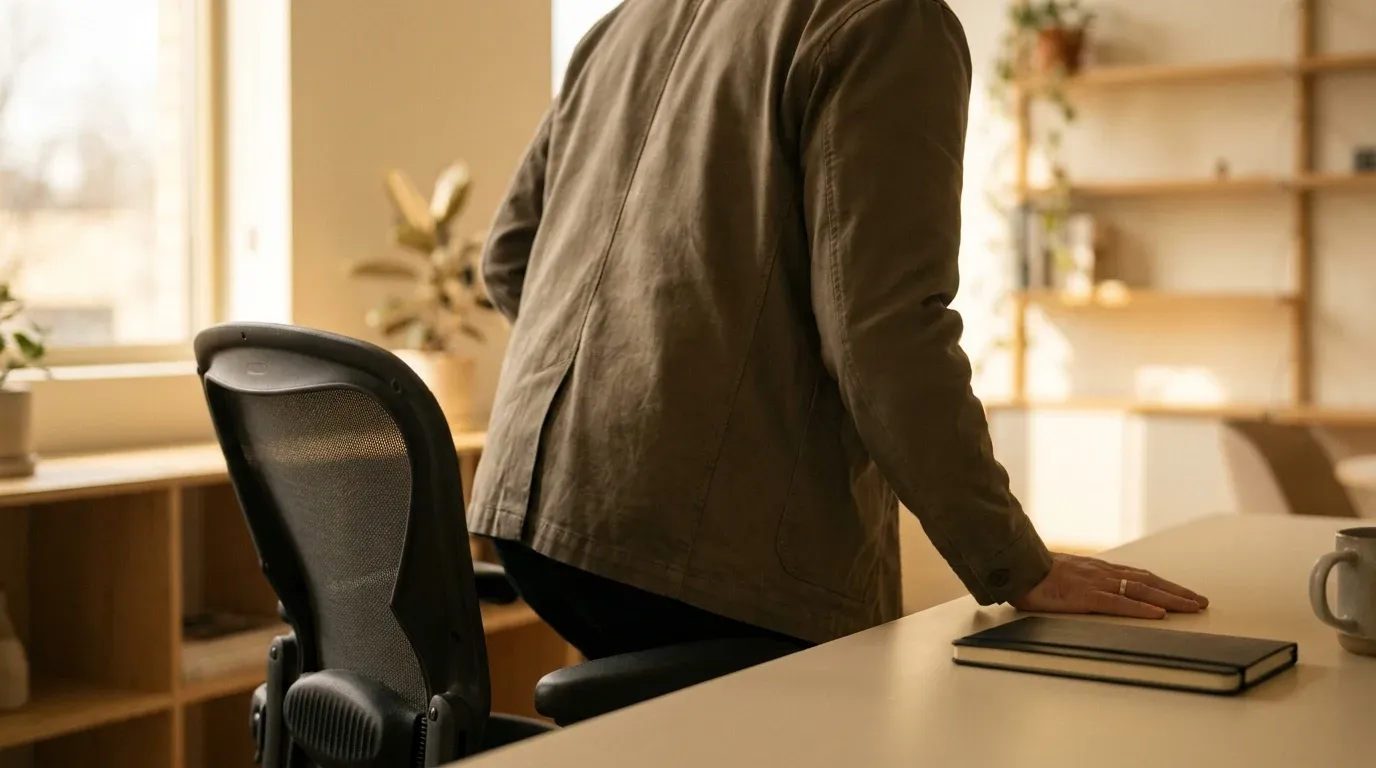
You probably already know that sitting all day isn't great for you. But a large 2026 study has sharpened that message considerably. It's not simply how long you sit that matters. It's whether you ever stop.
According to research published via SciTechDaily in July 2026, each additional hour of uninterrupted sedentary time per day was linked to a 9% higher cancer mortality risk. Not cumulative daily sitting. Not total screen time. Uninterrupted sitting. The pattern of your sedentary behavior, it turns out, is the variable that actually kills you.
That's a meaningful distinction. And for HR leaders, office managers, and anyone spending eight or more hours anchored to a desk, it changes what a healthy workday actually looks like.
Why Interruption Matters More Than Total Time
The study's finding isn't just a statistical quirk. There's a clear physiological explanation for why unbroken sitting is uniquely harmful compared to the same total hours distributed across the day with regular breaks.
When you remain sedentary for extended periods without interruption, several biological processes stall. Lipoprotein lipase activity, an enzyme critical to fat metabolism, drops sharply within 30 to 60 minutes of inactivity. Blood glucose regulation deteriorates. Insulin sensitivity declines. Blood flow to major muscle groups slows, reducing oxygen delivery and impairing cellular repair mechanisms.
Cancer risk is linked to these downstream effects in multiple ways. Chronic low-grade inflammation increases. Circulating insulin and insulin-like growth factor levels rise, creating conditions that promote tumor cell proliferation. Adipokine signaling, which regulates inflammation and immune function, becomes dysregulated. These aren't speculative pathways. They're measurable changes that begin within a single uninterrupted sitting session.
The important thing is that light physical activity, even a two-minute walk or a standing stretch, appears sufficient to interrupt these cascades. You don't need a gym session. You need a break.
The Cancer Finding Is the Headline, But It's Not the Whole Story
The 9% figure makes for a compelling headline, and it should. But the same 2026 research found that regularly interrupting sedentary time with even light physical activity was associated with lower risks across all mortality outcomes examined, not just cancer.
Cardiovascular mortality. All-cause mortality. The benefits of breaking up sitting time extended across the board. That means the physiological mechanism isn't cancer-specific. It reflects a broader systemic stress response that prolonged, unbroken inactivity triggers throughout the body.
This aligns with earlier work showing that five minutes of movement cuts mortality risk for desk workers. The dose required to interrupt the harm is genuinely small. The barrier isn't physical capacity. It's behavioral habit and workplace culture.
What the Workplace Research Actually Shows
If the solution is as simple as getting up more often, why aren't workers doing it? Because knowing something is good for you and changing your behavior are very different things.
An October 2026 employer-focused review looked at workplace interventions designed to reduce sedentary time. The findings were instructive. Behavioral support programs and height-adjustable desks were both effective at meaningfully reducing daily sitting time. Reminders alone, whether via app notifications, email nudges, or wearable alerts, were insufficient on their own.
That matters because reminders are the cheapest and most common intervention companies reach for. They're easy to deploy, easy to report on, and easy to dismiss. Workers learn to ignore them within days. Without a structural or behavioral framework around those reminders, the nudges stop working almost immediately.
The review's conclusion points toward what behavior change research consistently shows makes wellness stick at work: interventions need to change the environment, the social norms, or the routine itself. A ping on your phone doesn't do any of those things.
The Standing Desk Conversation Needs to Change
Height-adjustable desks have been sold to employers for years as the primary solution to sedentary work. The market has responded accordingly. Standing desks are now standard issue in many tech and finance offices, and organizations have spent significant budget on them, often $400 to $1,200 per unit at the mid-range, with premium models running considerably higher.
The 2026 research adds to a growing body of evidence that reframes this investment. The desk type is not the driver of health outcomes. The break pattern is.
A standing desk that you lock in the standing position for three hours straight produces similar physiological stress to sitting for three hours straight. Prolonged static postures, standing or seated, suppress the same metabolic processes. The benefit of a height-adjustable desk comes from the transition. The act of changing position, ideally combined with brief movement, is what interrupts the harmful cascade.
This aligns with what keedia has reported before: standing desks fail when they're deployed without the behavioral support to use them correctly. Without coaching on when and how to transition, workers either forget to adjust the desk or get fatigued from standing too long and lock it back down. The hardware becomes furniture.
What actually works is a structured approach. Defined break intervals. Team-level norms that make getting up feel normal rather than disruptive. Movement built into the meeting culture, not just the individual's routine. That's harder to implement than buying a desk. It's also significantly more effective.
What Light Activity Actually Means
One reason workers underestimate their ability to fix this problem is that "physical activity" triggers associations with exercise, effort, and gym time. The research here is specifically about light activity, and that category is much broader than most people assume.
Light activity includes standing and walking to a colleague's desk rather than messaging them. It includes a two-minute walk to the kitchen. It includes standing during a phone call. It includes walking to a further bathroom, taking the stairs, or doing a few standing stretches next to your workstation. None of this requires changing clothes, elevated heart rate, or dedicated workout time.
This is worth emphasizing because it removes the most common excuse. You don't need to be fit. You don't need equipment. You don't need to disrupt your workflow for more than 90 to 120 seconds. The threshold for interrupting the physiological harm is remarkably low. The challenge is building the habit, not performing the activity.
If you're already thinking about how structured movement fits into a broader fitness approach, it's worth noting that resistance training and consistent gym habits deliver their own mortality-reducing benefits. Lifting has been shown to outperform running for diabetes prevention, which is relevant given the metabolic disruption that prolonged sitting causes. The two strategies, breaking up sitting and training deliberately, stack rather than compete.
What HR Leaders Should Do With This Information
If you're responsible for workforce health, here's the practical takeaway from the 2026 research. Your sedentary time reduction strategy should prioritize three things, in this order.
- Behavioral infrastructure first. This means walk-and-talk meeting norms, defined break schedules, and team-level accountability. Culture change requires leadership modeling, not just policy documents.
- Environmental design second. Height-adjustable desks and accessible movement spaces support behavior change when workers are already primed to use them. They don't create the behavior on their own.
- Digital reminders third, and only as a supplement. Notifications can reinforce an existing habit. They can't build one from scratch. Deploy them alongside the other two layers, not instead of them.
The October 2026 review is consistent with what occupational health researchers have argued for years. The gap between knowing workers sit too much and actually changing that behavior is a behavior design problem, not an information problem. Workers don't sit all day because they don't know it's harmful. They sit because the environment makes movement the path of least resistance.
This is also worth situating in the broader burnout conversation. AI-driven workloads are increasing the pressure on desk workers, compressing schedules and reducing the natural breaks that once punctuated the workday. That makes intentional movement design more necessary, not less. The physiological cost of unbroken sitting compounds alongside the psychological cost of relentless cognitive load. These aren't separate problems.
The Number You Should Remember
Nine percent per additional uninterrupted hour. That's the risk increment for cancer mortality. If you currently sit for four unbroken hours in the morning before lunch, that's not four hours of harm. It's significantly more than if those same four hours included three two-minute breaks.
The practical implication is a protocol rather than a product. Set a maximum uninterrupted sitting interval, most evidence points to 30 to 45 minutes as a reasonable ceiling. Build transitions into your calendar. Make getting up the default during calls. If your company offers height-adjustable desks, use the transitions deliberately, not just occasionally.
The research is unusually clear on this point. It's not about how much you sit. It's about how long you sit without stopping. That's a problem you can fix without buying anything, changing your job, or logging a single formal workout. You just need to get up more, and to do it before your body forgets that it should.
For workers already managing chronic stress or recovery challenges, physical therapy approaches that address movement patterns can complement these behavioral strategies, particularly for those returning from sedentary-related musculoskeletal issues. The goal is the same: make movement the default state, not the exception.