
You've probably spent time optimizing your protein intake, your creatine dose, your carb timing around training. Boron has almost certainly never come up. It doesn't have a lobby, it doesn't trend on fitness forums, and it costs almost nothing to supplement. Yet a growing body of research connects it to free testosterone, estradiol regulation, vitamin D metabolism, and bone density. That's a reasonably interesting résumé for something most athletes have never heard of.
Here's what the evidence actually shows, where it falls short, and whether boron deserves a place in a serious supplement stack.
What Boron Actually Does in the Body
Boron is a trace mineral, not a vitamin, not a hormone, and not a steroid precursor. It doesn't behave like a pharmacological agent. What it does, based on current research, is modulate several biological processes that matter to athletes: it influences how your body activates vitamin D3, how it handles calcium and magnesium, and how it metabolizes sex hormones including testosterone and estradiol.
The mechanism isn't fully mapped, but one consistent finding is that boron appears to inhibit an enzyme involved in the breakdown of both vitamin D and steroid hormones. When that breakdown is slowed, circulating levels of those compounds tend to rise. That's not the same as injecting testosterone. It's more like removing a drain from a bathtub that was losing water faster than it should.
Boron also plays a documented role in the synthesis of key proteins involved in bone formation. Combined with its effect on vitamin D3 activation and calcium metabolism, this matters directly for athletes under high mechanical load, where bone density and stress fracture resilience are real concerns.
The Testosterone and Estradiol Data
The most frequently cited finding in boron research involves a measurable increase in free testosterone and a reduction in estradiol in men following supplementation. One study found that men supplementing with 10mg of boron daily for one week showed increased free testosterone alongside decreased estradiol and inflammatory markers including interleukin-6 and C-reactive protein.
Those are notable signals. But context matters. Free testosterone increased within a range that, while physiologically meaningful, is modest compared to what any hormonal intervention would produce. You're not going to see the kind of numbers associated with pharmacological testosterone support. What you may see is an optimization toward the upper end of your natural range, particularly if your diet has been consistently low in boron.
Products like Jocko Fuel Combat Tested 3.0 cite this research explicitly in their formulation rationale, and the dosing they use, typically 6-10mg per day, aligns with the doses used in the studies that produced positive findings. That's a reasonable reflection of the evidence. The claims don't exceed what the data supports, which is more than can be said for many supplements referencing hormonal effects.
It's worth being clear: boron is not going to replicate or approximate pharmacological interventions. If you're expecting dramatic hormonal shifts, you're misreading what the research shows. If you're asking whether it can meaningfully support natural hormonal balance in men who are likely boron-deficient, the answer is more encouraging.
Dietary Intake and the Deficiency Problem
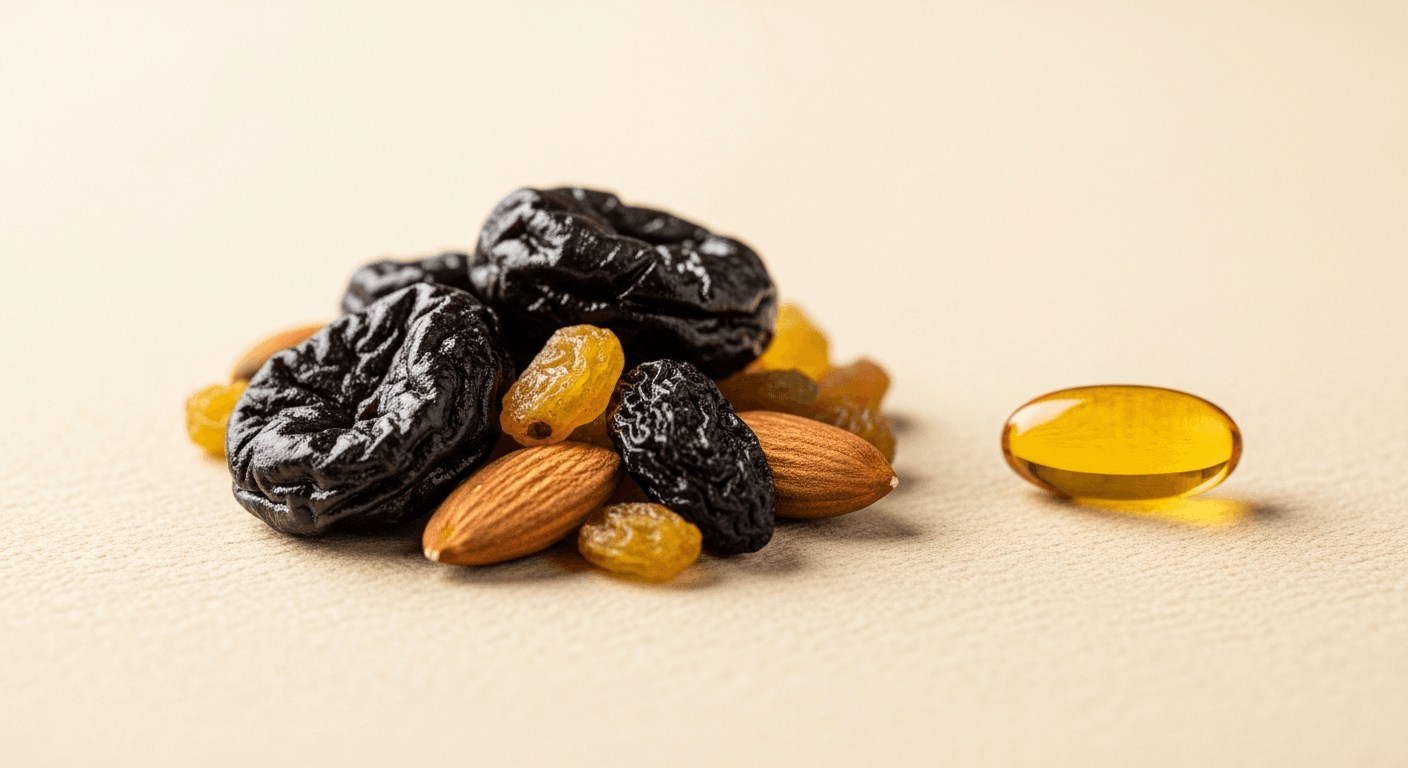
The average dietary intake of boron in Western diets sits somewhere between 1 and 3mg per day. The primary sources are fruits, nuts, legumes, and wine. That's a narrow nutritional base, and athletes eating high-protein, low-variety diets, which is extremely common in strength sports and combat sports, are likely sitting at the lower end of that range or below it.
There's no established recommended daily allowance for boron, which makes deficiency harder to define clinically. But the research on supplementation consistently uses 6-10mg as the effective dose, suggesting that the 1-3mg most people get from food leaves a meaningful gap if you're trying to leverage boron's biological functions.
If your diet is heavily centered on chicken, rice, eggs, and protein shakes with limited fruit and legume intake, your boron consumption is probably not keeping pace with the amounts shown to produce measurable physiological effects. That's not fearmongering. It's a realistic read of what typical athletic diets look like in practice. For a broader look at how dietary patterns affect performance nutrition, Protein, Creatine and Timing: The Combat Sports Nutrition Guide covers the foundational hierarchy worth getting right first.
Vitamin D Activation and Bone Health
One of boron's most practically significant roles is its interaction with vitamin D3. Specifically, boron appears to support the conversion of vitamin D into its active hormonal form, 1,25-dihydroxyvitamin D. This matters because vitamin D deficiency is already widespread among athletes, particularly those training indoors or living at higher latitudes, and inadequate vitamin D activation compounds the problem even when serum vitamin D levels look acceptable on a blood panel.
For athletes under high mechanical load, whether that's heavy barbell training, distance running, or contact sports, bone density and injury resilience are not abstract concerns. Stress fractures, reduced bone mineral density, and slower healing are real consequences of chronic micronutrient shortfalls. Boron's role in calcium metabolism and bone protein synthesis adds to its relevance here, even if the direct evidence in athletic populations specifically remains limited.
It's also worth noting that researchers studying animal models have flagged concerns about how extrapolated data translates to human physiology. Why Animal Nutrition Studies Keep Getting Humans Wrong is a useful read for understanding where to hold the boron evidence more loosely, since some of the foundational work on boron and bone formation comes from animal models.
What Boron Does Not Do
This section matters as much as the rest. Boron does not have an established ergogenic effect on direct performance metrics in healthy, well-nourished athletes. There are no reliable studies showing that boron supplementation increases strength, power output, sprint times, or VO2 max in athletes who are not deficient.
That puts it in a different category from creatine, which has decades of evidence behind its effect on strength and high-intensity performance. Boron's value proposition is more indirect: it may support the hormonal and metabolic environment in which training adaptations occur, not the adaptations themselves. That's a meaningful but narrower claim.
If you're already eating a nutrient-dense, high-variety diet and your vitamin D levels are solid, the case for boron supplementation weakens considerably. The strongest argument for it exists when dietary intake is low and when optimizing the hormonal and bone-health substrate for training matters, which describes a lot of serious athletes more than they'd expect.
How to Think About Dosing and Supplementation
The research literature clusters around 6-10mg per day as the dose range producing measurable effects on free testosterone, estradiol, and vitamin D metabolism. Lower doses in the 1-3mg range, typical of dietary intake, do not appear to produce those same effects consistently.
Boron supplements are inexpensive, widely available, and generally well-tolerated. The tolerable upper intake level set by health authorities is 20mg per day for adults, which gives reasonable room above the therapeutic dose range. Toxicity at typical supplemental doses is not a practical concern.
You don't need to anchor boron to a specific product. A standalone boron supplement at 6-10mg per day, taken with food, reflects the dosing that produced the most cited results. Some multivitamin and mineral formulas include boron, but often at 1-3mg, which is unlikely to produce the hormonal effects that make it relevant to this conversation.
If you're building a supplement protocol around performance and recovery, the sequencing still matters. Protein, creatine, and training-matched carbohydrate strategies have far stronger direct evidence for performance outcomes. Carb Timing for Endurance Athletes: What Actually Works illustrates how even well-researched nutrients require precise application to deliver results. Boron belongs after those foundations are in place, not instead of them.
The Honest Bottom Line
Boron isn't a breakthrough. It's not going to transform your physique or add kilograms to your lifts. What it represents is a legitimate but modest micronutrient intervention that's been consistently overlooked because it's cheap, unbranded, and doesn't fit neatly into the ergogenic supplement narrative.
The evidence for its effects on free testosterone and estradiol in men is real, dose-dependent, and more credible than most of what gets marketed as a testosterone booster. Its role in vitamin D activation and bone health adds a secondary layer of relevance for high-load athletes. And the gap between typical Western dietary intake and the doses shown to produce effects is wide enough that supplementation makes practical sense for many athletes eating narrow diets.
Just keep the framing accurate. This is a micronutrient optimization play. It belongs in the same category as correcting a vitamin D deficiency or addressing low magnesium. Not in the same conversation as pharmacological hormone management. Athletes who understand that distinction will find boron genuinely worth considering. Those looking for something more dramatic should look elsewhere, because the science doesn't support it and it never claimed to.