
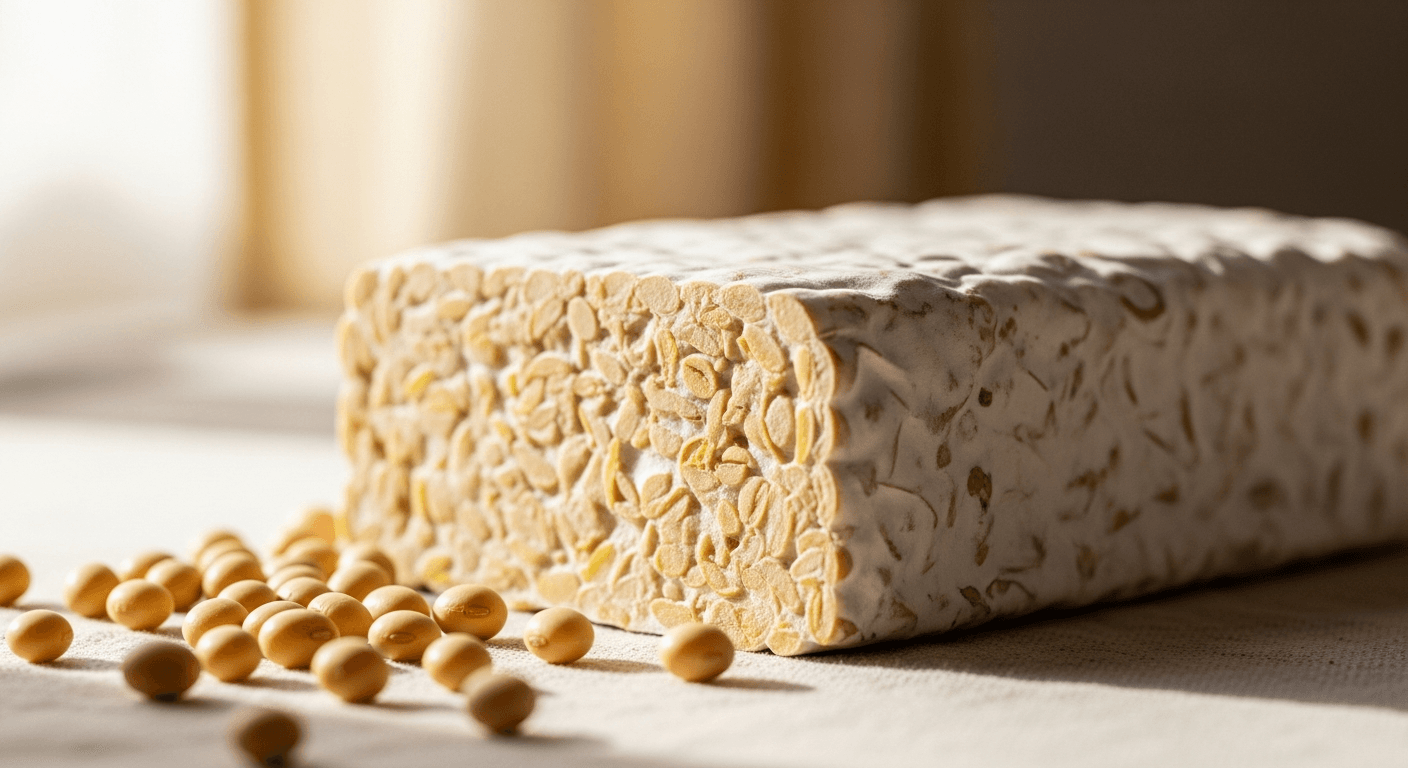
Tempeh has become a staple for plant-based athletes, strength trainees, and anyone trying to hit their protein targets without relying on meat. It's dense, whole-food, and relatively affordable. But here's what most people don't know: the nutritional value of the tempeh sitting in your fridge depends heavily on how long it was fermented. And that number is almost never on the label.
An April 2026 study on tempeh chips examined how fermentation duration directly alters amino acid composition and carbohydrate content. The findings matter for anyone who treats tempeh as a serious protein source rather than just a meat substitute.
What Fermentation Actually Does to Tempeh
Tempeh is made by inoculating cooked soybeans with Rhizopus oligosporus, a mold that binds the beans into a firm cake while breaking down macronutrients. The fermentation window typically runs anywhere from 24 to 72 hours, depending on the producer. That range is wider than most people assume, and it creates meaningfully different products.
During fermentation, the mold secretes enzymes that degrade complex carbohydrates and cleave proteins into smaller peptide chains and free amino acids. The longer this process runs, the more extensive that enzymatic activity becomes. Carbohydrate content drops as fermentable sugars are consumed. Proteins are partially hydrolyzed, meaning your body doesn't have to do as much work to absorb them.
The April 2026 study specifically tracked how tempeh chips fermented at different durations showed distinct amino acid profiles. Longer fermentation correlated with higher concentrations of essential amino acids, including lysine, leucine, and valine. Those are precisely the amino acids most relevant to muscle protein synthesis.
Longer Fermentation, Better Protein Quality
The distinction between total protein content and protein bioavailability is one that's often glossed over on nutrition labels. A product can list 18 grams of protein per serving while delivering far less absorbable amino acids than a product with 15 grams from a more bioavailable source.
With tempeh, longer fermentation appears to shift the balance toward higher bioavailability. The enzymatic breakdown during extended fermentation reduces the concentration of antinutrients. Phytic acid, trypsin inhibitors, and tannins are all reduced as fermentation progresses. These compounds, present in raw soybeans, directly interfere with protein and mineral absorption. Their reduction isn't a minor adjustment. It can meaningfully change how much of that listed protein your body actually uses.
For athletes watching protein intake closely, this matters in practical terms. If you're relying on tempeh to meet daily protein targets as part of a structured training plan, the fermentation duration of your product affects whether you're actually hitting those targets or just thinking you are. If you want a fuller picture of how plant proteins fit into a training diet, the Protein for Women: The No-BS Practical Guide covers the gap between label claims and real-world protein adequacy in detail.
The Label Problem Nobody Talks About
Walk into any grocery store and pick up two blocks of tempeh from different brands. The labels will likely show similar macros. But they won't tell you fermentation time, the strain of mold used, or the temperature at which fermentation occurred. All three variables influence the final amino acid profile and carbohydrate breakdown.
This is the crux of the problem. Nutritional databases, and by extension fitness apps and food logging tools, treat tempeh as a single standardized food. They're not wrong to do so, given current food labeling requirements. But the standardization creates a misleading picture for people who are using those numbers to make real decisions about their diet.
Coaches and registered dietitians working with plant-based athletes often don't flag this either. It's not a gap in expertise so much as a gap in available information. The fermentation data simply isn't disclosed, so there's nothing to flag. This puts tempeh in a similar category to other whole foods whose processing methods significantly alter their nutritional profile but remain invisible to the end consumer. The broader issue of how food processing affects muscle-relevant outcomes is worth understanding. The Ultra-Processed Food and Muscle: The Real Impact on Strength piece explores that processing-to-performance relationship in more depth.
What the Carbohydrate Shift Means
The carbohydrate changes during fermentation are just as significant as the protein changes, particularly for people managing blood sugar or following lower-carbohydrate approaches.
During fermentation, the mold consumes oligosaccharides and other carbohydrates as its primary energy source. Longer fermentation means fewer residual carbohydrates in the finished product. Raffinose and stachyose, the fermentable carbohydrates in soybeans that cause digestive discomfort for many people, are substantially reduced. This is one reason fermented soy products are generally better tolerated than whole soybeans or tofu.
Short fermentation windows leave more of these compounds intact. If you've ever found tempeh harder to digest than expected, the fermentation duration of that specific batch may be part of the explanation. It's not purely a soy sensitivity issue in many cases.
The implication for athletes is that longer-fermented tempeh may offer a cleaner carbohydrate profile with fewer compounds that interfere with absorption. For those in a caloric deficit or tracking net carbs, the difference between a 24-hour and a 48-hour fermented product isn't trivial.
How to Buy Smarter
Since fermentation time isn't standardized on labels, you're working with indirect signals. Here's what to look for:
- Country or region of production: Traditional Indonesian tempeh is typically fermented for 36 to 48 hours at controlled temperatures. Some commercially produced Western tempeh cuts fermentation shorter to speed up production. Artisan or Indonesian-origin brands tend to ferment longer.
- Texture: Longer-fermented tempeh is firmer and more cohesive. The mycelium binds the beans more thoroughly. If blocks crumble easily before cooking, that can indicate a shorter fermentation window.
- Smell: Properly fermented tempeh has a mild mushroomy, nutty smell. A very neutral or bean-like smell may indicate under-fermentation. A strong ammonia smell suggests over-fermentation, which isn't ideal either.
- Artisan and small-batch brands: In the US market, smaller producers are more likely to disclose fermentation practices, either on their packaging or directly on their website. It's worth emailing a brand directly if you're serious about sourcing.
- Organic certification: While not a direct proxy for fermentation quality, organic-certified tempeh producers tend to apply more rigorous process standards overall.
How to Cook Tempeh Without Undermining the Protein
The fermentation work can be partially undone by aggressive cooking methods that degrade heat-sensitive amino acids or strip the product of its structural integrity. Not all cooking methods are equal here.
Steaming before slicing is the most protective method. A 10-minute steam before pan-frying or baking opens the texture for better marinade absorption without destroying the amino acid profile. Many recipes call for raw tempeh to go directly into high-heat applications, which is fine but slightly less optimal from a protein preservation standpoint.
Avoid deep-frying at sustained high temperatures. The Maillard reaction that makes fried tempeh taste excellent also reduces the availability of lysine specifically, which is already the limiting amino acid in soy. For plant-based athletes where soy is a primary protein source, repeated high-heat cooking of tempeh across multiple meals can create a cumulative lysine shortfall that doesn't show up in the numbers you're tracking.
Marinating in acidic liquids, such as citrus or vinegar-based marinades, before moderate-heat cooking is one of the best approaches for both flavor and amino acid preservation. The acid continues light enzymatic activity and keeps the protein structure more accessible post-cooking.
Batch cooking tempeh and storing it in the refrigerator for up to four days doesn't appear to significantly degrade the amino acid profile once it's been properly cooked. The fermentation process is arrested by heat, so there's no ongoing microbial activity to worry about.
The Bigger Picture for Plant-Based Performance
Tempeh remains one of the most complete plant-based protein sources available. When fermented adequately, it delivers a full essential amino acid profile that comes closer to animal protein than most plant foods do. The research confirming fermentation duration as a key variable doesn't undermine that case. It strengthens it, because it gives you a framework for choosing products that actually deliver on the label's promise.
The challenge is that the food system doesn't currently reward transparency around fermentation practices. Until labeling standards catch up, informed buying decisions require you to go slightly beyond the nutrition facts panel. That's true of a lot of functional foods, and it's worth treating tempeh the same way you'd treat a protein supplement: sourcing and processing matter as much as the raw macros.
Tempeh doesn't need to be expensive to be effective. In the US market, well-fermented artisan tempeh typically runs $4 to $7 per block, comparable in cost per gram of protein to many premium plant-based protein powders. The difference is that tempeh delivers fiber, micronutrients, and fermentation-derived compounds that no powder replicates. Getting the fermentation quality right just makes the value case even stronger.