
For years, nutrition researchers have debated what "ultra-processed" actually means. Doctors warned patients to avoid ultra-processed foods. Journalists wrote about them constantly. But no U.S. government body had ever committed to a formal, policy-ready definition. That changed on May 15, 2025, when a landmark federal technical report proposed exactly that.
The definition matters more than it might sound. When a term lacks official standing, it can't anchor food labeling requirements, inform dietary guidelines with precision, or justify reformulation incentives. Now, for the first time, American food policy has a working framework to build on.
What the Report Actually Says
The technical report, developed through a federally coordinated process, defines ultra-processed foods as industrially manufactured products that contain ingredients not typically used in home cooking. Think emulsifiers, flavor enhancers, modified starches, hydrogenated oils, artificial sweeteners, and color additives that exist primarily to extend shelf life, boost palatability, or make cheap ingredients taste expensive.
The definition is deliberately evidence-informed rather than prescriptive. It draws on established classification systems, particularly the NOVA framework developed by nutritional epidemiologists, while adapting the language for regulatory use in the U.S. context. The goal is a definition that can withstand legal and scientific scrutiny when attached to actual policy.
Crucially, the report doesn't just name the problem. It outlines specific policy levers: front-of-package warning labels for high-UPF products, procurement restrictions in federal nutrition programs like school meals and SNAP, and financial incentives for manufacturers that reformulate products to remove industrial additives. These aren't speculative ideas. They're structured options presented to policymakers for implementation.
Why the Timing Is Urgent
Ultra-processed foods now account for an estimated 60% or more of total daily calories in the average American diet. For children and adolescents, that figure is even higher. This isn't a niche dietary concern about a handful of junk foods. It describes the structural reality of how most Americans eat, most of the time.
The evidence linking high UPF intake to health outcomes has grown substantially over the past decade. Epidemiological studies associate frequent UPF consumption with increased risk of cardiovascular disease, type 2 diabetes, certain cancers, depression, and all-cause mortality. The mechanisms aren't fully settled, but the associations are consistent across populations and countries.
Without a shared definition, measuring that burden accurately, or intervening at scale, has been nearly impossible. You can't label what you haven't defined. You can't regulate what you haven't named.
Processed vs. Ultra-Processed: Where the Line Falls
This is where a lot of public confusion lives, and it's worth being precise. Not all processed food is ultra-processed. Processing exists on a spectrum, and the distinction matters if you're trying to make practical decisions about your diet.
Here's a straightforward way to think about it:
- Minimally processed foods are whole foods that have been cleaned, frozen, dried, or packaged. Frozen spinach, canned chickpeas, plain oats, and hard-boiled eggs all qualify. The original food is still essentially intact.
- Processed foods have had ingredients added, typically salt, sugar, oil, or vinegar, for preservation or flavor. Canned tomatoes with added salt, smoked salmon, and aged cheese sit here. You could replicate these processes in a home kitchen.
- Ultra-processed foods require industrial inputs you simply cannot recreate at home. Emulsifiers like carrageenan or polysorbate 80, synthetic flavor compounds, modified starches, and color additives don't live in home pantries. They exist to optimize texture, palatability, and shelf life at industrial scale.
The defining test isn't whether a food has been transformed. It's whether the transformation required ingredients and processes that only exist at an industrial level.
What This Looks Like in Your Kitchen
Applying this framework to real products makes the definition concrete. Here's how common foods map onto it.
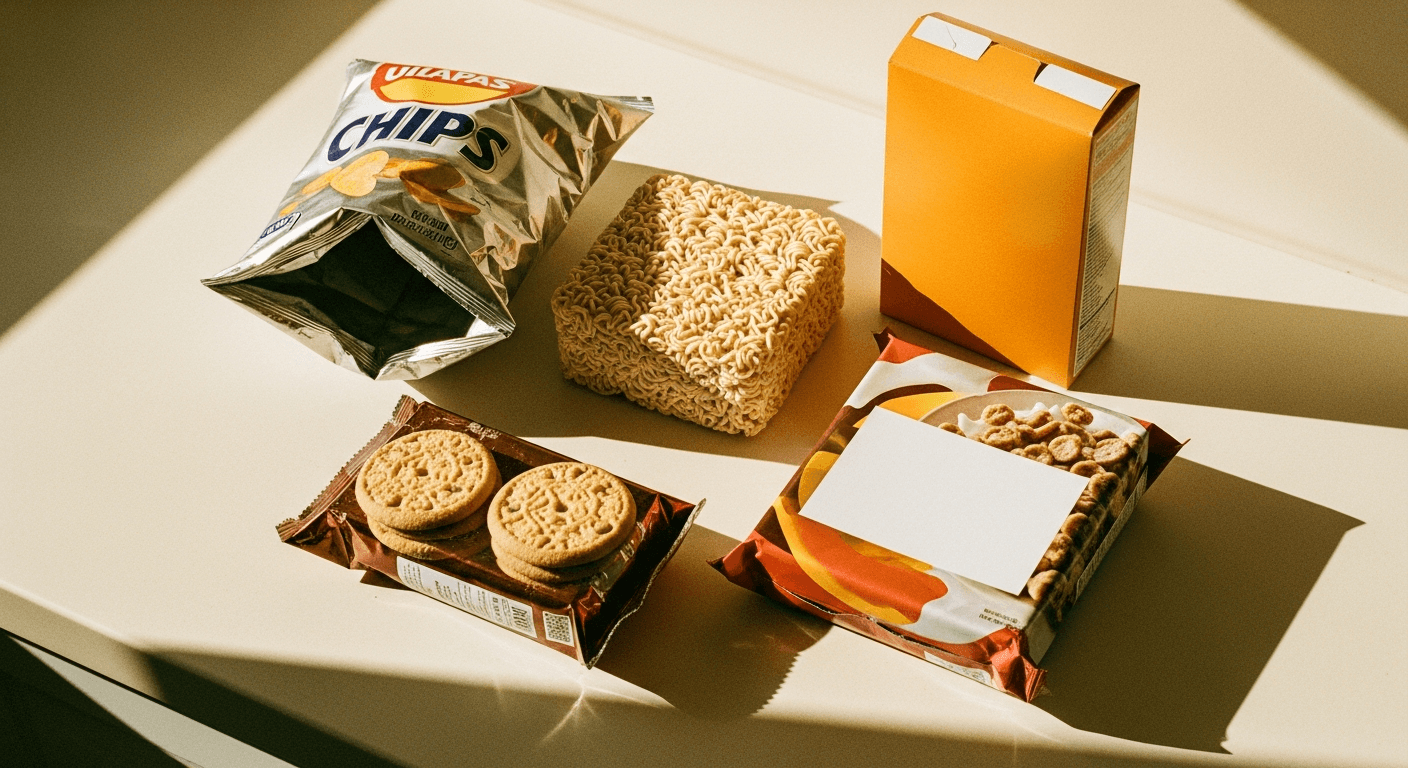
Likely ultra-processed: packaged breakfast cereals with added colors and synthetic vitamins, flavored instant noodles, most commercial chicken nuggets, soft drinks, flavored yogurt with stabilizers, supermarket bread made with dough conditioners, many protein bars with long additive lists, and most packaged snack chips and crackers. The giveaway is often a long ingredient list dominated by items you wouldn't find in a grocery store's baking aisle.
Not ultra-processed: plain Greek yogurt, sourdough bread from a bakery, canned fish in olive oil, natural peanut butter (ingredients: peanuts, salt), frozen vegetables, plain pasta, and most whole cheeses. These may be processed in some sense, but they don't rely on industrial additives to function.
The gray area exists, and the report acknowledges it. Some products are borderline. A packaged granola bar made with oats, honey, and nuts sits differently from one containing 22 ingredients including three types of modified starch and artificial vanilla flavoring. Both are "processed." Only one is ultra-processed under this framework.
How to Audit Your Own Intake
You don't need a nutrition degree to apply this definition practically. Here's a simple approach:
- Read the ingredient list, not just the nutrition label. If the first five ingredients include anything you couldn't buy at a grocery store or find in a standard recipe, that's a signal.
- Watch for specific additive categories. Emulsifiers (lecithin, carrageenan, mono- and diglycerides), artificial flavors, synthetic colors (Red 40, Yellow 5), and preservatives like sodium benzoate are strong indicators of ultra-processing.
- Count the ingredients. This isn't a hard rule, but products with 15 or more ingredients are statistically more likely to contain industrial additives. Fewer ingredients, especially recognizable ones, generally signals less processing.
- Focus on frequency, not elimination. A serving of packaged crackers occasionally isn't the issue. The concern is a diet where 60% of calories come from this category by default, across every meal and snack.
If you're already thinking about the broader picture of your diet quality, it's worth considering how nutrition decisions interact with your overall health. The same population-level data showing high UPF intake also shows links to reduced muscle function and physical resilience over time. Grip Strength: Test Your Longevity in 60 Seconds offers a useful baseline check that takes just a minute and can tell you something meaningful about where you stand.
What the Policy Options Could Change
The report's policy recommendations operate at a different scale than personal choice, but they'll eventually affect what's available to you and how it's presented.
Front-of-package labeling is one of the most immediately practical proposals. Countries including Chile, Mexico, and Brazil have already implemented warning labels on ultra-processed products, and the evidence from those markets suggests labeling does shift purchasing behavior, particularly for parents buying food for children. A U.S. equivalent would give shoppers a fast visual signal without requiring them to decode ingredient lists themselves.
Procurement restrictions in federal programs carry significant leverage. School meals, SNAP benefits, and other federal nutrition programs collectively influence food access for tens of millions of Americans. Restricting UPF purchases within these programs, or incentivizing healthier alternatives, would have outsized effects on populations with the highest UPF exposure and the fewest alternatives.
Reformulation incentives give manufacturers a financial reason to remove industrial additives from existing products rather than simply launching a "better-for-you" line as a premium option. This matters because premium alternatives don't reach everyone. If the standard product improves, the whole population benefits.
What This Means for You Right Now
The report doesn't change what's on your supermarket shelf today. Regulatory processes move slowly, and the gap between a technical recommendation and a federal rule can span years. But the definition itself is immediately useful because it gives you a stable framework to apply without waiting for labels to catch up.
It's also worth situating this conversation within the broader evidence on diet and health. Supplement choices, for example, often get treated as separate from diet quality, but they're connected. Is Daily Creatine Actually Safe? What Research Shows and Electrolytes for Gym Training: Do You Actually Need Them? are both worth reading if you're evaluating what your diet actually needs versus what marketing suggests it needs.
And if stress or sleep disruption is driving you toward convenient, highly palatable UPFs in the first place, that's a real pattern worth acknowledging. Anxiety in 2026: Stress and Sleep Are Still Winning covers the broader context of why so many people are defaulting to comfort foods as a coping mechanism.
The definition of ultra-processed foods is no longer a matter of academic debate. It's a policy tool. And for the first time, the U.S. has the framework to use it.