
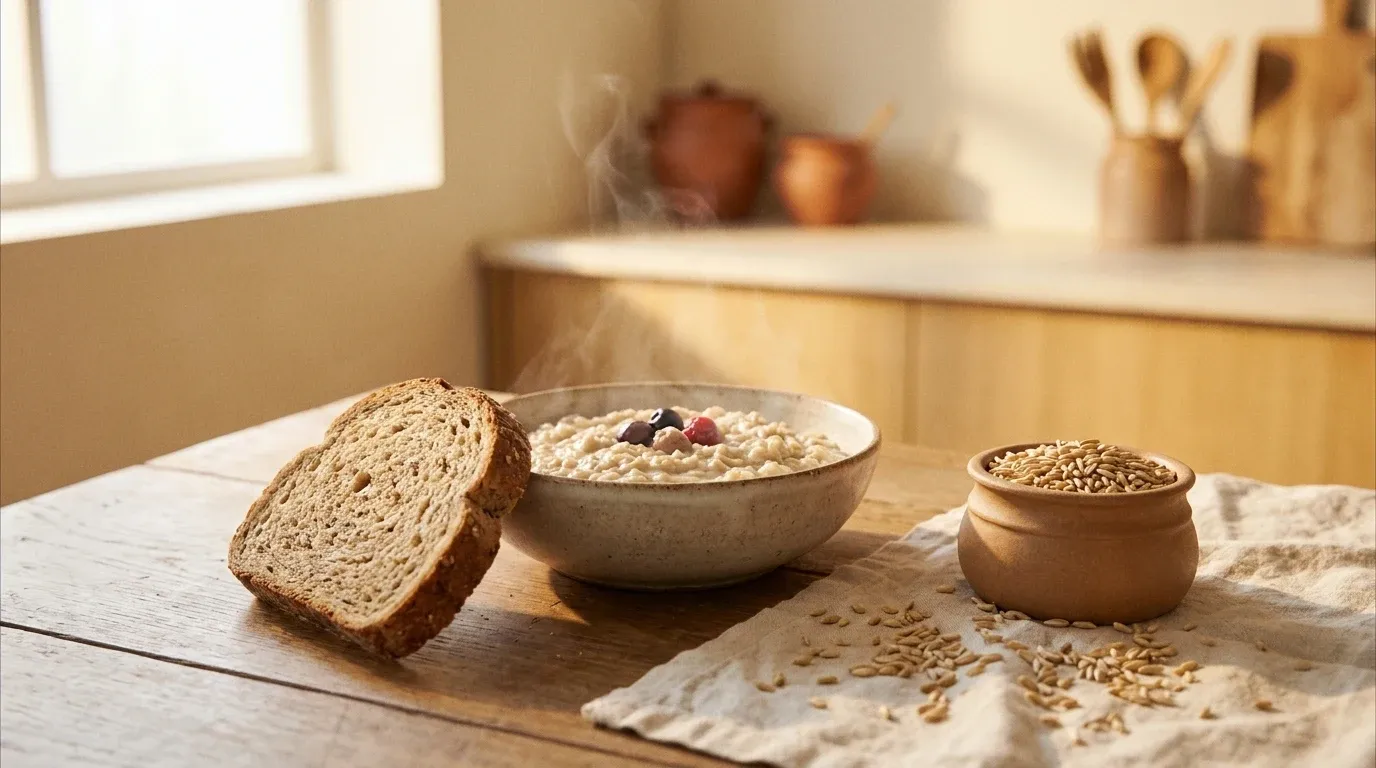
Most nutrition advice stops at "eat more whole grains." That's not enough. A landmark review of 87 clinical trials, published in September 2026, pinned down the optimal target: four to six servings of whole grains per day delivers the strongest associations with reduced cardiovascular risk, better glycemic control, and lower all-cause mortality. The science is settled on the quantity. What most people still don't know is what that actually looks like on a plate.
This guide closes that gap. No tracking apps required. No obsessive label-scanning. Just a clear picture of what a serving is, how to spot fakes, and how to spread your intake across the day without restructuring your life around it.
What One Serving Actually Means
One whole grain serving equals approximately 16 grams of whole grain content. That number is abstract until you anchor it to real foods.
- One slice of whole-grain bread (a standard sandwich slice, not a doorstop cut)
- Half a cup of cooked oats (that's a modest bowl, not the oversized portion most people pour)
- One-third of a cup of cooked brown rice or quinoa
- Half a cup of cooked whole-grain pasta
- Three cups of air-popped popcorn (yes, popcorn counts. Corn is a whole grain when it's not stripped.)
Four to six of those throughout the day. That's the target. It sounds like more than it is once you see how naturally these foods slot into meals you're probably already eating.
The Label Trap That Catches Almost Everyone
Here's where most people lose ground before they even start. Supermarket shelves are full of products using language designed to sound healthy without delivering on it. "Multigrain," "wheat bread," "made with whole grain," and "stone-ground" are marketing phrases, not regulatory guarantees.
A product labeled "multigrain" simply contains more than one type of grain. Those grains can all be refined. "Wheat bread" is almost always made primarily from refined white flour with a small amount of whole wheat added for color. It doesn't count toward your target.
To know you're getting true whole grain, look for one of two things on the label:
- The Whole Grain Stamp (from the Whole Grains Council), which shows the exact gram count of whole grain per serving
- The words "whole wheat," "whole oats," "whole rye," or another whole grain listed as the first ingredient
If the first ingredient says "enriched flour" or "unbleached flour," that's refined grain regardless of what the front of the package claims. Flip the product over. Read the ingredient list. That's the only label that tells you the truth.
Breakfast: Your Easiest Two Servings
Breakfast is where hitting your target becomes almost automatic if you make one or two swaps. A bowl of rolled oats (one cup cooked) already gives you two full servings before 9 a.m. Add a slice of verified whole-grain toast on the side and you're already at three.
If you're not an oatmeal person, a bowl of whole-grain cereal with at least 3 grams of fiber per serving and a whole grain listed first gets you one to two servings quickly. Overnight oats, savory oat bowls, and whole-grain waffles made with oat or spelt flour all count. The key is making one deliberate choice at breakfast rather than defaulting to refined cereals or white toast without thinking about it.
Whole grains at breakfast also support gut microbiome diversity, a factor that goes well beyond digestion. If you're interested in how gut health ties into performance and recovery, the connection between gut health for athletes and fermented food intake is worth understanding alongside your grain strategy.
Lunch: Swapping the Bread and the Base
Lunch is typically where whole grain intake collapses. Most sandwiches, wraps, and grain bowls at restaurants and delis are built on refined flour by default. You have to specifically ask for whole-grain options, or build the meal yourself.
At home, two slices of verified whole-grain bread in a sandwich equals two servings right there. If you're building a grain bowl, swap white rice for brown rice, farro, or barley. A half-cup serving of cooked farro brings around two grams of fiber and a nutty texture that holds up well to dressings and proteins.
One practical move: cook a large batch of a whole grain on Sunday and use it as a base for weekday lunches. Brown rice, farro, and whole wheat couscous all reheat well and take less than a minute to prepare mid-week. This is the single highest-leverage habit for consistent intake without daily effort.
Dinner: Where Athletes Pull Ahead
For active adults and athletes eating larger portions at dinner, this is where hitting the upper end of the range (five or six servings total) becomes straightforward. The volume of carbohydrates consumed at a training-fueled evening meal is high enough that swapping refined staples for whole grain versions adds servings without adding extra food.
One cup of cooked whole-grain pasta instead of white pasta. Brown rice or wild rice instead of white. A side of whole-grain bread instead of a dinner roll. Each of these swaps adds one to two servings to your day without changing the structure of your meal at all.
Athletes with high carbohydrate demands don't need to eat differently. They need to eat the same volume with better grain choices. A dinner that includes one and a half cups of cooked whole-grain pasta and a slice of whole-grain bread delivers four servings in one sitting, which on its own covers the minimum daily target.
Whole grains are also a meaningful source of B vitamins and minerals that active adults burn through at higher rates. If you're already weighing whether other micronutrient gaps need addressing, the evidence on whether multivitamins actually fill those gaps is a useful companion read.
Snacks That Count Without Feeling Like Health Food
Snacks are the overlooked opportunity. Three cups of air-popped popcorn equals one whole grain serving and takes ninety seconds to prepare. A small bowl of whole-grain crackers (check that the first ingredient is a whole grain) with nut butter or hummus adds another. Whole-grain rice cakes, rye crispbreads, and even some granola bars with verified whole grain content qualify.
The snack category is also where label confusion is worst. Many crackers and snack bars marketed as "natural" or "hearty" are made from refined flour with seeds added on top. Seeds are not whole grains. Oats are. Rye is. Check the ingredient list every time until you've memorized the two or three snack products that actually deliver.
A Realistic Day at Four to Six Servings
Here's what a full day looks like without any tracking app:
- Breakfast: One cup of cooked oats topped with fruit. Two servings.
- Lunch: Sandwich on two slices of whole-grain bread. Two servings.
- Snack: Three cups of air-popped popcorn. One serving.
- Dinner: Three-quarters of a cup of cooked brown rice with protein and vegetables. One serving.
Total: six servings. No app. No weighing. One intentional choice per eating occasion.
For someone eating less volume or skipping a snack, four servings is just as achievable. Oats at breakfast plus two slices of whole-grain bread at lunch already gets you there. The rest of the day can be built around preference.
How Whole Grains Fit Into a Broader Nutrition Strategy
Whole grains don't operate in isolation. Their fiber content feeds gut bacteria that produce short-chain fatty acids linked to reduced inflammation and improved metabolic signaling. Their effect on blood sugar is meaningfully different from refined grains, which produce sharper spikes and faster energy crashes, particularly relevant for anyone managing energy across training sessions and work days.
There's also growing research on the interplay between fiber-rich diets and appetite regulation pathways. Some of the same hormonal mechanisms involved in satiety are being explored in the context of natural GLP-1 pathways and how diet influences them. Whole grains may contribute to this effect independently of any supplementation.
Sleep quality, stress load, and metabolic health are also tightly connected. Poor sleep disrupts appetite hormones in ways that make refined carbohydrates harder to resist and whole food choices easier to skip. If you're finding the dietary changes hard to sustain, the relationship between sleep, stress, and metabolic function is a relevant lever to examine alongside your plate.
The Bottom Line
Four to six servings of whole grains per day is the evidence-backed target. One serving is about 16 grams of whole grain content. Most people aren't hitting this target not because it's hard, but because "multigrain" labels mislead them and they don't know what a serving looks like in a real meal.
Fix the label habit first. Learn to read ingredient lists instead of front-of-package claims. Then build one whole grain choice into each meal, and you'll hit the target without thinking about it by the end of the week.