
If you're an equipment brand or gym operator watching market data, one signal is loud enough to act on right now. Connected strength equipment is outpacing every other category in fitness hardware, and the window to position ahead of commoditization is narrower than most brands realize.
Two regions tell the clearest story. Europe's connected fitness market is expanding, with connected strength equipment leading at a 15.3% compound annual growth rate, according to a November 2026 market report. Asia Pacific is moving even faster at 19.8% CAGR for the same category. These aren't rounding errors. They represent a structural shift in how people buy, use, and expect strength training equipment to behave.
Why Connected Strength Is Pulling Ahead
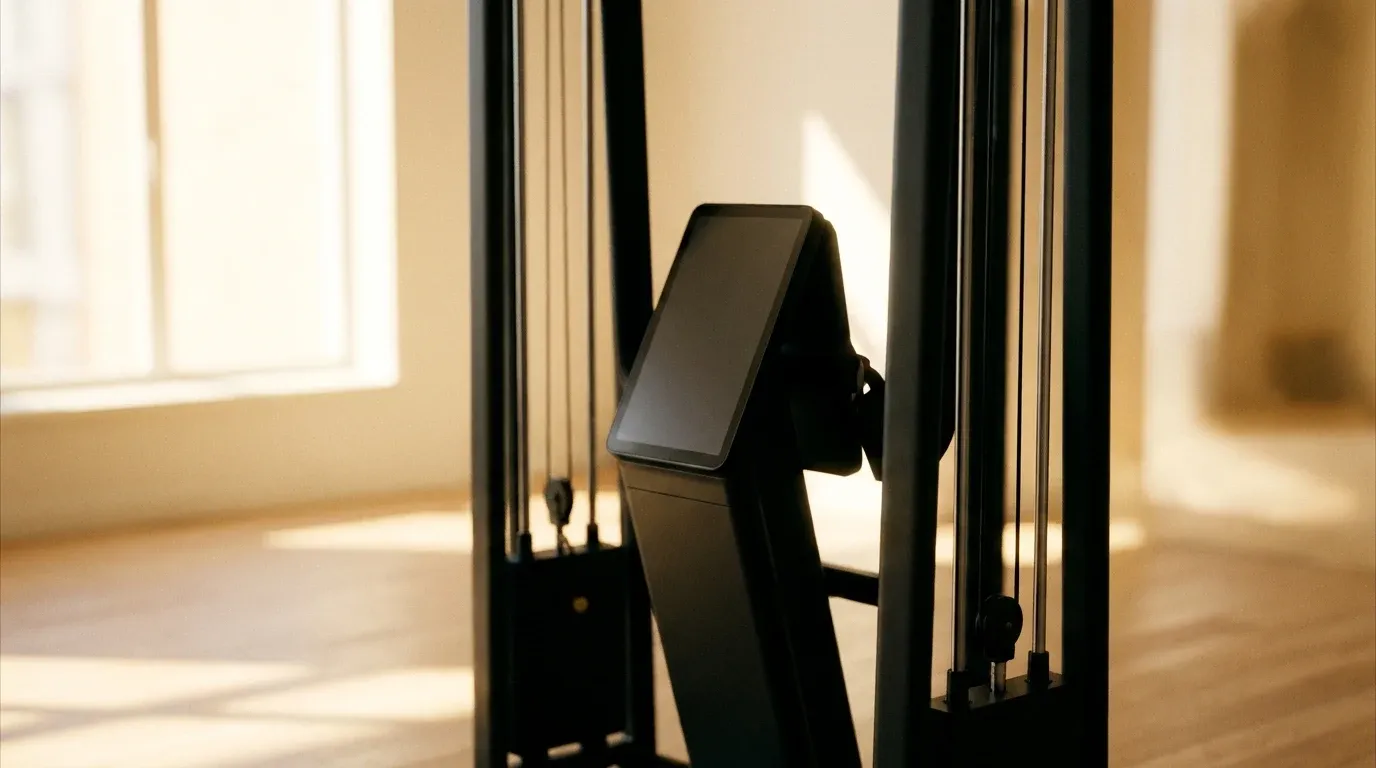
Traditional strength equipment. a rack, a stack, a cable machine. has been largely static for decades. What's changed is the layer sitting on top of it: sensors, resistance calibration, rep tracking, and adaptive programming delivered through screens and apps. Connected strength equipment merges the physicality of resistance training with the feedback loops that cardio wearables have offered since the early 2010s.
That convergence is proving commercially powerful. Consumers who've spent years tracking steps, heart rate, and sleep now expect the same data density from their strength sessions. Equipment brands that deliver it are growing. Those that don't are watching their category stagnate.
For a deeper look at how this hardware-software fusion is playing out at the consumer level, AI-Powered Home Gyms: Useful Upgrade or Expensive Hype? breaks down what's genuinely useful and what's still marketing.
The European Market: Home Users Are Setting the Agenda
Europe's connected fitness market has a defining characteristic in 2025: home users account for 55.70% of total connected fitness spend. That's the majority of the market, and it's being driven by the increasing affordability of wearable devices and app-based training subscriptions. When a consumer can build a credible training stack for well under $500 a year, the barrier to entry disappears.
This has real consequences for how equipment brands should allocate their go-to-market resources. If your sales motion is primarily B2B, targeting gym operators and corporate wellness buyers, you're addressing less than half the market by volume. The demand is sitting in living rooms, spare bedrooms, and apartment blocks across London, Berlin, and Amsterdam. And it's growing.
The strategic read here isn't that B2B is dead. It's that brands relying exclusively on operator distribution are building a structurally incomplete channel. Europe's Connected Fitness Market: What Operators Must Know maps out the downstream implications for facility-side strategy through 2035.
For equipment brands, the European home-user majority means your direct-to-consumer capability, your e-commerce infrastructure, your content marketing, and your app retention mechanics. is no longer a secondary priority. It's where the category is being decided.
Asia Pacific: Software and Sensors First, Hardware Second
The Asia Pacific story is different in character, but equally urgent. The region's connected fitness market is growing faster than Europe's, with connected strength at 19.8% CAGR. The drivers are urban youth adoption and the rise of compact digital resistance machines designed for smaller living spaces. In cities like Tokyo, Seoul, Singapore, and Shanghai, floor space is a premium. Equipment that folds, stacks, or replaces an entire cable setup in two square feet isn't a convenience. it's a category requirement.
But here's the data point that should reframe how hardware brands approach the region: wearables and trackers hold 52.30% of Asia Pacific connected fitness spend in 2025. The majority of consumer dollars in this market are going to devices that sit on the wrist or clip to clothing, not to standalone machines. Asia Pacific is, structurally, a software-and-sensor market.
What that means for equipment brands entering or scaling in the region is direct: you cannot lead with hardware alone. The consumer expectation is a full app ecosystem. adaptive programming, community features, progress visualization, integration with existing wearables. Equipment that ships with a mediocre app will lose to a mediocre machine with a great one. That's how mobile-first markets operate.
The science of training programming matters here too. Consumers who are engaged in app-driven strength training are increasingly exposed to research-backed methods. Content around 3 Seconds a Day to Get Stronger? New Study Says Yes reaches exactly the audience buying connected strength equipment in markets like South Korea and Australia, where fitness content consumption is high and evidence-based training is growing as a category.
The Channel Mismatch Threatening Gym-Focused Brands
Stack the two regional pictures together and a single strategic risk becomes visible. Home-user dominance in Europe and mobile-first behavior in Asia Pacific both point away from the traditional gym-operator channel as the primary growth lever for connected strength brands.
Gym-focused equipment brands face a specific version of this problem. Their product development cycles are built around commercial durability and operator specification requirements. Their sales teams sell to procurement managers and facility directors. Their warranty and service models assume high-use institutional environments. All of that infrastructure is optimized for a channel that now represents a minority of where connected fitness growth is happening.
This isn't a temporary dislocation. The home-user majority in Europe and the wearable-first spending pattern in Asia Pacific reflect long-term behavioral shifts accelerated by remote work normalization, rising gym membership costs, and the genuine improvement of at-home training technology. Waiting for the market to revert is not a viable posture.
Brands that have built premium positioning in adjacent categories are already navigating similar structural pressures. Athleisure's Premium Surge and the Mid-Market Squeeze documents how the same bifurcation between premium direct-to-consumer and mass-market compression is playing out in apparel, with lessons that transfer directly to connected hardware.
What Positioning Ahead of Commoditization Actually Requires
The 15.3% and 19.8% CAGR figures are attractive, but fast-growing categories attract fast-following competitors. Connected strength equipment will commoditize. The question is whether your brand is positioned on the high side of that compression or caught in the middle of it.
Positioning ahead of commoditization requires three things operating in parallel:
- App ecosystem depth. Hardware specs will converge. The differentiation layer will be software: programming quality, AI-driven adaptation, wearable integration, and community retention mechanics. Brands without a credible app roadmap are building a product that becomes a commodity the moment a lower-cost competitor ships equivalent resistance curves.
- Direct-to-consumer channel maturity. Reaching the home-user majority in Europe means owning the customer relationship directly. Subscription revenue, usage data, and upsell paths all depend on D2C infrastructure. Brands that route exclusively through operators don't accumulate the data assets needed to improve their products at the pace the market will demand.
- Content and community as a moat. The consumers buying connected strength equipment are engaged, curious, and often research-driven. Brands that produce credible training content. not marketing, but actual programming science. build retention loops that hardware alone cannot create. For newer strength trainees entering through connected equipment, resources like The Beginner's Entry Point Into Strength Training Science Actually Backs represent the kind of educational content that creates long-term brand attachment.
The Operator Opportunity Within the Shift
None of this means gym operators are written out of the connected strength story. It means the operators who win will be those who use connected strength equipment as a data and engagement layer, not just a floor asset.
Facilities that deploy connected strength equipment with member-facing app integration, progress tracking across sessions, and programming that members can continue at home are building a hybrid engagement model. The equipment becomes a reason to come in, not a reason to stay home. That's a fundamentally different value proposition than "we have more machines than the gym down the street."
Operators navigating this alongside the broader high-value low-price surge in facility models have a specific set of decisions to make about where connected strength equipment fits in their floor mix and membership proposition. The strategic frameworks developing around that challenge are covered in depth in America's Gym Boom: What the HVLP Surge Demands from Operators.
The Narrow Window
The growth rates in connected strength are real, but growth rates in emerging categories have a half-life. The brands and operators that move in the next 18 to 24 months will establish the ecosystem relationships, the data assets, and the consumer brand recognition that become defensible. Those that wait for the category to mature before committing will find the positioning already occupied.
Europe's home-user majority and Asia Pacific's software-first spending tell you where the consumer is. The question for your brand is whether your channel strategy, your app investment, and your content infrastructure are aligned with where the market already is, or still optimized for where it used to be.