
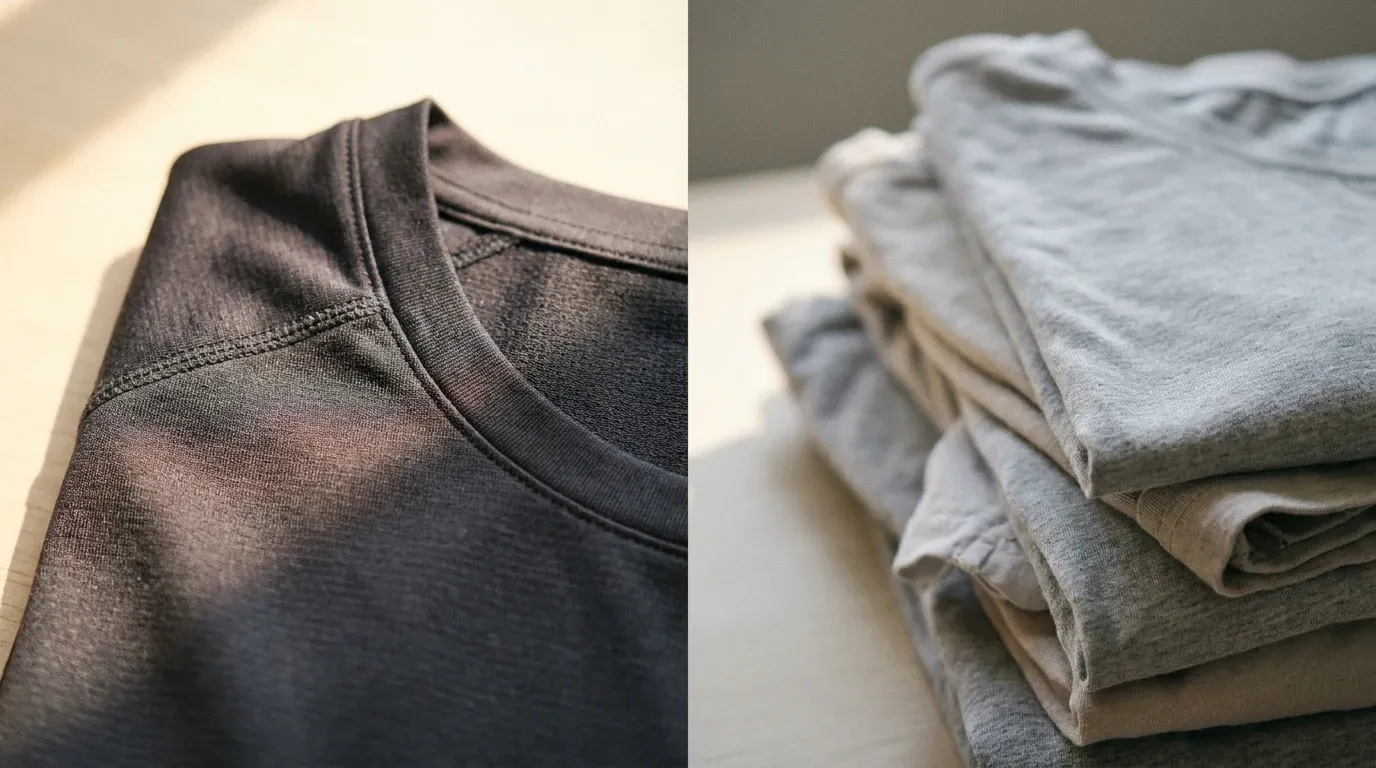
The athleisure market is growing fast, but it's not growing evenly. While the headline numbers look bullish across the board, the underlying dynamics are splitting the market into two very different trajectories. Premium and performance-tier brands are pulling ahead with real momentum. Mid-market players are facing a structural squeeze that's getting harder to escape.
If you're making brand positioning decisions in 2026, that distinction matters more than it has in years.
The Market Is Large and Getting Larger. The Distribution of Growth Is What's Shifting.
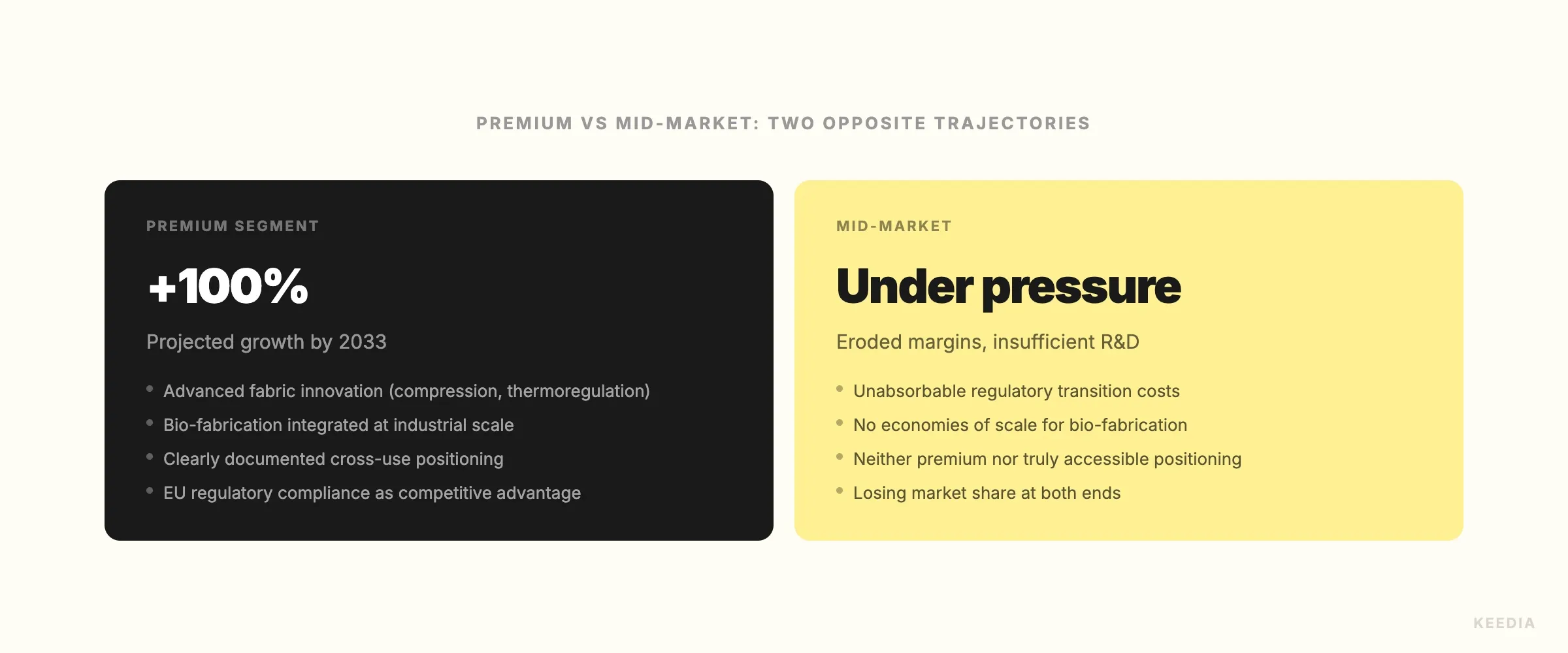
According to Grand View Research, the global athleisure market is projected to grow from $459.8 billion in 2026 to $892.5 billion by 2033. That's nearly doubling in under a decade. At a surface level, it looks like a rising tide that lifts all boats.
It isn't. The premium segment is identified as the fastest-growing tier within that expansion, driven by advanced moisture management, graduated compression systems, and temperature-regulating fabric technologies. These aren't marketing terms. They're measurable functional properties that consumers are increasingly willing to pay a significant premium to access.
The brands capturing outsized growth are those that can point to what their product actually does, not just how it looks or which athlete is wearing it in a campaign. That's a meaningful shift from how athleisure competed even five years ago, when brand cachet and aesthetic positioning carried more weight.
This aligns with broader fitness industry momentum. As detailed in the $430B Supplement Market: Who Actually Wins by 2035?, performance-linked product categories consistently outperform lifestyle-adjacent ones when consumer spending comes under pressure. Athleisure is following the same pattern.

Bio-Fabrication and Chemical Regulations Are Raising the R&D Floor
Here's where the squeeze becomes structural rather than cyclical. Two simultaneous forces are compressing the cost and compliance landscape for apparel brands that lack manufacturing scale.
First, automated bio-fabrication technologies are reshaping how performance fabrics are produced. These systems can significantly reduce synthetic material waste, lowering environmental footprint while improving consistency in fiber performance. That's genuinely good news for the industry. But it comes with high capital requirements and long development timelines that favor brands with existing manufacturing infrastructure or significant R&D investment capacity.
Second, stricter chemical standards are expanding beyond the EU and into broader global markets. Regulations governing restricted substances in textiles are becoming more stringent and more geographically widespread. Organic material blends that meet these evolving standards are entering premium activewear lines at scale. For brands without the supply chain relationships or technical teams to navigate that compliance layer, the cost of staying in market is rising sharply.
Mid-market brands face a painful double bind. They're absorbing higher input costs without the premium pricing power to pass those costs to consumers. And they're competing against fast-fashion producers at the low end who compress margins from below while premium brands pull aspirational consumers upward.
The result is that brand positioning decisions are unusually consequential right now. A brand that hasn't clearly staked a performance or lifestyle claim is exposed from both directions simultaneously.
Consumers Are Telling You Exactly What They Want
The consumer demand profile in 2026 is unusually clear, and it rewards a specific type of positioning. According to Business Research Insights, over 72% of consumers now prioritize comfort-focused apparel, and 68% prefer multifunctional clothing that moves across contexts without requiring a wardrobe change.
That's not a niche preference. That's a majority demand signal pointing directly at cross-use functionality. The consumer who buys a single pair of leggings to wear through a morning run, a coffee meeting, and an afternoon of errands is the core buyer in this market. She or he isn't looking for a product that performs narrowly in one context. They want versatility that holds up under real-world use.
This is partly driven by how fitness itself has evolved. Research increasingly supports the value of movement distributed throughout the day rather than concentrated in a single session. As covered in Everyday Movement Counts as Much as Your Workout, the science now confirms that ambient physical activity carries meaningful health benefits alongside structured training. Apparel brands that understand this shift are building products to match it. Those still designing strictly around gym use are missing the actual behavioral context of their customers.
What this means in practice: brands competing purely on aesthetic or heritage are increasingly vulnerable. Heritage doesn't answer the question of whether a fabric breathes during a midday walk or whether compression panels hold structure through six hours of wear. Function does.
Where Mid-Market Brands Can Still Compete
The mid-market squeeze is real, but it's not a death sentence for every brand sitting in that tier. The brands that survive the current bifurcation are likely to be those that make an explicit and defensible positioning choice rather than trying to serve everyone.
There are a few viable paths. Specialization by activity type is one. A brand that owns a specific sport or movement category can build concentrated product expertise and community loyalty that larger premium players can't easily replicate. The brand that everyone in a particular running community trusts has defensible ground, even at a mid-market price point.
Community-driven distribution is another lever. Direct relationships with fitness communities, coaching ecosystems, and gym networks offer an alternative to competing in a crowded retail environment on price and shelf positioning alone. The Planet Fitness acquisition of Be-Fit illustrates how gym networks are becoming increasingly important strategic anchors for adjacent consumer categories, including apparel and equipment partnerships. Brands that build intentional relationships within those networks have access to captive, fitness-committed audiences.
Transparency on materials and compliance is a third option that's underutilized. As chemical regulations become more visible to consumers, brands that can clearly articulate what's in their fabrics and why that matters will have a credibility advantage, particularly with the health-conscious consumer segment that already applies that level of scrutiny to nutrition and supplementation.
The Performance Positioning Opportunity for 2026 and Beyond
If you're on the premium or performance side of this market, the opportunity is to be specific rather than broad. Vague claims about performance fabrics won't hold up as more brands enter the space with legitimate technical differentiation. The brands that win long-term will be those that can explain the mechanism: why a particular fiber blend manages moisture more effectively, what graduated compression actually does for recovery, how temperature regulation works under varying exertion levels.
That specificity connects to a broader consumer sophistication trend that's visible across the fitness and wellness category. The same consumer who reads about creatine's cognitive benefits alongside its physical effects is applying similar scrutiny to the gear they're buying. Marketing to that consumer with surface-level performance language is increasingly ineffective. They want the mechanism, not the slogan.
Brands that invest in educating their audience about the actual science behind their product choices are building a more durable relationship than those relying on influencer reach or brand association alone.
What This Market Split Means for Adjacent Industry Players
The athleisure bifurcation doesn't only matter to apparel brands. It has downstream implications for gym operators, fitness coaches, and anyone whose business intersects with how people think about their fitness lifestyle.
Gym operators selecting retail partnerships or in-facility merchandise strategies need to understand that mid-market apparel partnerships carry different risk profiles than they did three years ago. As the HFA Global Report 2026 makes clear, operators are under increasing pressure to ensure that every partnership and revenue stream reflects their member experience positioning. Aligning with an apparel brand that's being squeezed on quality while trying to hold price points doesn't serve that goal.
For fitness professionals and coaches, the athleisure premium surge reinforces a consistent theme across the industry: clients are spending more on the full fitness lifestyle stack, including apparel, and they're doing so with more intentionality. Understanding what's driving those purchasing decisions helps you speak credibly to clients about how they're investing in their health and performance, not just what they're doing inside the session.
The Decisions That Can't Wait
The global athleisure market will almost certainly be larger in 2033 than it is today. That growth will reward brands that made clear, defensible positioning decisions in 2025 and 2026. It will be significantly less kind to brands that deferred those decisions while hoping conditions would stabilize.
The premium segment's current growth trajectory is not a temporary spike driven by post-pandemic consumer indulgence. It's a structural shift rooted in real fabric innovation, genuine regulatory pressure, and a consumer base that's become more performance-literate than any previous generation. That combination of forces doesn't reverse quickly.
If you're building or advising a brand in this space, the question isn't whether to take a position. It's whether you take one now, while the market is still defining its tiers, or wait until those tiers are locked and the premium players have established the reference points that everyone else gets measured against.