
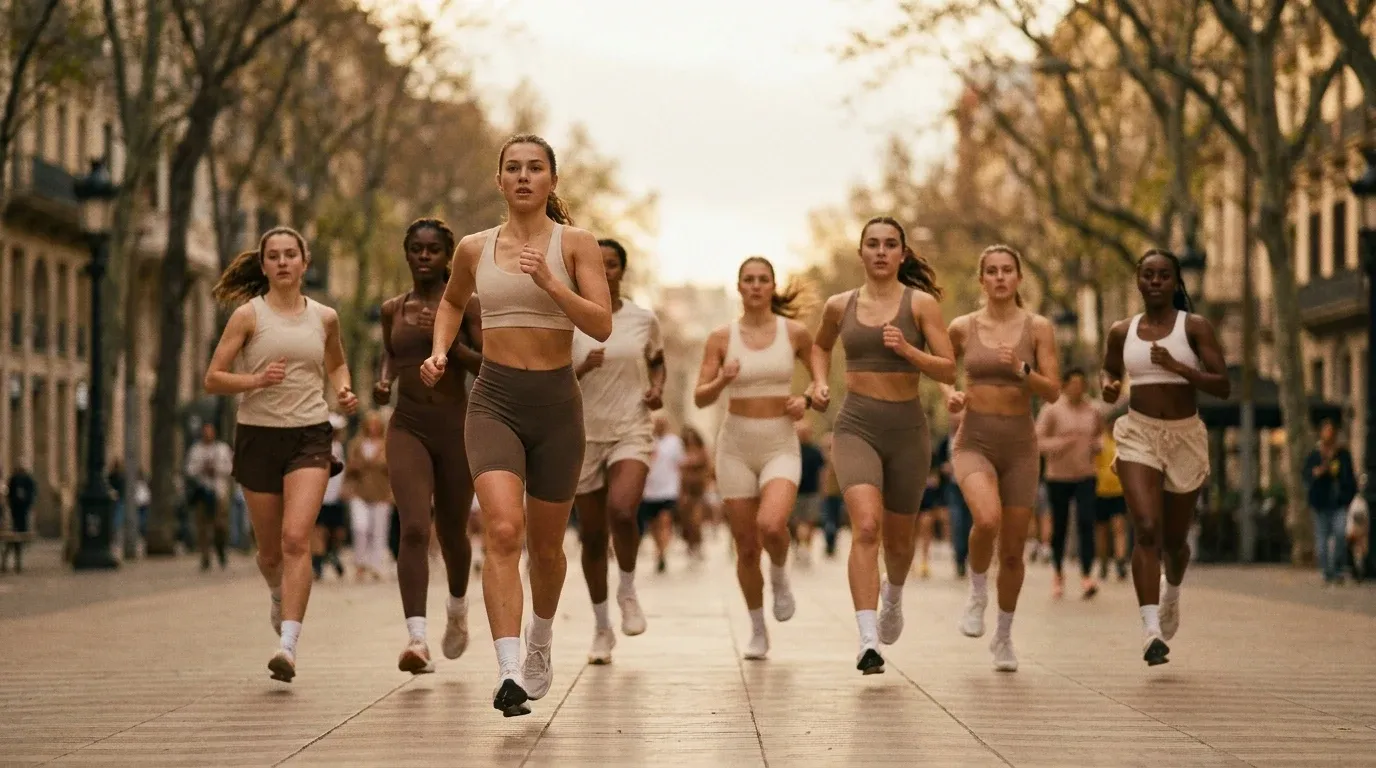
40% of Under-30s at Berlin Are Women: What It Means for the Future of Road Racing
The numbers coming out of the 2026 Berlin Marathon registration data are worth paying attention to. Women now represent 36.2% of Berlin's total field, a figure that already marks a significant jump from the historical norms at World Marathon Majors. But the real story sits inside a single age bracket.
Among runners aged 26 to 30, women make up 40.2% of all starters. That's not a rounding error or a one-year blip. It's a structural shift in who is showing up to race, and it has implications that reach well beyond one city in Germany.
Why the 26-30 Age Bracket Changes the Conversation
Overall participation percentages at major marathons have crept upward for women over the past two decades, but slowly. The sub-40% ceiling at the total field level has been stubbornly consistent across events like London, Chicago, and New York.
What makes the Berlin 26-30 data significant is that it shows younger women not just participating at higher rates than previous generations, but outpacing the overall field trend by more than four percentage points. When the youngest adult cohort at a major marathon is nearly gender-balanced, you're looking at a leading indicator, not a lagging one.
To understand why Berlin draws this kind of data, it helps to know the course itself. Why Berlin Is the World's Fastest Marathon Course breaks down the flat profile, wide roads, and consistent conditions that make it a target race for ambitious runners of all experience levels. That accessibility matters: it's not just elite runners who choose Berlin. It's first-timers chasing a personal best and experienced runners who want a legitimate shot at a fast time.
The Broader Running Boom Is Not Gender-Neutral
The post-2020 running boom is well documented. What's less discussed is how unevenly it has distributed across demographics. Women under 35 are now the sport's fastest-growing participation segment globally in 2026, according to race industry tracking and registration trend data from major event organizers.
Road race registration data consistently shows that women in their mid-to-late twenties are entering the sport at rates that outpace men in the same cohort. Social running communities, group training programs, and platform-driven accountability have all lowered the barrier to entry. The marathon, once positioned as a grueling ordeal best left to a certain type of personality, is now a goal that younger women are actively building their training cycles around.
This shift also shows up in gear and nutrition spending patterns. Brands that tracked the 2023-2025 period saw women's running categories grow faster than men's in footwear, apparel, and supplementation. Race-day nutrition is one area where younger female runners are increasingly informed and intentional. If you're planning around a goal race, 5 Race-Day Fueling Mistakes and How to Fix Them is worth reviewing before your next long effort.
What Race Organizers Are Actually Doing About It
The 2026 Berlin women's elite field is a direct response to this demographic momentum. Race directors have assembled a lineup that includes Tigist Assefa, the world record holder who ran 2:11:53 on this course in 2023, alongside multiple athletes capable of running sub-2:18.
That's not incidental. When a race invests in a deep, competitive women's elite field, it sends a signal to the mass participation wave behind it. Women in the 26-30 age group who are three, five, or ten years from chasing a qualifying standard are watching that elite field. The presence of world-class women at the front of the race normalizes the idea that this is a sport where women compete at the highest level, not as a sideshow.
Berlin isn't alone in making these investments. The broader landscape of destination marathons has shifted meaningfully. Destination Marathons Are Booming: Why Runners Travel to Race captures how international events are increasingly positioning themselves around experiences that appeal to a younger, more diverse participant base.
The Competitive Field: What You Need to Know Before Race Day
If you're following the 2026 race closely, the full breakdown of the elite lineups, pacing strategies, and potential fast times is covered in detail in Berlin Marathon 2026: Favorites, Fields, and Fast Times. The women's field in particular looks positioned for a significant performance, given the course, the weather projections, and the depth of athletes confirmed.
Assefa's presence alone tends to elevate a race. But the sub-2:18 depth means that even if the front of the race is tactically conservative early, the middle miles are likely to be competitive across multiple athletes rather than a solo time trial. That's better for the sport, better for television, and better for the tens of thousands of mass participants who spend their training months studying the women who run this distance at the limit of human performance.
What This Data Means for Coaches, Brands, and Event Planners
If you work in the running industry in any capacity, the Berlin participation data is a number worth tracking. Here's what it's pointing toward:
- Training program demand is shifting. Women in their late twenties are increasingly seeking structured marathon training, not just general fitness guidance. Coaching programs priced around $150 to $300 per month are seeing stronger uptake in this demographic than at any previous point.
- Nutrition education is a genuine gap. Younger female runners report higher rates of GI distress during long efforts, a problem that's addressable with better fueling strategies. Why Your Gut Struggles More During Fall Training covers some of the physiology behind this, particularly relevant as fall race season peaks.
- Elite representation drives mass participation. The correlation between strong women's elite fields and increased women's registration at major marathons is not anecdotal. Event organizers who invest in elite depth see downstream effects in the general entry pool.
- Gear and category development needs to keep pace. Women's-specific products in footwear, hydration, and race-day nutrition have historically lagged the participation curve. Brands that closed that gap early are now capturing disproportionate market share.
A Generation That Expects More From the Sport
There's something specific about the 26-30 cohort that makes their participation data particularly meaningful. These are runners who came of age alongside social running culture, who trained through COVID-era disruptions, and who in many cases built their fitness identity around running as a primary sport rather than a supplement to another activity.
They're also more likely to research their training, track their data, and make deliberate decisions about nutrition and recovery. They're not casual joggers who signed up on a whim. They're athletes who chose the marathon as a goal and built a training block around it.
That behavioral profile matters because it means this cohort will push the sport forward in ways that go beyond registration numbers. They'll demand better race experiences, better elite representation, better coaching infrastructure, and better products. The 40.2% figure at Berlin isn't just a participation statistic. It's a signal about what road racing looks like in five years if current trends hold.
The Road Ahead
No single data point defines a movement. But the 26-30 age bracket at Berlin 2026 is a genuinely striking figure. When a major marathon approaches gender parity in its youngest adult cohort, it reflects years of compounding behavioral change: more women starting, more women finishing, more women returning for another race.
The overall field at 36.2% women is already above historical norms. The 40.2% figure in the under-30 group suggests the overall number will keep climbing as this cohort ages into peak marathon-running years. The sport's center of gravity is shifting, and the evidence is already in the start list.
If you're in that cohort, racing Berlin or planning your next marathon cycle, you're not a trend. You're the runner the sport has always had room for. The data is finally catching up.