
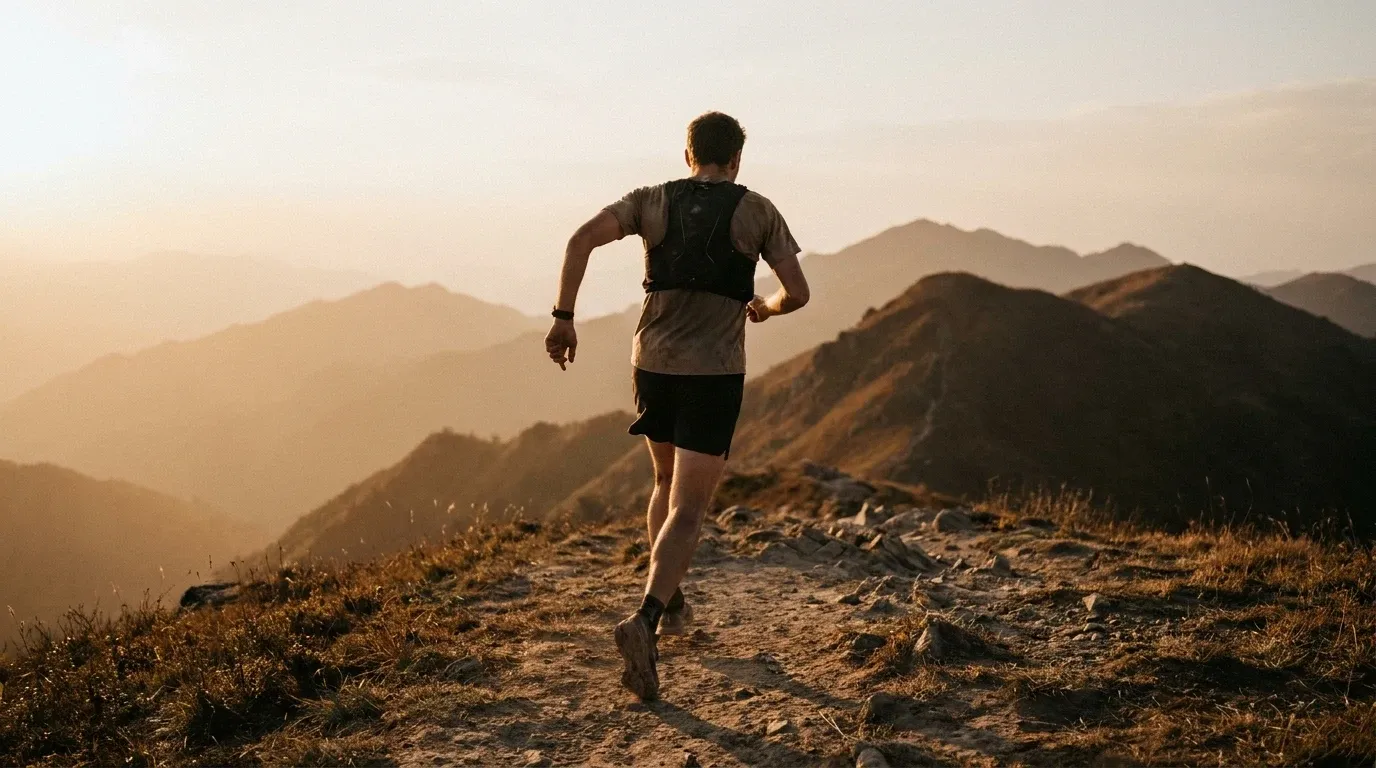
The mountains around Shangri-La don't forgive hesitation. At the 2026 Kailas Ultra-Trail Mount Siguniang, that reality played out across days of racing that produced new course records, a genuinely mixed international field, and a result sheet that will matter when runners calculate their UTMB Index scores later this season.
China's trail running circuit has grown fast. UTMS is now the clearest proof that growth has arrived at a global level.
What Happened on the Course
The flagship 108K race, the most watched distance at UTMS, saw its previous course record broken by just over twelve minutes on the men's side. The winning run combined sustained climbing pace with a controlled descent strategy that the high-altitude terrain, peaking above 5,000 meters, makes brutally necessary. Any runner who goes out too hard on the early ridgelines pays for it in the final technical sections near the valley floor.
On the women's side, the course record also fell. The winning performance demonstrated the kind of pacing discipline that separates podium finishes from mid-pack efforts at altitude. Both records had stood for three years, which made the margins of improvement meaningful rather than incidental.
The 50K and shorter distances drew strong fields too, with several runners using UTMS as either a tune-up for UTMB Mont-Blanc later in the season or as a standalone target race. That dual function, serious enough to race hard but staged early enough to leave recovery time, is part of what makes UTMS a smart calendar choice for international athletes.
Who Was Racing
The 2026 field included runners from more than thirty countries, with strong representation from Japan, South Korea, France, Spain, the United States, and Australia alongside the deep Chinese contingent. That kind of international spread was rare at Asian trail events a decade ago. It's now increasingly standard at the top tier of China's racing calendar.
Chinese domestic runners have closed the gap on international competition significantly. Podium finishes at UTMS no longer come predominantly from European or North American athletes, and that shift reflects years of infrastructure investment, coaching development, and a generation of Chinese runners who have competed extensively on the global circuit and brought that experience home.
Several runners in the top ten across distances had previous podium finishes at Hardrock 100, Western States, or UTMB. That caliber of athlete doesn't travel to Siguniang out of curiosity. They come because the race is legitimate, the organization is credible, and the UTMB Index points make the trip financially and competitively sensible.
Why China's Trail Scene Is Different Now
Trail running in China went through a painful public reckoning after the 2021 Yellow River Stone Forest tragedy, which killed twenty-one athletes during a mountain race in Gansu province. The government response was sweeping: stricter safety requirements, mandatory weather protocols, more robust race organization standards, and a significant reduction in the number of registered events in the years that followed.
What emerged from that period was a smaller but more professionally run circuit. Events that survived the regulatory tightening did so because they invested in safety infrastructure and organizational capacity. UTMS, which has the backing of Kailas, one of China's most established outdoor gear brands, was well positioned to meet those standards and has used the intervening years to build a race that feels closer to CCC or TDS in operational quality than to the scrappier events that defined early Chinese trail culture.
The result is a circuit that international runners trust. That trust is the foundation everything else is built on.
The UTMB Index Factor
If you're not familiar with how the UTMB Index works, here's the short version: races certified by UTMB World award points based on distance, elevation, and finish time. Those points determine whether you qualify for the lottery at UTMB Mont-Blanc and other marquee UTMB World Series events. UTMS carries full certification, which means results there translate directly into qualification currency for the events most trail runners treat as career goals.
That integration into the UTMB World system has been a significant driver of international participation at UTMS. Runners who can't get lottery spots at European races sometimes find that racing well in Asia is both a faster path to qualification and a genuinely different and rewarding experience. The two goals don't conflict.
It's worth watching how other Asian events develop alongside UTMS. The sport's global expansion is accelerating. Six new trail and road events are already scheduled for 2027, and several of them are in regions that have historically been underrepresented on the competitive calendar. Asia is leading that expansion, not following it.
Altitude, Terrain, and What Makes UTMS Hard
Siguniang, which translates as "Four Girls Mountain," sits in Sichuan province in western China. The terrain is not technical in the same way as Chamonix or the Dolomites. It's hard in a different way: sustained altitude, long exposed ridges, variable weather that can shift from clear skies to whiteout conditions in under an hour, and total elevation gain on the 108K course that exceeds 7,000 meters.
Runners who underestimate the altitude suffer. Acclimatization isn't optional at UTMS. Most serious competitors arrive at least five days before race day, and several of the international athletes who performed well in 2026 had raced or trained in Yunnan or Tibet in the weeks prior to sharpen their altitude adaptation.
Nutrition strategy at that elevation also requires adjustment. Gastric distress is more common above 4,000 meters, and runners who rely on high-sugar gels without electrolyte support tend to pay for it in the second half of the race. The connection between fueling strategy and high-altitude performance is an area where sports science is still developing consensus, but electrolyte management is consistently flagged as critical. If you want to understand the evidence behind supplement stacks that target exactly this kind of endurance demand, here's what the research says about creatine, HMB, and hydration combinations.
What the Results Mean for the Global Circuit
Trail running's global structure is maturing. It's no longer accurate to describe the sport as a European export that the rest of the world participates in on European terms. Events in Asia, the Americas, and Africa are generating their own competitive narratives, their own records, and their own elite cultures.
UTMS 2026 fits that pattern. The records that fell at Siguniang aren't asterisked as "Asian records" or treated as regional footnotes. They're tracked alongside results from Zegama, TDS, and Hardrock by coaches, sponsors, and selectors who pay attention to where the sport is actually happening.
Historically remarkable performances are happening everywhere now. Stephanie Case's 100-mile run in Antarctica is one example of how the sport's boundaries are being pushed in directions that weren't even considered a decade ago. UTMS, in its own way, is part of the same expansion story.
The sport is also attracting a broader range of participants below the elite level. Mass participation in trail running has grown sharply across Southeast and East Asia, with participation rates in organized events increasing faster than in any other global region over the past five years. That grassroots base is what sustains elite-level events long-term. You can't have a credible elite race without a deep community underneath it.
What to Watch Going Forward
The 2026 UTMS results will ripple through the qualification and ranking systems for the remainder of the year. Runners who performed well at Siguniang will carry that form and those points into autumn races in Europe and North America. A few of the Chinese athletes who podiumed may appear at UTMB Mont-Blanc for the first time, which will be worth tracking.
The race's growth trajectory also suggests that the 2027 edition will attract an even deeper international field. Word spreads quickly in trail running communities, and performances like those recorded in 2026 generate credibility that no amount of marketing can replicate. If you're considering adding UTMS to your calendar, the registration windows typically open several months in advance and fill quickly for the flagship distances.
Trail running's expansion into Asia isn't a future story anymore. UTMS 2026 made clear it's happening right now, at a competitive level that the global circuit is paying full attention to. The same forces driving growth in other endurance formats, accessibility, international integration, rising standards of organization, are visible here. Events like the XTERRA European Trail Championship moving to the French Riviera in 2027 reflect a sport that's actively seeking new audiences and new venues. UTMS is doing the same thing, just on a different continent and at altitude.
The mountains around Siguniang will reset themselves before the next start line. The records set in 2026 won't.