
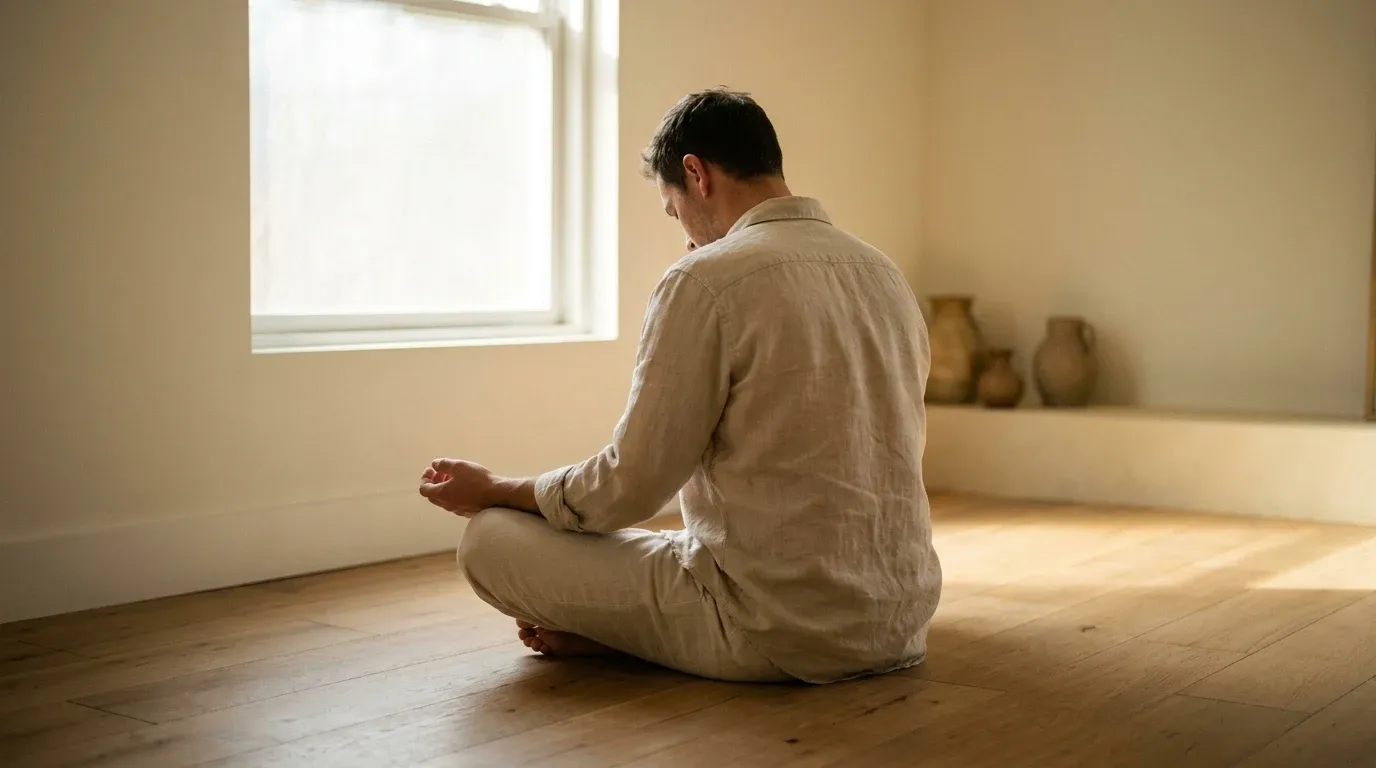
Mindfulness has become one of the most marketed wellness concepts of the last decade. Apps, retreats, corporate programs, and social media accounts all promise the same thing: sit quietly, breathe, and watch your stress dissolve. The reality is more complicated. The research on mindfulness-based stress reduction is genuinely promising in places, genuinely overstated in others, and almost universally more nuanced than the headlines suggest.
Here's what the science actually shows, and how to use it to build a stress management approach that works for you specifically.
The Evidence Base Is Real, but It's Not Uniform
Mindfulness-based stress reduction (MBSR) has been studied extensively since the early 1980s, and the findings are largely positive. Multiple systematic reviews and meta-analyses show measurable reductions in self-reported stress, anxiety, and cortisol markers following structured mindfulness programs. One widely cited meta-analysis covering over 200 studies found moderate effect sizes for stress and anxiety outcomes across diverse populations.
The problem is the word "moderate." Effect sizes in mindfulness research tend to cluster around 0.3 to 0.6, which is clinically meaningful but far from universal. Roughly 30 to 40 percent of participants in controlled trials show minimal or no significant benefit. That's not a failure of mindfulness as a concept. It's a signal that individual response varies considerably depending on personality type, baseline stress levels, the specific technique used, and how consistently it's practiced.
Neuroimaging research adds useful texture here. Regular mindfulness practice has been associated with changes in the prefrontal cortex and amygdala, regions tied to emotional regulation and threat response. But these structural changes take time, and they don't happen uniformly across all practitioners or all methods.
Not All Mindfulness Practices Are the Same
When people say "mindfulness," they often mean very different things. Formal seated meditation, body scan practices, mindful movement like yoga or tai chi, open awareness techniques, and focused attention practices all fall under the umbrella. Research suggests these techniques produce different outcomes and suit different people.
Focused attention meditation, where you anchor your attention on the breath and return it when the mind wanders, tends to show stronger short-term results for acute stress. Open monitoring practices, which involve observing thoughts without engagement, may be more effective for people dealing with rumination. Body-based approaches appear particularly useful for individuals who find seated stillness uncomfortable or anxiety-provoking, which is more common than the wellness industry typically acknowledges.
It's also worth noting that the format matters. An eight-week structured MBSR program delivered by a trained instructor consistently outperforms self-guided app use in controlled comparisons, though apps still show benefit over doing nothing. If you're dealing with significant stress, the $30 to $100 monthly cost of a structured program or working with a qualified instructor may produce meaningfully better results than a $12.99 app subscription alone.
Stress Management Is Highly Personal
One of the most consistent findings across the broader stress reduction literature is that there is no single best intervention. Experts working in evidence-based mental health and behavioral medicine increasingly frame stress management as a matching problem: finding the approach that fits your biology, lifestyle, and psychological profile.
Some people respond strongly to contemplative practices. Others respond better to physical exertion, social connection, or creative engagement. Research suggests that activities like dance can outperform more conventional wellness interventions for stress relief, particularly for people who find structured meditation tedious or overstimulating.
This matters because the stress response is not a single mechanism. Chronic workplace stress, acute performance anxiety, grief-related stress, and trauma-related hyperarousal each have different physiological signatures and respond differently to various interventions. A technique that works well for one type of stress may do very little for another.
The practical implication: if you've tried mindfulness and found it unhelpful, that's not a character flaw. It may simply not be the right tool for your particular stress profile. The goal is to find what genuinely reduces your physiological and psychological stress markers, not to succeed at the intervention that happens to be culturally popular right now.
Exercise and Sleep Often Outperform Meditation in Head-to-Head Comparisons
Here's something the mindfulness industry rarely leads with. In evidence-based frameworks for stress reduction, aerobic exercise and high-quality sleep consistently rank as the two most robust interventions across populations. This isn't a knock on mindfulness. It's a recalibration of where it sits in the overall picture.
Regular aerobic exercise reduces cortisol and adrenaline levels acutely and, over time, improves hypothalamic-pituitary-adrenal (HPA) axis regulation, the core system governing your stress response. The effect sizes for exercise on stress and anxiety outcomes are generally larger than those observed for mindfulness in matched comparisons. A single 30-minute session of moderate-intensity cardio has been shown to reduce anxiety for up to several hours afterward.
Sleep is, if anything, even more foundational. Research into sleep and physiological recovery shows how profoundly sleep quality affects cardiovascular and respiratory systems, both of which are directly implicated in how your body handles stress. Chronic sleep deprivation elevates baseline cortisol, reduces prefrontal cortical function (your capacity for rational regulation of emotional responses), and essentially undermines every other stress management strategy you're trying to run simultaneously.
If you're sleeping poorly and sedentary, starting a meditation practice without addressing those two variables is likely to produce limited results. The hierarchy matters.
Consistency Beats Duration Almost Every Time
One of the most actionable findings in the mindfulness research literature is about practice structure. The common assumption is that more time equals more benefit. The evidence suggests something more specific: short, consistent practice outperforms infrequent longer sessions for most people managing everyday stress.
Studies comparing daily 10-minute sessions against weekly 60-minute sessions in non-clinical populations consistently favor the daily format for stress reduction outcomes. The proposed mechanism involves habituation and automaticity. Brief, frequent practice builds the neural habit of shifting attentional focus, while infrequent longer sessions don't embed that habit as reliably.
This is practically useful. Ten minutes of focused attention practice in the morning, done five to six days a week, is more likely to produce meaningful stress reduction over three months than a 45-minute session you do once a week when you remember. Lower barriers to entry translate to higher adherence, and adherence is the single most predictive variable in almost every behavioral intervention studied.
The same principle applies to physical stress management strategies. Shorter, more frequent bouts of exercise are generally more effective for stress and mood outcomes than the once-a-week long workout. Building sustainable recovery habits across the week, rather than treating rest as a single event, consistently produces better outcomes.
What a Practical, Evidence-Informed Approach Looks Like
Based on the weight of current evidence, here's a framework that reflects what actually works for most people managing chronic or moderate everyday stress.
- Prioritize sleep first. Aim for seven to nine hours, consistent timing, and address any obvious disruptors (light exposure, alcohol, late-night screens) before adding anything else to your routine.
- Build consistent movement into your week. Three to five sessions of moderate aerobic activity, even brisk walking, will produce measurable stress reduction effects over four to six weeks.
- Choose a mindfulness technique that fits your temperament. If seated stillness feels difficult, start with body scan, mindful walking, or a movement-based practice. Fit matters more than format.
- Practice briefly but daily. Ten minutes of focused attention practice, most mornings, is a realistic and evidence-supported starting point.
- Track your own response honestly. Stress is subjective enough that your data matters. If a technique produces no noticeable change after six to eight weeks of consistent use, that's real information. Adjust accordingly.
- Don't isolate any single intervention. The strongest outcomes in stress reduction research consistently come from multimodal approaches combining movement, sleep hygiene, and some form of attentional or cognitive practice.
The Honest Bottom Line
Mindfulness works for many people, under the right conditions, with the right technique, applied consistently. It doesn't work equally well for everyone, and it's not the most powerful tool in the evidence-based stress reduction toolkit when measured purely by effect size against exercise or sleep optimization.
The more useful question isn't "does mindfulness work?" It's "what combination of approaches reduces my stress most effectively, and what's realistic for me to sustain?" That question leads to better outcomes than chasing whatever practice happens to be trending.
Research continues to evolve here. The relationship between behavioral interventions and physiological stress markers is genuinely complex, and even well-regarded recovery practices come with tradeoffs that aren't always communicated clearly to the public. Staying grounded in what the evidence actually says, rather than what the wellness industry wants it to say, is the most useful thing you can do for your long-term stress management.