
Remote work was supposed to be the healthier option. No packed commutes, no fluorescent-lit open-plan offices, no vending machine temptations at 3 p.m. And in one narrow sense, the data confirms it: remote workers do sleep a little more. But a significant new study out of Finland reveals that this single win comes packaged with a much larger loss, one that HR teams and remote workers alike have been slow to reckon with.
The problem isn't stress or isolation. It's that your body is barely moving at all.
What the University of Turku Study Actually Found
Published on September 23, 2026, research from the University of Turku tracked workers across both remote and office-based days, measuring sleep duration and sedentary behavior with objective monitoring tools. The findings were clear: remote workdays produced slightly more sleep, but also significantly more time spent sitting compared to equivalent days in the office.
This isn't a trivial difference. When researchers identified the structural reasons behind the spike in sedentary time, two culprits emerged above everything else: the absence of standing workstations at home, and the elimination of commute-related incidental movement. These aren't lifestyle choices. They're environmental defaults that most remote workers never consciously chose.
The commute, for all its frustrations, forced your body to do things. Walk to a platform. Stand on a train. Navigate a parking lot. Cross a street. That low-intensity movement added up across five days a week in ways most people never tracked and now never replace. At home, your path from bed to desk can be measured in steps rather than minutes.
You're Probably Sitting More Than You Think
This finding doesn't land in a vacuum. Remote Work Is Making You Isolated and Less Active has been a growing editorial thread at keedia for good reason. Previously published keedia data shows that desk workers already sit for approximately 76% of their waking day. The University of Turku results suggest that remote workers may be pushing that figure even higher, potentially crossing into territory where the cardiovascular and metabolic risks become clinically significant.
Prolonged sitting is associated with reduced insulin sensitivity, increased cardiovascular risk, impaired circulation, and accelerated musculoskeletal decline. None of these risks care whether you're sitting in a modern open-plan office or a home study with a view of your garden. The mechanism is the same: your muscles are largely inactive, your postural load is compressed, and your metabolic rate drops toward baseline.
For workers over 35, this compounds further. Recovery from prolonged inactivity takes longer, postural imbalances accumulate faster, and the window to reverse accumulated damage without structured intervention narrows. If that describes your situation, the recovery habits that matter most after 35 become relevant not just for athletes but for anyone trying to undo the damage of a long sedentary workday.
The Sleep Benefit Is Real. It's Also Incomplete.
It's worth acknowledging what the study confirms: remote workers are getting marginally more sleep. That matters. Sleep deprivation is a systemic health issue, and any structural improvement in sleep duration is worth noting.
But duration alone doesn't tell the full story. If you want to understand what that extra sleep is actually doing for you, the distinction between sleep quality and sleep quantity matters enormously. Sleeping longer in a disrupted pattern, or without sufficient deep and REM stages, may not deliver the restorative benefits the raw number implies.
The research doesn't yet tell us whether remote workers are sleeping better in a qualitative sense, only that they're sleeping longer. That's a meaningful limitation when you're weighing it against a measurable increase in sedentary behavior.
What the Researchers Actually Recommend
The University of Turku researchers weren't short on practical guidance. Their minimum countermeasures for remote workers fall into three categories:
- Intentional sitting breaks. Regular interruptions to prolonged sitting, structured across the workday rather than left to chance. A break every 30 to 45 minutes is the threshold most movement research supports.
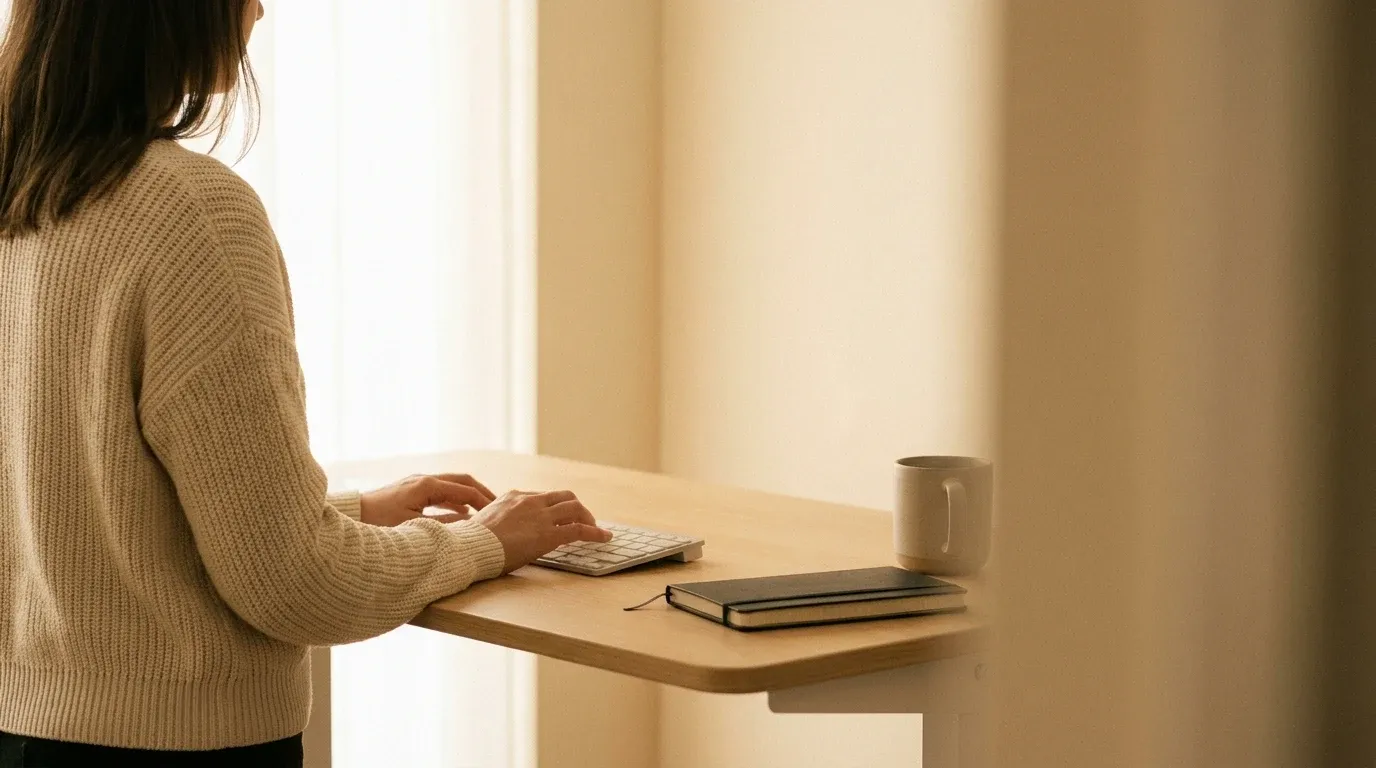
- Posture changes throughout the day. Alternating between sitting, standing, and light movement rather than holding any single position for hours. This requires either a standing desk or a deliberate protocol for moving between locations at home.
- Deliberate leisure-time physical activity. Because the incidental movement that commuting provided is gone, it needs to be consciously replaced. A walk. A gym session. A cycle. Something structured that isn't just steps between rooms.
None of these are complicated. All of them require intention that the office environment used to supply automatically. That shift from automatic to intentional is exactly where remote workers tend to fall short, not from laziness but from the absence of environmental cues that used to trigger movement without any conscious effort.
For those looking to structure their movement breaks more deliberately, exercise snacks designed for desk workers offer a research-backed framework for integrating short, effective movement bursts into a sedentary workday without disrupting productivity.
The Equipment Gap HR Has Been Ignoring
Here's where the organizational responsibility becomes hard to sidestep. Most remote-work equipment policies were written during the early scramble of 2020 and updated only slightly since. They tend to cover monitors, ergonomic chairs, keyboards, and occasionally lighting. They almost never cover active workstation options.
That gap is no longer defensible. Ergonomics is moving up the corporate agenda in 2026, and the University of Turku findings add a specific, evidence-based pressure point: if your organization provides a home-office stipend that doesn't include the option of a sit-stand desk or a walking pad, you're funding a sedentary environment and calling it a benefit.
Sit-stand desks suitable for home use now start at around $300 to $400 for reliable motorized options, with quality models in the $600 to $900 range. Walking pads designed for desk use typically run $250 to $500. These are one-time costs against a multi-year duty-of-care liability. Framed that way, the expense is modest.
HR leaders in organizations with distributed or hybrid teams should now be asking a direct question: does our home-office policy actively reduce the sedentary risk our remote employees face, or does it simply ensure they have a screen to sit in front of? The study gives you the research to make that case internally. The equipment market gives you the solutions.
What You Can Do Without Waiting for Policy to Change
Organizational change moves slowly. Your body doesn't have that kind of patience. If you're a remote worker waiting for your employer to act, here are the structural changes you can implement without institutional support:
- Set a recurring calendar block every 45 minutes as a movement prompt, treated as non-negotiable as a meeting.
- Create a deliberate replacement for your former commute. A 20-minute walk before your first call and after your last one replicates the low-intensity movement that transit used to provide.
- Use a laptop on a kitchen counter or bookshelf for 60 to 90 minutes per day as an improvised standing position while the budget for a proper desk accumulates.
- Schedule your physical activity at the start of the week the same way you schedule meetings. Unscheduled exercise is the first thing eliminated by a busy day.
- Pay attention to the physical signals your body sends before you consciously register fatigue or discomfort. Tension across the upper back, heaviness in the legs, and reduced concentration are often posture and movement signals before they're stress signals. Your body communicates strain before your brain catches up.
The Reframe Remote Work Needs
The remote-work health conversation has spent the last several years focused on isolation, mental health, and the erosion of team culture. Those are real concerns. But the University of Turku study points to a risk that's more measurable, more physical, and more immediately solvable: the systematic removal of movement from the working day.
You're probably sleeping slightly better. But if you're sitting for the better part of eight to ten hours without structured interruption, that sleep benefit isn't offsetting the metabolic and musculoskeletal cost you're accumulating in your chair.
The good news is that this is one of the more tractable problems in workplace health. The drivers are structural. The solutions are known. The costs are manageable. What's required now is for both workers and the organizations that employ them to treat sedentary remote work as the measurable health risk the evidence says it is, and to respond with the same seriousness they'd bring to any other workplace safety issue.