
The supplement industry has spent the last two years quietly rebuilding its infrastructure around artificial intelligence. Supply chain forecasting, formulation testing, personalized recommendation engines. The technology is real, and it's moving fast. But for everyday athletes, the consumer-facing version of this revolution looks very different from the backend story. Here's what's actually happening, and how to tell the difference between genuine progress and marketing noise.
What's Changing Inside Supplement Companies
The most meaningful AI applications in sports nutrition right now aren't in your app. They're in the operations centers of mid-to-large supplement brands. Companies are using machine learning models to predict ingredient shortages three to six months out, optimize sourcing across global suppliers, and reduce the formulation-to-shelf timeline for new products.
That operational shift matters because it affects what ends up in your tub and how consistent it is batch to batch. Quality control has historically been a weak point in the supplement industry. AI-assisted spectrometry analysis and real-time batch testing are starting to close that gap, particularly for brands with the capital to invest in the infrastructure.
On the product side, several larger brands now run recommendation engines trained on millions of purchase and health data points. These systems don't just suggest "protein powder for muscle gain." They're pulling in variables like training frequency, age ranges, dietary restrictions, and regional weather data to adjust hydration and electrolyte product suggestions. It's a meaningful step up from the demographic-bucket approach that defined the industry for decades.
For deeper context on where the nutrition industry is heading across multiple fronts, Sports Nutrition 2026: What's Actually Changing covers the broader landscape of personalization and evidence-based product development.
The Consumer-Facing Reality in 2026
When that same AI logic gets translated into consumer apps and subscription services, the quality spread is enormous. Some tools are genuinely useful. Many are not.
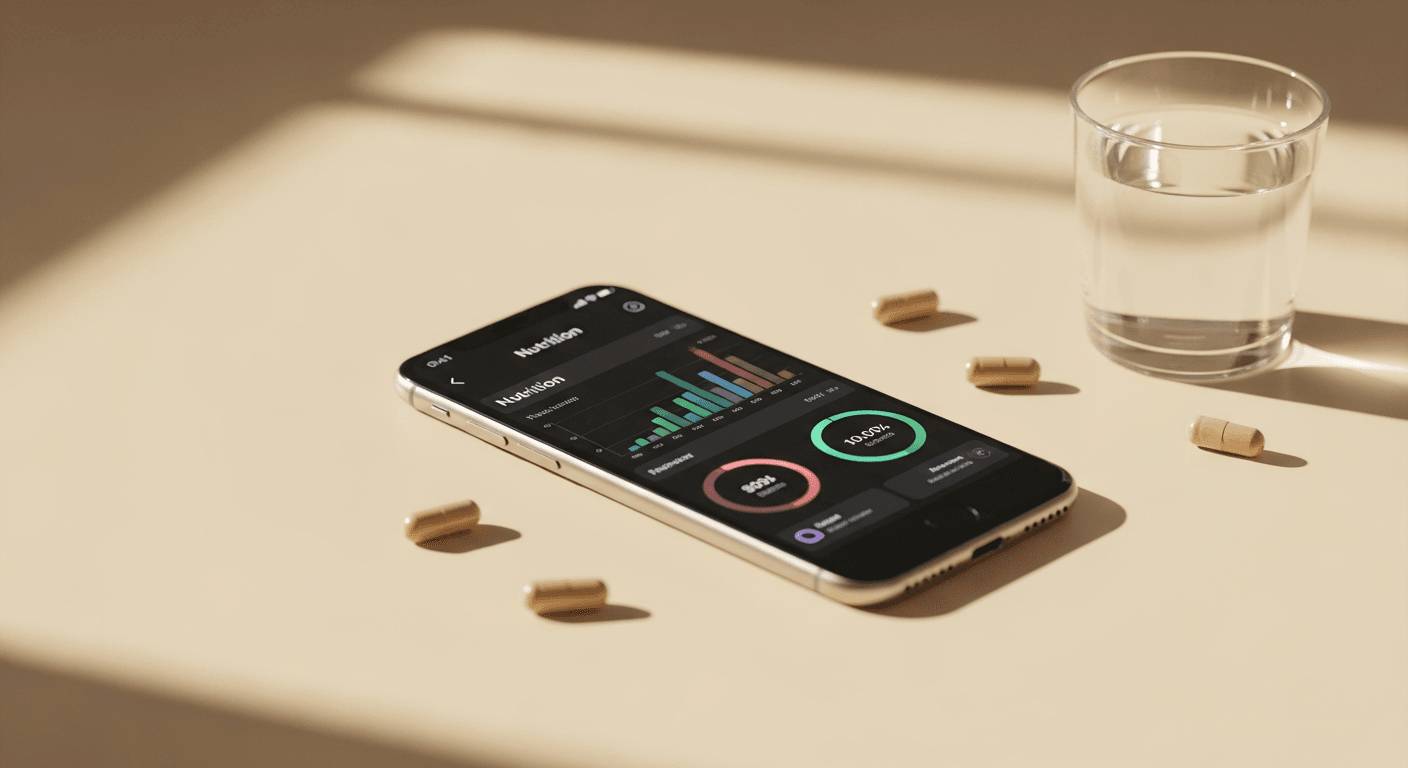
At the useful end of the spectrum, you have platforms that integrate with wearable data and blood biomarker testing. These tools adjust your protein targets based on actual training load, not a static calculator. They flag micronutrient gaps based on your current lab values, not a generic "active adult" template. A few platforms now sync with continuous glucose monitors to adapt carbohydrate timing recommendations in real time, which has real value for endurance athletes managing fuel and recovery simultaneously. Check out Carbs and Hydration: The Exact Timing for Performance to understand why real-time adjustment of these variables actually matters.
At the other end, there are quiz-based supplement subscription services that use the word "AI" in their marketing while running what amounts to a decision tree with twelve nodes. You enter your weight, activity level, and fitness goal. The algorithm outputs a stack that looks suspiciously identical to what it recommends for everyone who selected "lose fat" or "build muscle." That's not personalization. It's segmentation with a rebrand.
The price range reflects the gap in quality. Genuinely integrated AI nutrition platforms with biomarker testing typically run $150 to $350 per month in the US market. Basic quiz-based subscription services start around $40 to $60 per month. The cost difference is not arbitrary, it maps closely to how much real data is actually being processed.
Blood Markers and Training Load: Where AI Earns Its Keep
The strongest case for AI in nutrition personalization comes from its ability to synthesize data types that no human coach could manually cross-reference at scale. Training load, sleep quality, heart rate variability, blood iron, ferritin, vitamin D, inflammatory markers. A well-built system can identify patterns across these variables and adjust recommendations before you notice a performance dip.
Vitamin D is a practical example. Deficiency is common in athletes who train indoors or live at higher latitudes, and its effects on recovery and immune function are well-documented. A static recommendation to "take 2,000 IU daily" ignores seasonal variation, skin tone, baseline levels, and training volume. An AI tool with access to your bloodwork and your training calendar can do better. Vitamin D and Immunity: What Athletes Need to Know breaks down why getting this one right is worth the effort.
Training load adaptation is another area where AI adds real value. Your protein needs on a rest week are not the same as your protein needs during a three-week build phase. Your creatine timing may matter more or less depending on your training density. Systems that pull from your workout data, not just your stated goals, can make adjustments that actually track with your physiology. If you're using heart rate data as part of your training structure, Heart Rate Training Zones: The Practical 2026 Guide is a useful companion read for understanding how to interpret what your wearable is telling you.
The Three-Question Framework for Evaluating Any AI Nutrition Tool
Before you hand over your health data and a monthly subscription fee, run any AI nutrition tool through these three questions. The answers will tell you almost everything you need to know.
- Does it use your actual data, or your self-reported preferences? Tools that rely solely on quiz answers, without integrating wearable data, blood markers, or food logs, are making recommendations based on what you think you do, not what you actually do. That's a significant limitation. Real personalization requires real inputs.
- Does the recommendation change when your situation changes? A genuine AI nutrition system should update its output when you increase training volume, change your sleep patterns, or upload new bloodwork. If your recommended supplement stack hasn't changed in six months despite significant shifts in your training or health markers, the tool isn't actually adapting. It's a static plan wearing dynamic clothes.
- Can it explain why it's recommending what it's recommending? The best platforms provide transparent reasoning. They tell you that your ferritin levels suggest an absorption issue, that your recovery metrics indicate a magnesium deficit, or that your current training load warrants a higher leucine threshold. If the tool just outputs a product list with no mechanistic explanation, you have no way to evaluate whether the recommendation makes sense for you.
These three questions cut through most of the noise quickly. A service that fails all three is not an AI nutrition tool. It's a supplement store with extra steps.
What AI Still Can't Do
It's worth being honest about the current limits. Even the most sophisticated AI nutrition platforms in 2026 are working with incomplete data. Gut microbiome variation affects nutrient absorption in ways that most platforms don't yet account for. Genetic polymorphisms, particularly around nutrient metabolism, are rarely integrated at the consumer level. Psychological factors, stress load, motivation, behavioral patterns around eating, remain difficult to quantify and easy to ignore.
There's also a data quality problem. The accuracy of any AI recommendation is bounded by the accuracy of the inputs. Wearables still have meaningful error rates in key metrics. Food logging remains one of the most inaccurate self-report behaviors in nutrition research. Blood markers are snapshots, not continuous feeds, with the exception of glucose monitoring.
Recovery is a useful illustration here. Supplements like boswellia, ashwagandha, and similar compounds are increasingly showing up in AI-driven stacks for high-volume athletes. But the evidence base for many of these ingredients is still developing, and no algorithm can yet predict how an individual will respond. Boswellia for Muscle Recovery: What the Science Says is a good example of the kind of evidence-level thinking you should apply before accepting any AI-generated recommendation for a novel supplement.
How to Use AI Nutrition Tools Without Getting Played
The practical approach isn't to avoid AI nutrition tools. It's to use them with appropriate skepticism and clear expectations.
Start by identifying what data you're actually willing to provide. If you're not doing regular blood panels, the tools that require biomarker integration won't work well for you yet. A simpler platform that syncs with your wearable and adjusts macros based on training load is more useful than a sophisticated platform you're feeding incomplete information.
Treat AI recommendations as hypotheses, not prescriptions. Test them over a defined period. Track your energy, recovery, and performance markers. Adjust based on results. The algorithm is making a prediction about you based on population-level patterns and your data. You're the one who knows whether the prediction was right.
Don't pay for personalization you're not actually receiving. If the platform's recommendation looks generic, it probably is. Use the three-question framework before you commit, and revisit it every few months as the tool evolves.
AI in sports nutrition is not a future story. The backend infrastructure is already transforming how products are made and sourced. The consumer-facing tools are improving rapidly. But the gap between the best and worst offerings is still wide enough to matter. Knowing which side of that gap you're on is worth the twenty minutes it takes to find out.