
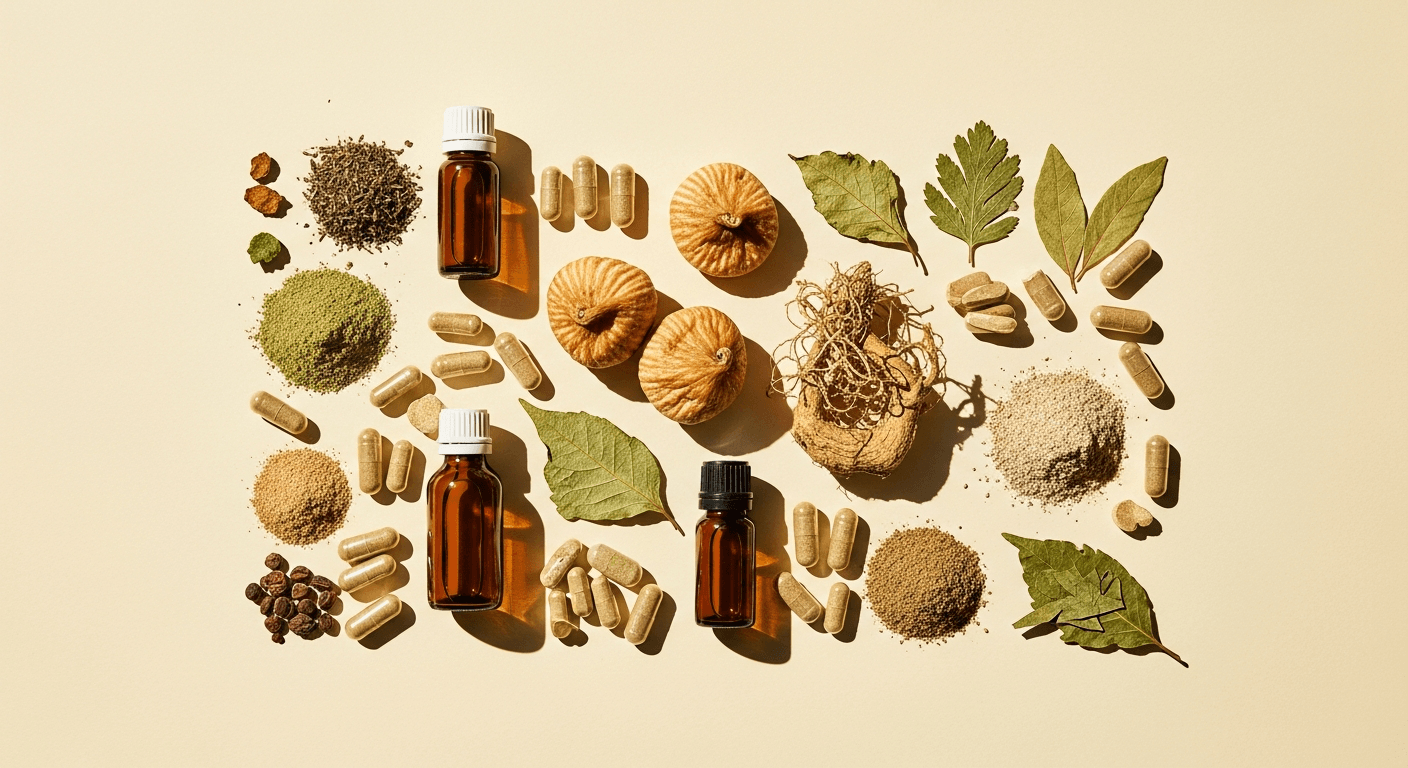
The botanical supplement market is expanding faster than the research can keep up. Fig leaf extract, napiergrass, shatavari, adaptogenic mushrooms, obscure seed extracts. If it grows in the ground and can be put in a capsule, someone is selling it. The question isn't whether these ingredients exist. It's whether any of them actually do what's claimed.
In 2026, a clearer scientific standard is starting to separate credible botanical ingredients from the noise. Here's what that standard looks like, and which botanicals are beginning to meet it.
Why Most Botanical Research Has Failed You Until Now
Historically, botanical supplements have been sold on the back of traditional use, weak observational data, or single-method studies that don't hold up under scrutiny. A study showing that an extract kills cancer cells in a petri dish gets turned into marketing copy before anyone has asked whether it does anything in a living body.
That's the problem with single-method research. In vitro testing (cells in a lab) tells you a compound has potential. It tells you nothing about absorption, metabolism, dosage, or real-world effect. The supplement industry has exploited this gap for decades.
The credibility standard that serious researchers are now applying combines three methods: in vitro work (what does the compound do at the cellular level), in silico analysis (computational modeling to identify bioactive compounds and predict how they interact with biological targets), and in vivo testing (animal or human trials showing effects in a living system). When all three methods converge on the same mechanism, you have something worth taking seriously.
The Multi-Method Model: What It Actually Means
A 2026 study on Ficus carica leaf extract illustrates this approach clearly. Researchers used in vitro assays to identify antioxidant and enzyme-inhibiting activity, applied in silico modeling to pinpoint which bioactive compounds were responsible and how they interacted with metabolic targets, and then validated findings through in vivo testing. The result was a mechanistic account of how fig leaf extract may support metabolic health, including blood glucose regulation and lipid metabolism.
That's not a marketing claim. That's a research pathway. It identifies specific compounds, explains the mechanism, and tests it across multiple contexts. It's also exactly the kind of evidence chain you should demand before adding anything to your supplement stack.
This matters because mechanism is everything. An ingredient backed by identified bioactive compounds and a plausible biological pathway is categorically more credible than one supported only by "traditional use" or a single observational study in a small population. The same logic applies when evaluating newer supplement categories. The analysis of Vitamin B3 and NK cell activity shows how multi-method evidence can shift a nutrient from theoretical interest to actionable protocol consideration.
Fig Leaf Extract: Metabolic Health Support With a Mechanism
Fig leaf extract (Ficus carica) has been used in traditional medicine across the Mediterranean and Middle East for centuries, primarily for blood sugar management. What's new in 2026 is that researchers have started to identify why it might work.
The key bioactive compounds identified include flavonoids, triterpenes, and phenolic acids. In silico modeling has flagged interactions with alpha-glucosidase and alpha-amylase, two enzymes involved in carbohydrate digestion and glucose absorption. Inhibiting these enzymes slows the rate at which glucose enters the bloodstream after eating, which has direct implications for blood sugar control.
In vitro evidence supports antioxidant and anti-inflammatory activity. In vivo animal models have shown reductions in fasting glucose and improvements in lipid profiles. Human trials are still limited, and dosage standardization is inconsistent across products on the market. That's the honest caveat: the mechanism is credible, but clinical human data at scale is still emerging.
If you're managing metabolic health through diet and supplementation, fig leaf extract is worth tracking. It's not a replacement for dietary strategy, and it doesn't override the basics of blood sugar management through food quality and training. But it's one of the more scientifically grounded botanical options available right now.
Napiergrass: An Unexpected Entry in Muscle and Strength Research
Napiergrass (Pennisetum purpureum) is not a name you'd expect to see in a sports nutrition context. It's primarily known as a high-yield forage grass. But 2026 research has identified bioactive compounds in napiergrass extracts, including flavonoids and phenolic acids, with potential relevance to muscle function and oxidative stress.
The proposed mechanism involves antioxidant activity that may reduce exercise-induced oxidative damage to muscle tissue, alongside potential anti-inflammatory pathways that support recovery. In vitro and in silico work has mapped compound-target interactions relevant to muscle cell biology. In vivo evidence in animal models has shown some support for strength-related outcomes.
To be direct: napiergrass is early-stage. Human trial data is minimal. The research is interesting enough to watch, particularly for coaches and athletes looking to stay ahead of the evidence curve. But it doesn't belong in a protocol yet unless you're working with a practitioner actively monitoring outcomes.
What napiergrass does illustrate is that botanicals with strength and recovery applications are being studied more rigorously now. If you're optimizing for performance, this kind of research is worth following alongside more established interventions. For context on how diet quality affects strength at a foundational level, the piece on ultra-processed food and its real impact on muscle strength is a useful reference point.
Shatavari: Hormonal Support for Women With Real Evidence Behind It
Shatavari (Asparagus racemosus) has a longer evidence trail than most botanical supplements. It's been used in Ayurvedic medicine for thousands of years and has attracted enough modern research to make it one of the more defensible options in the women's wellness space.
The primary bioactive compounds are steroidal saponins, particularly shatavarins, which are thought to interact with estrogen receptors and support hormonal balance. Research has examined applications across the female lifespan, including menstrual cycle regulation, perimenopausal symptom management, and lactation support. Some clinical trials, including randomized controlled designs, have shown benefits for hot flashes, mood, and hormonal markers in perimenopausal women.
The in silico modeling for shatavari has helped clarify which saponins are most active and what their likely receptor interactions look like. In vitro work has supported estrogenic and anti-inflammatory activity. The human trial data, while not extensive, is more developed than most botanicals in this category.
For women training through perimenopause or managing hormonal fluctuation, shatavari is one of the better-supported botanical options available. It should be considered alongside, not instead of, protein adequacy and training structure. The practical guide to protein needs for women who train covers the nutritional foundation that makes any supplement strategy more effective.
What to Demand Before You Add Any Botanical to Your Protocol
The botanical supplement market in 2026 is worth an estimated $50 billion globally, and most of that money is spent on products with weak or missing evidence. Here's a practical framework for filtering what's worth considering.
- Study type: Has the ingredient been tested using more than one method? In vitro alone is not sufficient. Look for multi-method research that includes in vivo data. Human trials are the gold standard. If only animal or cell data exists, treat the ingredient as experimental.
- Identified bioactives: Can the manufacturer or the underlying research name the specific compounds responsible for the proposed effect? Vague references to "plant extracts" or "phytonutrients" without identified bioactives are a red flag. Credible research names the compounds and explains the mechanism.
- Dosage tested: Does the product dose match what was actually studied? Many supplements use doses far below or above what appeared in research. If the clinical evidence used 300mg of a standardized extract and your product contains 50mg of an unstandardized powder, the evidence doesn't apply.
- Human trial status: Is there any randomized controlled trial data in humans? If not, is the rationale for human application clearly derived from animal or mechanistic data? Transparency here matters. Brands that can't or won't answer this question are not worth your money.
- Standardization: Is the extract standardized to a specific percentage of the active compound? Unstandardized botanical products vary wildly in potency between batches. Standardized extracts are more reliable and more comparable to what was studied.
This framework applies whether you're evaluating botanicals, amino acid derivatives, or any other supplement category. The same rigor that's being applied to emerging botanical research is being used to reassess established supplements. The evidence on collagen and muscle recovery is a good example of how even widely used supplements look different under scrutiny.
The Honest State of Botanical Evidence in 2026
Multi-method research combining in vitro, in silico, and in vivo testing is raising the floor for what credible botanical science looks like. Fig leaf extract, napiergrass, and shatavari are three ingredients that are beginning to meet that standard, each at different stages of the evidence pipeline.
Fig leaf extract has a plausible, multi-method supported mechanism for metabolic health. Shatavari has the most developed human trial base of the three, particularly for hormonal support in women. Napiergrass is early but scientifically interesting for muscle and recovery applications.
None of them are shortcuts. None of them replace training, sleep, and nutritional fundamentals. But if you're building a supplement strategy on evidence rather than marketing, these are the kinds of ingredients and the kinds of research standards worth paying attention to.
The supplement market will always run ahead of the science. Your job is to close that gap by asking better questions before you spend a dollar on anything.