
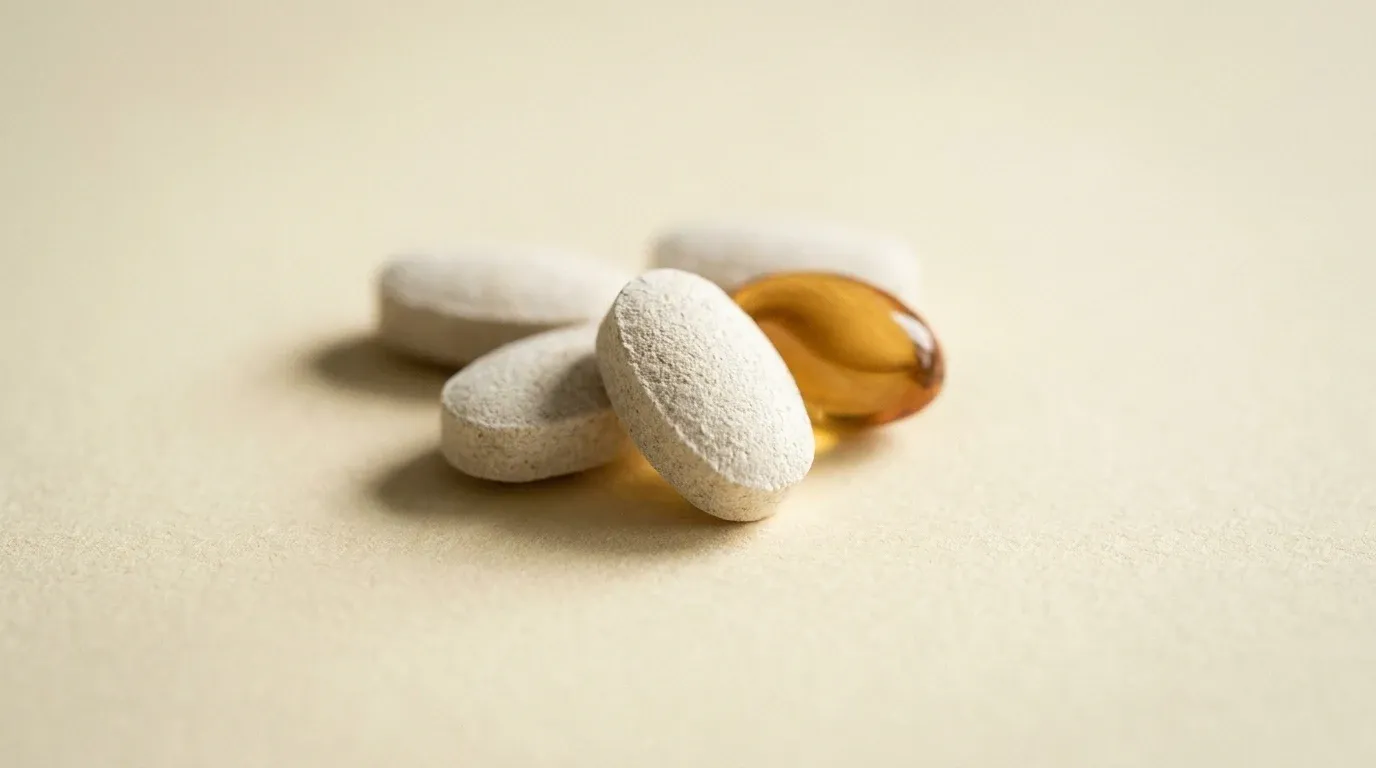
For decades, the advice has been consistent: take your calcium and vitamin D supplements to protect your bones. Millions of adults follow it, often because a doctor or pharmacist suggested it. The supplements are cheap, widely available, and feel like sensible insurance. The problem is that a major 2026 review of the available evidence suggests the insurance policy may not pay out the way most people expect.
Here's what the research actually shows, what it means for your daily habits, and where supplements still make legitimate clinical sense.
What the 2026 Review Found
The review, which pooled data from dozens of randomized controlled trials involving hundreds of thousands of adults, reached a conclusion that runs counter to what most supplement labels imply: calcium and vitamin D supplementation, taken by generally healthy adults, produces little meaningful reduction in fracture risk. That includes hip fractures, vertebral fractures, and total fracture incidence.
The effect sizes observed were small, and in many cases statistically insignificant once researchers controlled for dietary intake, physical activity levels, and baseline vitamin D status. In other words, people who were already eating reasonably well and moving regularly saw virtually no additional benefit from supplementing.
This isn't the first signal pointing in this direction. A large 2022 meta-analysis published in The BMJ covering over 50,000 older adults found that calcium supplements alone did not significantly reduce fracture risk, and that vitamin D supplementation showed similarly weak results when studied in isolation. The 2026 review adds weight to that earlier finding with a broader and more recent dataset.
Why So Many People Are Still Taking Them
The disconnect between evidence and practice is striking. Surveys consistently show that calcium supplements are among the top five most purchased dietary supplements in the US, with annual sales exceeding $1 billion. Vitamin D follows closely. Both are routinely recommended during routine check-ups, often without much discussion of the underlying evidence.
Part of the reason is historical momentum. The idea that calcium builds bones is physiologically true. Bone is approximately 70% mineralized with calcium phosphate crystals. Vitamin D is essential for calcium absorption in the gut. The logic of supplementing both seems sound on paper.
The issue is that physiology in a controlled lab context doesn't always translate into clinical outcomes in the real world. Bone health is a dynamic, load-sensitive process. The skeleton responds to mechanical stress, not just nutrient availability. Flooding a system with calcium when the underlying architecture isn't being challenged by physical demand doesn't produce stronger bones. It often just produces more calcium in circulation, with some evidence suggesting elevated cardiovascular risk from high-dose calcium supplementation specifically.
What Actually Protects Your Bones
The evidence base for non-supplementation strategies is considerably more robust than most people realize.
Weight-bearing and resistance exercise remains the most consistently supported intervention for bone density across every major age group. The mechanical load placed on bone during activities like walking, running, hiking, and lifting stimulates osteoblast activity, the process by which new bone tissue is formed. Studies tracking bone mineral density in adults who engage in regular resistance training show meaningful gains, particularly at the hip and lumbar spine, both high-fracture-risk sites.
If you're a woman approaching or past midlife, this is especially relevant. Research continues to highlight how significantly underserved this group is when it comes to structured strength work. Midlife Women Are Missing Out on Strength Training is worth reading if you want a grounded look at why that gap exists and what it costs in terms of long-term bone and metabolic health.
For women specifically looking to act on this, How to Actually Start Lifting After 40 as a Woman offers a practical framework built around the evidence rather than gym mythology.
Dietary calcium from food sources consistently performs better in trials than supplemental calcium. Dairy products, fortified plant milks, leafy greens like kale and bok choy, canned fish with soft bones, and tofu made with calcium sulfate are all effective contributors. Dietary calcium appears to behave differently from supplemental calcium at the cellular level, possibly because food delivers it alongside other co-factors that regulate absorption and utilization more effectively.
Protein intake matters too, and more than most bone-health conversations acknowledge. Adequate dietary protein supports the collagen matrix of bone, which is the scaffolding on which mineralization occurs. Not All Protein Sources Are Equal: Here's Why It Matters covers the nuances of protein quality in a way that's directly relevant here.
Sun exposure for vitamin D synthesis remains the most efficient route to adequate vitamin D status for most people. Fifteen to thirty minutes of midday sun exposure on the arms and legs, several times per week during warmer months, can maintain sufficient serum 25(OH)D levels in the majority of the population without a single capsule.
Who Still Has a Clinical Case for Supplementation
The review's findings don't mean supplements are useless across the board. There are clearly defined populations where the risk-benefit calculation still favors supplementation, and it's worth being precise about who they are.
- People with diagnosed osteoporosis or osteopenia. In the context of clinical bone disease, often managed alongside bisphosphonate medications, calcium and vitamin D are part of a broader treatment protocol. The supplement here supports the drug intervention, and the clinical guidance remains appropriate.
- Older adults in care settings or with limited mobility. Residents of long-term care facilities, who have minimal sun exposure and often eat poorly, have shown fracture-risk reductions with supplementation in more controlled study environments. This is a meaningfully different population from healthy, mobile adults.
- People with documented deficiency. A serum vitamin D level below 20 ng/mL is a legitimate clinical finding that warrants correction. Supplementation to address a confirmed deficiency is different from taking supplements prophylactically with no blood data to support the decision.
- Individuals with malabsorption conditions. Crohn's disease, celiac disease, bariatric surgery patients, and others with compromised gut absorption genuinely struggle to meet needs through diet and sun exposure alone. Supplementation in this group is medically justified.
- Pregnant women and infants. Vitamin D requirements during pregnancy and early development are well-established, and the evidence for supplementation in this context is strong and separate from adult fracture-prevention data.
If you don't fall into one of these categories, your supplement spending is probably not returning the bone-health benefit you're expecting from it.
The Bigger Picture on Supplement Spending
The supplement industry has long thrived on translating plausible mechanisms into confident health claims. Calcium and vitamin D are prime examples. The mechanism is real. The clinical outcome, at the population level for healthy adults, is far more modest than marketing suggests.
This matters for how you allocate both money and attention. A decent bottle of combined calcium and vitamin D runs $15 to $30 per month in the US. That's not a large sum, but money and cognitive energy directed at supplementation can displace investment in things that demonstrably work: a gym membership, a session or two with a qualified trainer to learn how to load the skeleton properly, or simply eating more whole foods.
If working with a trainer is part of your plan, choosing someone with genuine expertise in resistance training and bone health is worth the effort. How to Choose a Trainer for Building Muscle After 40 outlines what to look for in someone who'll actually move the needle on long-term strength and skeletal health, not just take you through circuits that feel hard but don't produce adaptive stress on bone.
What to Do With This Information
Start with a blood test. If you don't know your current vitamin D status, you can't make an informed decision about whether you need to supplement. Ask your doctor for a 25(OH)D panel. It's a routine, inexpensive test that gives you an actual data point.
Then look at your movement habits honestly. Are you doing any weight-bearing exercise with sufficient load to stimulate bone adaptation? If the answer is no, that's where your energy belongs before any conversation about supplements.
Audit your diet for calcium-rich foods before defaulting to a pill. Most adults who eat a varied diet that includes dairy or fortified alternatives are hitting adequate calcium intake without supplementing. The food-first approach also delivers magnesium, phosphorus, and vitamin K2, all of which interact with calcium metabolism in ways that isolated supplements don't replicate.
And if you're still considering supplements after doing all of that, that's fine. Just go in with accurate expectations. You're likely supporting overall nutritional adequacy, not preventing fractures in any clinically meaningful way.
The review doesn't say throw out your supplements. It says don't count on them to do a job that movement and food do far better.