
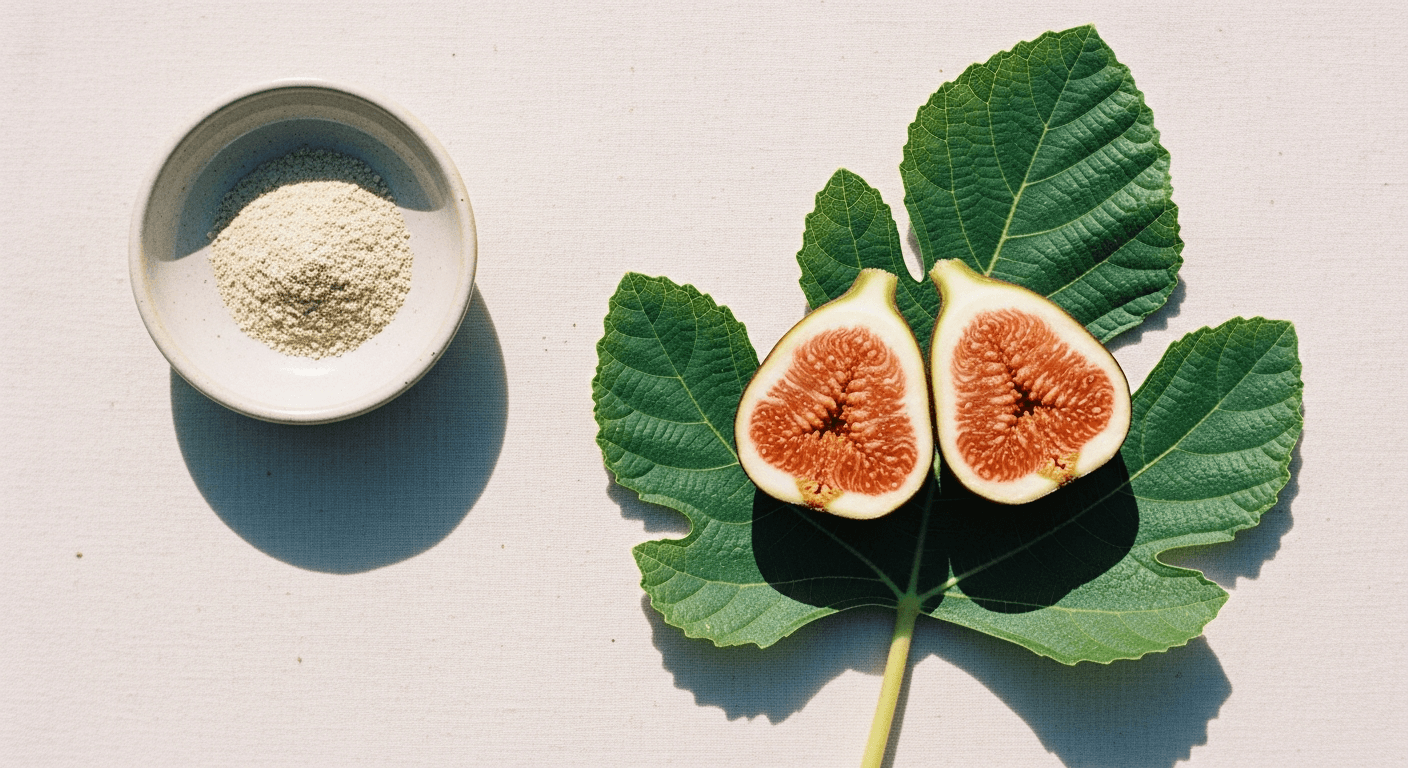
Fig leaf extract has been circulating in wellness conversations for years, mostly backed by tradition and scattered preliminary research. A 2026 multi-method study changed that conversation in a meaningful way. It didn't prove that fig leaf cures anything. But it gave researchers and informed consumers something more useful than anecdote: structured, replicable evidence across three distinct research approaches.
Here's what the study actually found, what the limitations are, and whether this ingredient deserves a place on your radar.
What the 2026 Study Actually Tested
The study used a three-method design: in vitro (cell-based lab testing), in silico (computational modeling), and in vivo (live animal models). Each method has its strengths and weaknesses. Used together, they create a more complete picture than any single approach can offer.
The target outcomes were anti-inflammatory activity, anti-diabetic markers, and effects relevant to obesity. Researchers used Ficus carica leaf extract, not the fruit pulp that most people associate with figs.
In the cell-based tests, the extract demonstrated measurable inhibition of inflammatory markers. In the animal models, researchers observed improvements in metabolic indicators associated with blood sugar regulation. Neither result was marginal. They were statistically significant under the study's conditions.
What makes this study worth paying attention to is not any single finding in isolation. It's the consistency across methods. When an effect holds across in vitro, in silico, and in vivo conditions, it carries more scientific weight than a single positive result from a petri dish.
The In-Silico Component: Why It Matters
The computational modeling portion of the study did something that purely biological tests can't do efficiently: it identified which specific compounds in the extract are likely driving the observed effects.
Ficus carica leaves contain a range of bioactive compounds, including polyphenols, flavonoids, and triterpenoids. The in-silico analysis used molecular docking simulations to assess how these compounds interact with biological targets linked to inflammation and glucose metabolism. Several compounds showed strong binding affinity to receptors associated with insulin signaling and inflammatory pathways.
This mechanistic layer matters because it moves the conversation from "this plant does something interesting" to "here are probable molecular reasons why." That's the kind of specificity that supports further clinical research and, eventually, standardized supplementation.
This approach is increasingly common in botanical research. It's similar to how researchers have begun identifying specific mechanisms behind other micronutrients. The Vitamin B3 and NK Cells study offers a useful parallel: mechanistic clarity is what separates credible supplement science from noise.
The Anti-Diabetic Signal: Context and Caution
The anti-diabetic effects observed in the study centered on glucose regulation and insulin sensitivity markers. In the in vivo models, animals receiving fig leaf extract showed improved fasting glucose levels and reduced markers of insulin resistance compared to controls.
These are meaningful signals. Type 2 diabetes and metabolic dysfunction affect hundreds of millions of people globally. Any botanical compound with a credible mechanism and measurable effect on glucose regulation deserves careful scientific attention.
That said, you need to keep the context sharp. Animal models are not human trials. The dosages used in this study were controlled and standardized in ways that no commercial supplement currently replicates. The extract form tested is also not what you'd find in most fig-based products on the market today.
It's also worth noting that metabolic health is shaped by a wide range of inputs. Diet quality, physical activity, sleep, and overall food pattern all interact. Supplements, even well-studied ones, don't function in isolation. If you're managing blood sugar concerns, the quality of your overall diet matters far more than any single botanical addition.
Anti-Inflammatory Effects: What Was Observed
Inflammation is a word that gets used loosely in wellness content. In this study, the researchers measured specific pro-inflammatory cytokines, the signaling proteins the immune system uses to amplify inflammatory responses. The extract showed inhibitory activity against several of these markers in the in vitro component.
Chronic low-grade inflammation is tied to a wide range of conditions, including cardiovascular disease, metabolic syndrome, and accelerated cellular aging. An ingredient that demonstrably reduces these markers in controlled conditions is worth tracking.
What the study doesn't tell you is whether this translates to a meaningful reduction in inflammation in a healthy human adult consuming a standard dose of a commercial product. That's the gap between phase-one research and clinical evidence. It's a real gap, and it matters.
The Obesity Angle
The study also examined markers related to obesity, specifically lipid accumulation and adipogenesis, the process by which cells become fat cells. Some bioactive compounds in the fig leaf extract showed inhibitory effects on these processes in the in vitro models.
This is the area where the most caution is warranted. Weight regulation is extraordinarily complex. No single compound has ever resolved obesity in a clinical setting independent of broader behavioral change. The in vitro data here is interesting but the least immediately actionable of the three outcome areas tested.
If you're focused on body composition and metabolic health, the foundational variables still dominate. Adequate protein intake, resistance training, sleep quality, and minimizing ultra-processed foods are the evidence-backed levers. The impact of ultra-processed food on muscle strength is well documented and represents a far more direct dietary target than any botanical supplement at this stage.
The Gap Between Research and Your Supplement Shelf
Here's where honest editorial judgment matters. A 2026 study with rigorous methodology is not a green light to buy fig leaf capsules. The pathway from promising preclinical data to a supplement you can trust looks like this:
- Preclinical studies (in vitro, in silico, in vivo). This is where fig leaf extract currently sits.
- Phase I human trials (safety, tolerability, dosage range in small groups).
- Phase II and III human trials (efficacy, optimal dosing, comparison to placebo in larger populations).
- Regulatory review and standardized commercial formulation.
The 2026 study is a rigorous entry at the first stage. That's genuinely valuable, and it's more than most botanical ingredients have. But it's still the first stage.
The supplement industry doesn't always wait for the full pipeline. Products marketed around fig leaf extract already exist, and that market will likely grow as botanical personalization becomes a bigger trend. The challenge is that current commercial products vary widely in extract concentration, bioactive standardization, and delivery method. What was tested in this study is almost certainly not what's in a generic bottle at a health food store.
Why Botanical Personalization Is Changing the Conversation
The supplement market is moving toward more individualized, evidence-adjacent formulations. Consumers are increasingly asking for botanical ingredients with documented mechanisms, not just traditional use claims. Fig leaf extract fits that profile better after this study than it did before it.
The broader trend here is about scientific literacy in nutrition. Researchers are using tools like molecular docking and multi-model study designs to build credible cases for ingredients that previously lived entirely in the realm of folk medicine. That's a genuine shift in how botanical ingredients get evaluated.
It also creates responsibility for consumers and for media. A study like this one should raise informed interest, not trigger purchases. The same critical lens that applies to understanding protein needs for women in training applies here: understand what the evidence actually supports before adjusting your routine.
This matters even more as some companies begin integrating biomarker-based recommendations into supplement protocols. Models that use biological data to personalize supplementation are becoming more sophisticated. But those systems are only as good as the underlying evidence for each ingredient they draw on.
What You Should Actually Do With This Information
If you're someone who pays attention to nutrition science, here's the practical takeaway.
Watch fig leaf extract as an emerging ingredient with credible early-stage evidence. Don't treat the 2026 study as proof of efficacy in humans. It isn't. Be skeptical of any supplement brand that uses this study to make strong clinical claims.
If you have metabolic health concerns, focus first on the interventions with extensive human trial data: dietary pattern, physical activity, sleep quality, and stress management. Botanicals, at their best, are a complement to those foundations. Not a substitute.
And if fig leaf extract does progress through human trials over the next few years, that will be genuinely significant. A standardized, bioactive-verified extract with a clear mechanism and demonstrated human efficacy would be a legitimate tool. That's the version worth getting excited about. It just doesn't exist yet.
The 2026 study is an honest, well-constructed step in the right direction. That's worth acknowledging. It's also worth knowing exactly what that means and what it doesn't.