
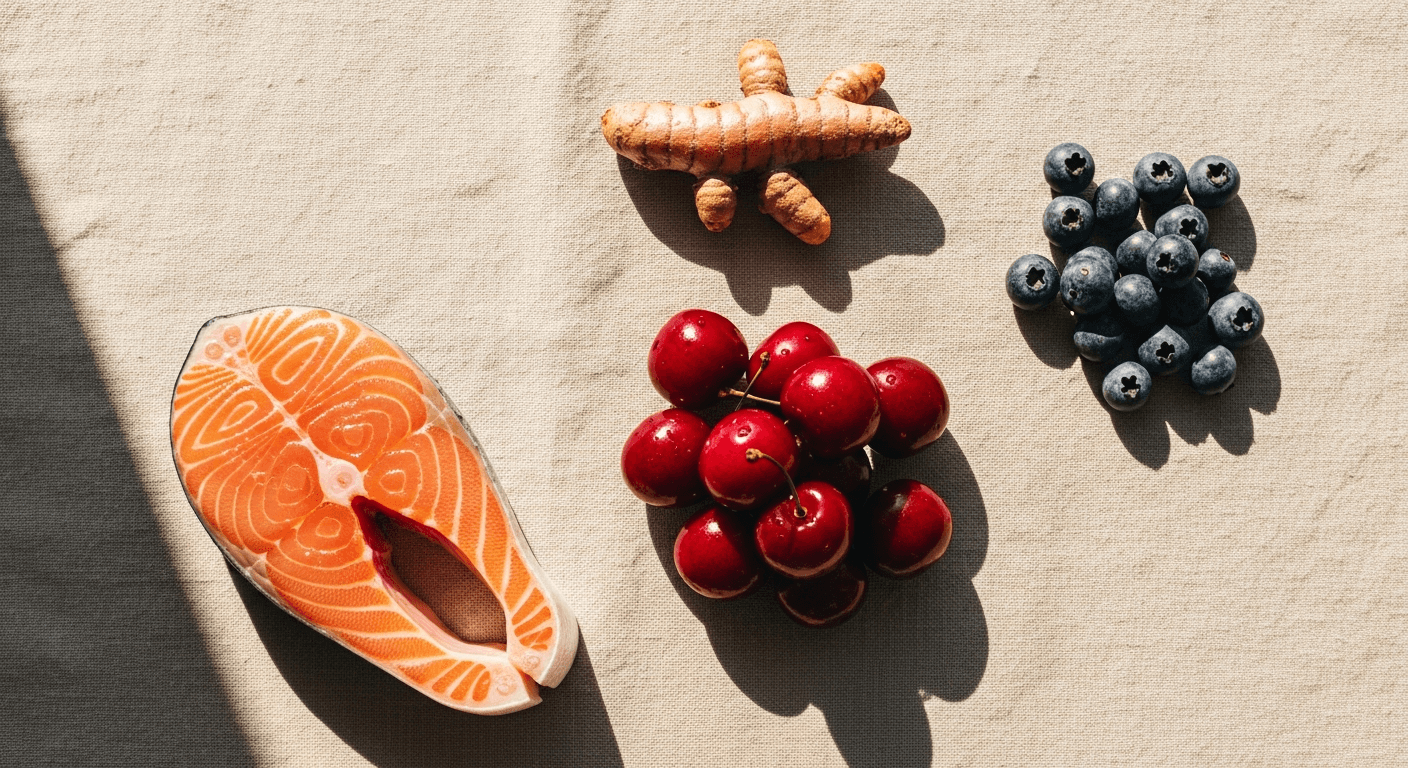
The recovery nutrition conversation gets hijacked by protein powder ads more often than not. You've seen the posts: shake immediately after training, repeat daily, never question it. The reality is that whole foods have been quietly accumulating strong peer-reviewed evidence for years, and the 2026 research landscape makes that case harder to ignore.
These seven foods are ranked by practical impact. That means measurable results in actual trials, realistic price points, and timing guidance you can act on this week. No wholesale diet overhaul required.
Why Whole Foods Deserve More Credit in Recovery Science
Most supplement-funded studies are designed to show a product works well enough to justify a label claim. Independent trials with whole foods don't have that incentive, which makes positive results more credible when they show up. And they've been showing up consistently, particularly around inflammation markers, muscle damage indicators, and glycogen replenishment speed.
Timing still matters. The post-session window of 30 to 60 minutes remains the most well-supported period for delivering carbohydrates, protein, and anti-inflammatory compounds to working tissue. Getting the right foods into that window isn't complicated, but it does require some planning. For a deeper look at how carbohydrate and hydration timing fits into this, the Carbs and Hydration: The Exact Timing for Performance guide covers the mechanics precisely.
1. Tart Cherries
Tart cherries are one of the most replicated findings in recovery nutrition. Multiple independent trials have shown that tart cherry juice and concentrate reduce markers of exercise-induced muscle damage, including creatine kinase and interleukin-6, following both endurance and resistance training. A 2025 meta-analysis pooling data from over 600 active adults confirmed significant reductions in perceived soreness at 24 and 48 hours post-exercise.
The active compounds are anthocyanins, which inhibit specific inflammatory pathways without the side effects associated with NSAIDs. A 250ml serving of unsweetened tart cherry juice runs around $2 to $3 at most grocery stores. Frozen tart cherries are even more affordable at roughly $4 to $5 per pound. Drink or eat them within the post-training window and again before sleep, when muscle repair peaks.
2. Fatty Fish
Salmon, sardines, and mackerel deliver two things simultaneously: high-quality complete protein and long-chain omega-3 fatty acids (EPA and DHA). The protein drives muscle protein synthesis. The omega-3s reduce prostaglandin-driven inflammation and have been shown in controlled trials to lower delayed onset muscle soreness scores by 15 to 25 percent over a three to four week supplementation period.
Canned sardines and mackerel are genuinely affordable, typically $1.50 to $2.50 per can, and shelf-stable. A 150g serving of canned salmon provides roughly 25g of protein and a solid omega-3 dose. If you're training seriously and managing budget, these canned options outperform many protein supplements on cost per gram of quality protein.
3. Beets and Beet Juice
The recovery story on beets goes beyond performance. Yes, dietary nitrates from beets convert to nitric oxide and improve blood flow during exercise. But post-training, that same vasodilation accelerates nutrient and oxygen delivery to damaged muscle tissue. Research from 2024 and 2025 shows that beet juice consumed within 60 minutes post-exercise reduces muscle soreness at 24 hours and improves force recovery within 48 to 72 hours.
A standard 250ml shot of beet juice concentrate costs about $2 to $4. Whole roasted beets are even cheaper. The caveat: the nitrate content varies widely between beet products, so look for standardized juice shots if you want consistent results. Loose beets from the produce section, around $2 to $3 per bunch, work well roasted and eaten with your post-training meal.
4. Greek Yogurt
Greek yogurt hits the post-training window with an efficient combination of fast-digesting whey protein and slower casein, producing a more sustained amino acid release than most protein shakes. A 200g serving delivers 17 to 20g of protein depending on brand. It also provides carbohydrates for glycogen replenishment and calcium, which plays a role in muscle contraction signaling during repair.
Plain full-fat or low-fat Greek yogurt runs $1.50 to $2.50 per serving at most supermarkets. It's portable, requires no preparation, and pairs easily with tart cherries or berries to stack the anti-inflammatory benefit. This is one of the most practical post-training foods available, and it's consistently underrated relative to its actual evidence base.
5. Eggs
Whole eggs outperform egg whites in muscle protein synthesis trials, which surprised researchers enough that the findings were repeated multiple times. The fat-soluble nutrients in the yolk, including leucine cofactors and phospholipids, appear to enhance the anabolic signaling from the protein itself. A 2023 trial found that whole egg consumption post-resistance training produced approximately 40 percent greater muscle protein synthesis response than an equivalent protein dose from whites alone.
At $3 to $5 per dozen for standard eggs, this is one of the cheapest high-quality protein sources available anywhere. Three eggs post-training delivers around 18 to 19g of complete protein with a leucine content that reliably triggers the mTOR pathway associated with repair and growth. Hard-boil a batch at the start of the week and you have a portable recovery option with zero prep time on training days.
6. Leafy Greens (Spinach and Kale)
Leafy greens don't get headline treatment in recovery nutrition, but the evidence is building. Spinach and kale are dense sources of magnesium, which is involved in over 300 enzymatic processes including muscle relaxation, protein synthesis, and sleep quality. Athletes consistently underperform their magnesium needs through sweat loss, and deficiency is associated with increased cramping, impaired recovery, and poorer sleep architecture.
Beyond magnesium, leafy greens provide nitrates (similar to beets), polyphenols, and vitamin K, which supports bone and connective tissue repair. A 100g serving of raw spinach provides roughly 80mg of magnesium. A bag of spinach costs $2 to $4 and is one of the most nutrient-dense items you can drop into a post-training smoothie or scrambled eggs. If you're working hard across multiple training modalities, check out The Off-Day Recovery Routine Heavy Lifters Swear By for additional context on how nutrition fits into a broader recovery structure.
7. Kiwi
Kiwi is the most underrated food on this list. Two kiwifruits provide around 140mg of vitamin C, which plays a direct role in collagen synthesis for tendon and connective tissue repair. Post-exercise oxidative stress is real, and vitamin C from whole food sources has been shown to reduce markers of oxidative damage more effectively than isolated supplement forms in several recent trials.
There's also a sleep angle. A 2024 trial found that consuming two kiwis one hour before bed significantly improved sleep onset, duration, and efficiency in active adults. Since most muscular repair occurs during deep sleep stages, improving sleep quality is a legitimate recovery strategy. Kiwis cost roughly $0.50 to $1 each, making them one of the most affordable high-impact options on this list.
How to Stack These Foods Practically
You don't need to eat all seven every day. The most effective approach is building a post-training habit around two or three of them consistently. A practical post-session combination might look like this:
- Immediately post-training (0 to 60 minutes): Greek yogurt with tart cherries, or three eggs with a handful of spinach
- With your next full meal: A serving of fatty fish or canned sardines with roasted beets on the side
- Before sleep: Two kiwis, which addresses both vitamin C and sleep quality simultaneously
This structure requires no supplements, costs under $10 per day when executed smartly, and covers protein synthesis, inflammation control, glycogen replenishment, connective tissue repair, and sleep quality in a single day's eating.
If you're also exploring how supplementation fits alongside whole-food strategies, Boswellia for Muscle Recovery: What the Science Says is worth reviewing, particularly for those managing chronic training loads. And for athletes thinking about plant-based approaches to hitting these same recovery targets, Plant Protein for Athletes: The 2026 Practical Guide lays out the practical framework clearly.
The Bottom Line
Recovery nutrition doesn't require an expensive supplement stack. The foods with the strongest independent evidence are mostly sitting in the produce aisle and the canned goods section. Tart cherries, fatty fish, beets, Greek yogurt, eggs, leafy greens, and kiwi each bring specific, documented mechanisms that address what actually happens to your body after hard training.
The edge comes from consistency and timing, not from chasing the latest product launch. Stock your kitchen with these seven foods, respect the post-training window, and let the evidence work for you.