
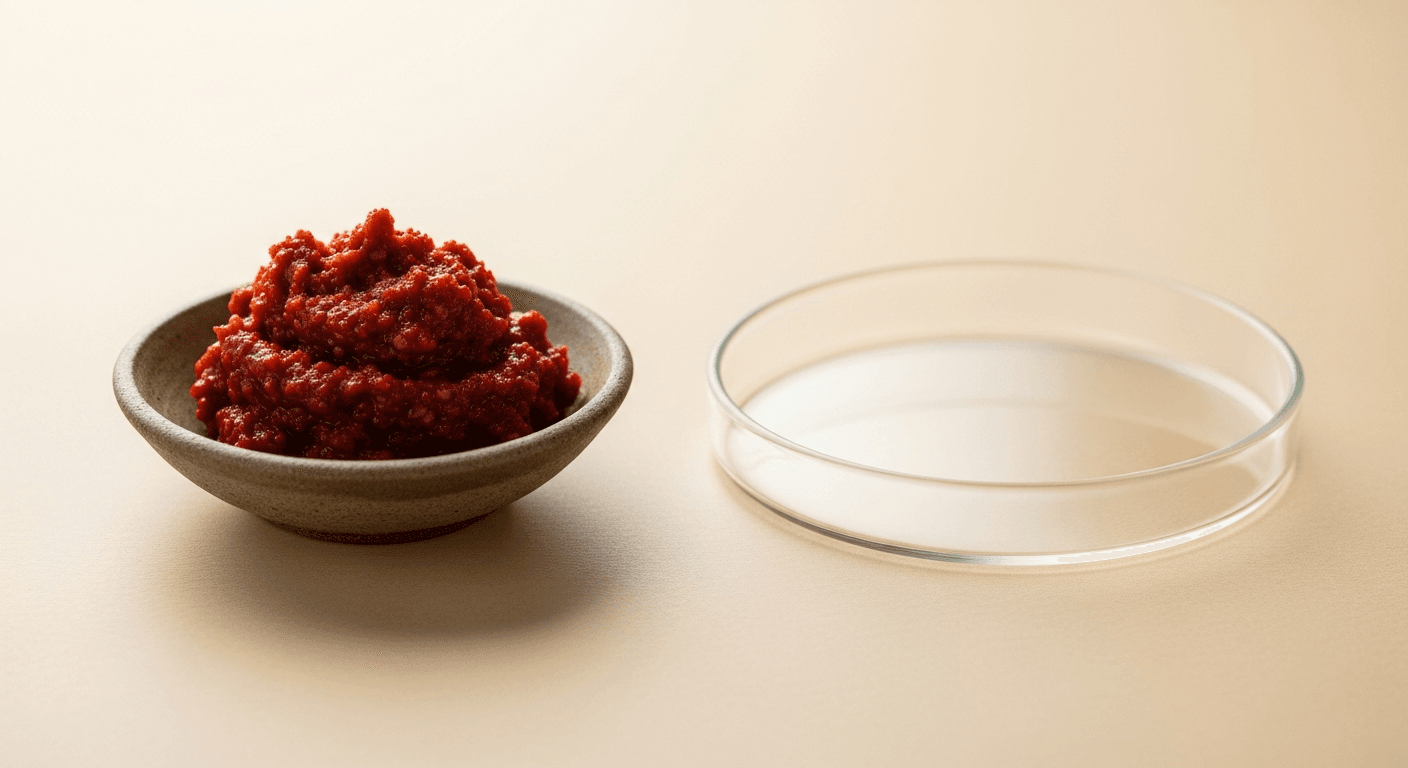
A Korean fermented chili paste showing up in cancer research headlines sounds like exactly the kind of thing that gets wildly overinterpreted online. So let's be precise about what a recent study actually found, what it didn't find, and what any of it means for the way you eat.
What the 2026 Study Found
Research published in April 2026 examined the effects of gochujang extract on multiple gastrointestinal cancer cell lines, specifically gastric and hepatic (liver) cancer cells. The findings were notable: gochujang extract significantly reduced cell viability across these lines, meaning fewer cancer cells survived exposure to the extract in laboratory conditions.
What made the study more interesting than a standard "food compound kills cancer cells" headline was the mechanistic detail. The pathways through which gochujang extract appeared to act differed depending on the cancer type being tested. That suggests specific bioactive compounds in gochujang are doing targeted work rather than a single blunt mechanism wiping out cells indiscriminately.
That specificity matters scientifically. It opens legitimate questions about which compounds are responsible and how they interact with different tumor environments. It's a real finding worth paying attention to.
Why This Doesn't Mean Gochujang Prevents Cancer
This was a cell-line study. That phrase deserves more weight than it usually gets in health reporting.
Cell-line studies test what happens when a substance is applied directly to isolated cells growing in a controlled lab environment. There is no digestive system involved. No absorption, no metabolism, no competing variables, no immune system, no difference between what you eat and what eventually reaches a tumor. The extract used in lab conditions is typically far more concentrated than anything you'd consume through food.
Dozens of substances reduce cancer cell viability in a dish. Bleach would, too. The gap between "this extract affects cells in a lab" and "eating this food reduces your cancer risk" is enormous, and most substances that perform well at the cell-line stage never survive the complexity of human trials.
This isn't a reason to dismiss the study. Cell-line research is a legitimate and necessary early step in understanding biological mechanisms. But it sits at the very beginning of a long research pipeline, not the end. No oncologist is recommending gochujang as a cancer treatment based on this data, and you shouldn't interpret it that way either. Understanding how research funding and framing can shape headlines is also worth keeping in mind. Does Meat Industry Funding Skew Nutrition Research? explores how study design and sponsorship can push findings in particular directions, a useful lens any time a single study generates outsized media attention.
What Gochujang Actually Contains That's Worth Caring About
Setting the cancer headlines aside, gochujang has a genuinely interesting nutritional profile for people focused on performance and gut health.
Capsaicin. The compound responsible for heat in chili peppers has a real body of evidence behind it. At dietary doses, capsaicin has been linked to modest thermogenic effects, meaning it may slightly increase calorie burn. It also appears to support satiety signaling, which is relevant if you're managing body composition. These effects are meaningful but not dramatic, and they require regular consumption rather than occasional use.
Fermentation-derived probiotics. Gochujang is fermented, which means it introduces live microbial cultures into your gut when consumed raw or lightly heated. The diversity of your gut microbiome has downstream effects on digestion, immune regulation, and increasingly, on recovery from training. The research on fermented foods and athletic performance is still maturing, but the directional evidence is consistent enough that including a range of fermented foods in your diet is a reasonable strategy.
Antioxidants. The red pepper base contributes carotenoids and vitamin C. Fermentation itself can increase the bioavailability of certain antioxidants compared to the raw ingredients. These aren't exotic benefits; they're simply additional reasons that a tablespoon of gochujang in a meal adds more than just flavor.
Sodium awareness. Traditional gochujang is high in sodium. If you're tracking electrolyte intake around training or managing blood pressure, it's worth factoring that in rather than treating it as a free food.
The Gut Microbiome Angle for Athletes
If you're training consistently, your gut health directly affects how well you absorb nutrients, how efficiently you recover, and how resilient your immune function stays under the stress of a heavy training load. Fermented foods, gochujang included, contribute to microbial diversity, and diversity is generally the marker researchers use as a proxy for a healthy gut ecosystem.
This isn't about any single food being essential. It's about a dietary pattern that includes a variety of fermented sources: kimchi, yogurt, kefir, miso, tempeh, and yes, gochujang. Each introduces different microbial strains and compounds. The cumulative effect on gut diversity is more relevant than any individual food's contribution.
Recovery from training involves more than your muscles. Your nervous system, inflammatory response, and hormonal signaling all play roles. If you're building out a full recovery approach, tools like the ones covered in Recovery Gadgets vs. the Basics: What to Prioritize pair well with a nutrition base that supports gut and systemic health rather than competing with it.
How to Think About Functional Foods Without Overhyping Them
The fitness and wellness space has a pattern: a study comes out, headlines inflate it into a miracle cure or superfood, and then a few months later the backlash overcorrects into dismissal. Neither extreme is accurate or useful.
Gochujang is a flavorful, fermented condiment with a legitimate nutritional profile. The 2026 cell-line research adds a mechanistically interesting data point to an ongoing area of inquiry into fermented foods and cancer biology. That's genuinely worth tracking as more research develops. It is not a reason to start consuming gochujang in therapeutic quantities or to position it as a cancer-fighting food in your diet.
The same measured thinking applies across functional foods broadly. If you're navigating the nutrition supplement space and trying to separate real evidence from marketing, the principles are consistent: look at the study design, understand where in the research pipeline the finding sits, and ask whether realistic dietary doses produce the effect being claimed.
Women navigating different nutritional needs across life stages may find this kind of evidence-weighing especially relevant. Women's Nutrition by Life Stage: What Actually Changes breaks down which dietary shifts are actually supported by research versus which ones are based on broad assumptions.
Practical Ways to Use Gochujang in a Performance Diet
If you want to incorporate gochujang regularly, here's how to do it in a way that's realistic and nutritionally useful:
- Use it as a marinade base. Mixed with a little sesame oil, garlic, and rice vinegar, gochujang makes an effective marinade for protein sources like chicken thighs, tofu, or salmon. You get flavor, capsaicin, and some fermentation benefits without adding significant calories.
- Add it to grain bowls. A teaspoon stirred into a grain bowl with roasted vegetables and a protein source adds depth and nutritional variety without dominating the meal.
- Use it in dressings and dips. Combining it with Greek yogurt creates a high-protein dip that layers probiotic sources, which is a simple way to increase fermented food frequency without overthinking it.
- Keep portions sensible. One to two tablespoons per meal captures the flavor and functional benefits without loading up on sodium unnecessarily. Gochujang is a condiment, not a supplement.
- Look for traditionally fermented versions. Not all commercial gochujang is fermented the same way. Products that list a longer fermentation period or traditional meju (fermented soybean) in the process tend to retain more of the probiotic and bioactive compounds that make the research interesting.
The Bigger Picture on Fermented Foods and Cancer Research
The gochujang study doesn't exist in isolation. There's a broader research thread examining fermented foods, microbial metabolites, and their relationships to cancer risk. Some of this work looks at gut bacteria and how they process compounds from food into forms that may either protect against or promote cellular damage. It's a genuinely active and evolving field.
What the evidence supports right now is that diets high in fermented foods are consistently associated with better gut health markers and, in some population studies, with lower incidence of certain gastrointestinal conditions. Association is not causation, but it's also not nothing. The mechanistic studies like the April 2026 gochujang research help researchers start to understand the biological plausibility behind those associations.
For a performance-focused audience, the practical takeaway is straightforward. Fermented foods belong in your diet because they support gut diversity, and gut health has real downstream effects on how you train and recover. If you're also curious about where else recovery science is heading, New Recovery Tech: What Actually Works in 2026 covers current evidence across a range of tools and modalities.
Gochujang is a smart addition to a varied, whole-food diet. It's not a cancer cure. The science is early. But that's not a reason to ignore it. It's a reason to follow it carefully as the research matures.