
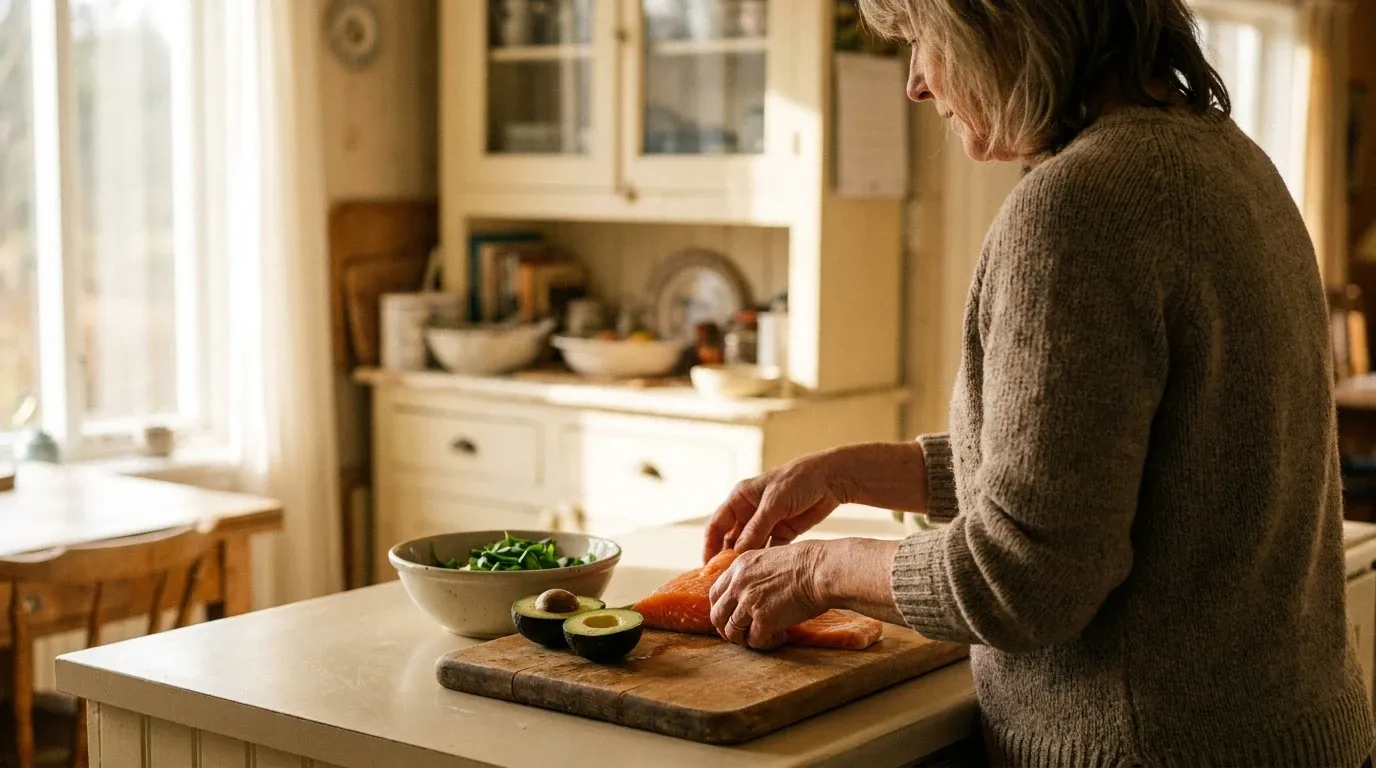
Most of what we know about protein, muscle, and aging comes from studies built around men. A significant portion of the rest comes from research on younger women. If you're a woman between 50 and 75, the evidence base meant to guide your nutrition has largely been written without you in mind.
That's starting to change. The StrengthenHER study is specifically designed to examine how nutrition and strength training interact in women aged 50 to 75. Its goal is to understand what this demographic actually needs to build and maintain muscle, and to preserve the physical independence that most older women say matters more to them than almost anything else.
Why This Age Group Has Been Left Out
Research exclusion isn't always intentional, but it has real consequences. For decades, exercise physiology and sports nutrition studies defaulted to male subjects because hormonal fluctuations in women were considered a confounding variable. When women were included, they tended to be younger, often premenopausal, which made results easier to standardize but far less useful for older populations.
The result is a significant knowledge gap. Women between 50 and 75 are navigating menopause or postmenopause, managing age-related muscle loss (sarcopenia), and facing elevated fracture and fall risk. They're making daily decisions about food, exercise, and recovery. And the guidance available to them is largely borrowed from data that doesn't reflect their biology.
This matters at a public health scale. Falls are the leading cause of injury-related death among adults over 65 in the United States. Women are disproportionately affected, partly because of lower baseline muscle mass and partly because of bone density losses tied to estrogen decline. Keeping women strong and mobile in this age range isn't just a personal health goal. It's a national healthcare priority.
The Hormonal Shift That Changes Everything
Menopause isn't just a reproductive transition. It fundamentally alters how the body processes and uses nutrients. Estrogen plays a direct role in muscle protein synthesis, glucose metabolism, and fat distribution. When estrogen levels drop, women experience changes in insulin sensitivity, reduced anabolic signaling, and a shift toward greater fat accumulation and lean mass loss.
This means that recommendations calibrated for a 35-year-old woman, or even a 55-year-old man, may not translate accurately. The body's ability to use dietary protein to build and repair muscle becomes less efficient with age, and this effect appears to be amplified in postmenopausal women due to reduced hormonal support for anabolic processes.
As a result, protein thresholds that would maintain muscle in a younger person may be genuinely insufficient for a woman in this age range. Your protein needs change across life stages, and midlife is one of the most significant inflection points. The StrengthenHER study is designed to quantify exactly how much protein is needed, in what form, and at what times, to overcome these metabolic shifts in this specific group.
Protein: Not Just How Much, But When and What Kind
Current general recommendations suggest most adults need somewhere between 0.8 and 1.0 grams of protein per kilogram of body weight per day. Emerging evidence for older adults. particularly those engaged in strength training. consistently points higher. Some researchers advocate for 1.2 to 1.6 grams per kilogram for this population, and in some contexts even more.
But quantity alone doesn't capture the full picture. Timing matters. Studies in older adults show that muscle protein synthesis responds better to protein doses distributed evenly across meals rather than concentrated in a single sitting. A pattern like 30 to 40 grams at breakfast, lunch, and dinner appears more effective than skewing intake toward dinner, which is a common dietary pattern in many Western households.
Protein quality also plays a role. Animal-based proteins tend to be leucine-rich, and leucine is the specific amino acid that triggers the anabolic signaling cascade responsible for muscle building. Plant-based proteins can absolutely support muscle maintenance, but they often require higher total quantities and more deliberate food combining to deliver equivalent leucine levels.
The StrengthenHER study is examining all three variables simultaneously, which is rare. Most studies isolate one factor. This design should produce far more actionable guidance for practitioners working with women in this age range.
Strength Training as the Necessary Partner
Nutrition doesn't work in isolation. Protein eaten without a stimulus for muscle adaptation has limited anabolic effect. Strength training provides that stimulus, and for women over 50, it's one of the most powerful tools available for maintaining functional independence.
The challenge is that resistance training remains underutilized in this demographic. There are well-documented reasons why most people still avoid resistance training, and many of them are amplified for older women: unfamiliarity with gym environments, fear of injury, lack of programming targeted to their needs, and a fitness culture that has historically pointed this group toward low-intensity cardio instead.
When strength training is done consistently and progressively, it counteracts sarcopenia, improves bone density, and reduces fall risk directly. Research on the optimal weekly lifting frequency for long-term health outcomes suggests that two to three sessions per week is sufficient for meaningful benefit, which is an accessible target for most women in this age range if programming is appropriately designed.
The StrengthenHER study is not just measuring nutrition in isolation. It's tracking how nutrition and resistance training interact, because the combination produces effects neither variable achieves alone.
Recovery: The Variable That Gets Overlooked
Muscle isn't built during training. It's built during recovery. And recovery becomes physiologically more complex as women age. Hormonal changes slow tissue repair, inflammation takes longer to resolve, and sleep quality often deteriorates around and after menopause, further impairing the body's ability to rebuild.
This has real implications for how women in this age group should structure their weeks. Rest days aren't optional. Sleep is a genuine physiological requirement, not a lifestyle preference. Understanding why recovery slows after 40 and what to do about it is increasingly relevant as this research matures.
Nutritional support for recovery in this age group extends beyond protein. Calcium and vitamin D remain critical for bone health, particularly when estrogen is no longer providing its protective effect. Anti-inflammatory dietary patterns, adequate hydration, and overall caloric sufficiency all contribute to whether the training stimulus translates into actual strength gains or simply leaves women fatigued.
Translating Research Into Practice
One of the stated goals of the StrengthenHER study is to produce guidelines that practitioners can actually use. This is not a trivial aspiration. Research that doesn't translate into clinical practice or coaching frameworks has limited real-world impact.
Right now, a registered dietitian working with a 62-year-old woman who wants to stay strong and independent is largely extrapolating from data generated on populations that don't match her client. The same is true for a personal trainer developing a program for this demographic. Good personal training requires understanding the physiology of the individual in front of you, and that understanding is only as good as the evidence base supporting it.
Evidence-based guidelines specific to women aged 50 to 75 would fill this gap meaningfully. They would help practitioners set appropriate protein targets, design training loads that account for recovery capacity, and make supplement or dietary recommendations grounded in data from the relevant population rather than adjacent ones.
Supplements and Whole Foods: Where the Evidence Points
Women in this age group are often targeted by the supplement industry. Collagen powders, protein shakes, bone support formulas, and hormonal support blends fill the market. Some of these products have genuine utility. Others are poorly evidenced or dosed at levels unlikely to produce real benefit.
The research picture for bone-specific nutrients like calcium and vitamin D is more nuanced than most marketing suggests. A major review of calcium and vitamin D supplementation found results that may surprise you. Whole food sources remain the most reliably beneficial approach for most micronutrients, even when specific supplementation has a role in targeted deficiency correction.
Protein supplements, including whey and plant-based options, can be useful tools for women who struggle to meet intake goals through food alone. They're not superior to whole food sources, but they're not inferior either, assuming quality is adequate. The key is treating them as complements to a nutrient-dense diet rather than replacements for one.
What You Can Do Now
The StrengthenHER study is ongoing, and its findings will take time to reach clinical guidelines. That doesn't mean you're without options in the meantime.
- Prioritize protein at every meal. Aim for at least 30 grams per meal rather than concentrating intake at dinner. High-quality sources include eggs, dairy, fish, poultry, legumes, and tofu.
- Lift consistently. Two to three strength training sessions per week with progressive overload will outperform any supplement stack for muscle preservation.
- Protect your recovery. Sleep quality directly affects muscle protein synthesis and hormonal regulation. This isn't optional support. It's a core part of the process.
- Don't under-eat. Caloric restriction combined with aging and hormonal changes is a fast path to muscle loss. Adequate total energy intake supports the anabolic environment your body needs.
- Work with practitioners who understand your life stage. General advice designed for younger or male populations may actively work against your goals.
The StrengthenHER study represents a meaningful step toward correcting decades of underrepresentation in nutrition and exercise research. Women aged 50 to 75 deserve an evidence base built around their actual biology. That work is underway. In the meantime, the fundamentals, protein, progressive training, recovery, and whole-food nutrition, remain the most reliable tools available.